Lake Nakuru: flamingos, rhinos and rising water
At Lake Nakuru, flamingo numbers follow the chemistry of the lake, while a fenced sanctuary gives black and white rhinos a place within the park.
- Country
- Kenya
- Extent
- about 188 sq km
- Ground
- soda lake shore and acacia woodland
 CC BY-SA 3.0 — Daryona
“A few thousand” is one version of Lake Nakuru; well over a million is another. The difference is not a matter of mood, though the lake has plenty of room for dramatic entrances and exits.
Lake Nakuru National Park covers about 188 square kilometres in the Kenyan Rift Valley. It was declared a bird sanctuary in 1960, then a national park in 1968. I like that the bird story came first. It is a small correction to the idea that a park needs one grand reason for being here. Lake Nakuru has several, and they do not all stay still.
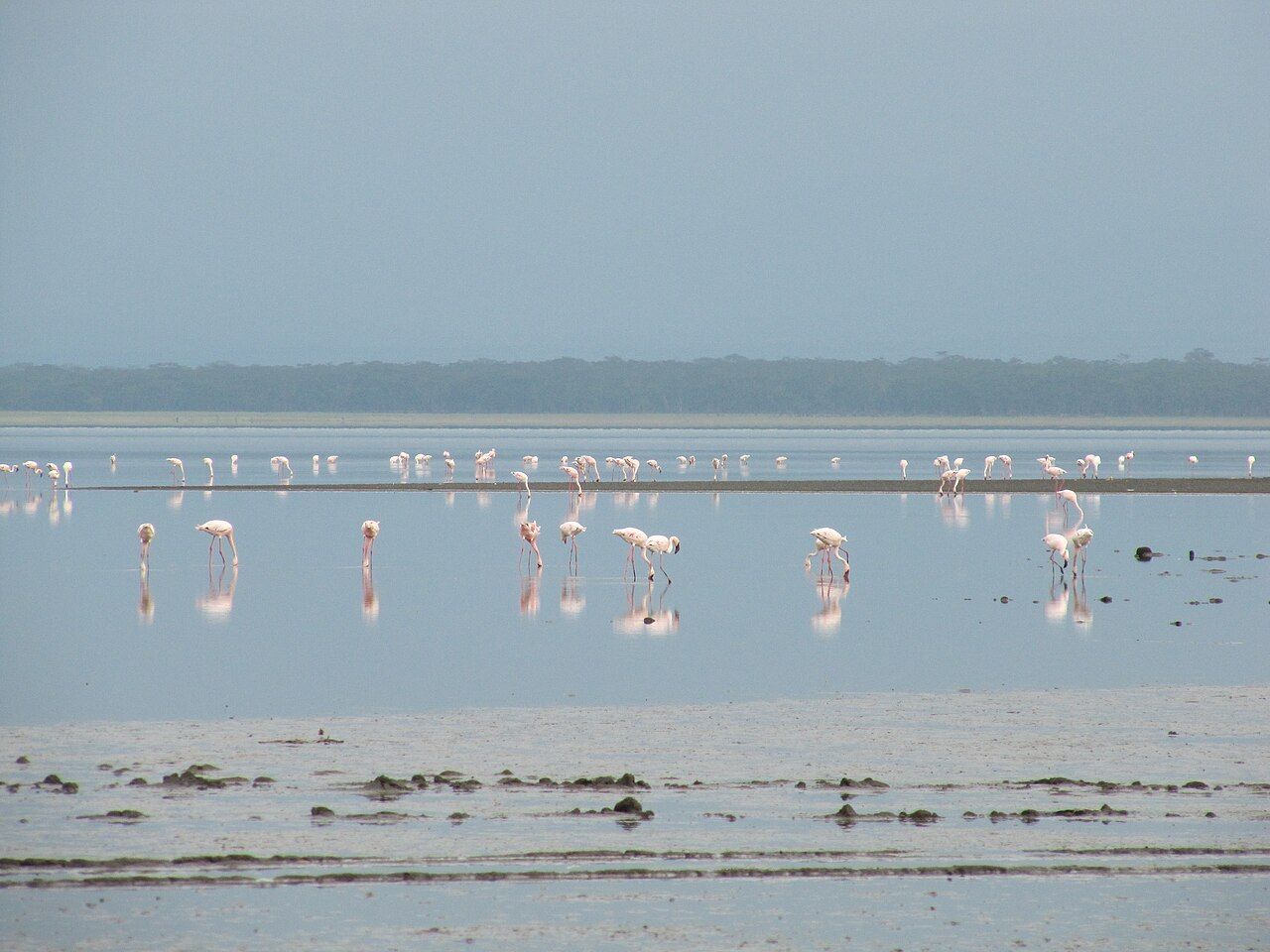
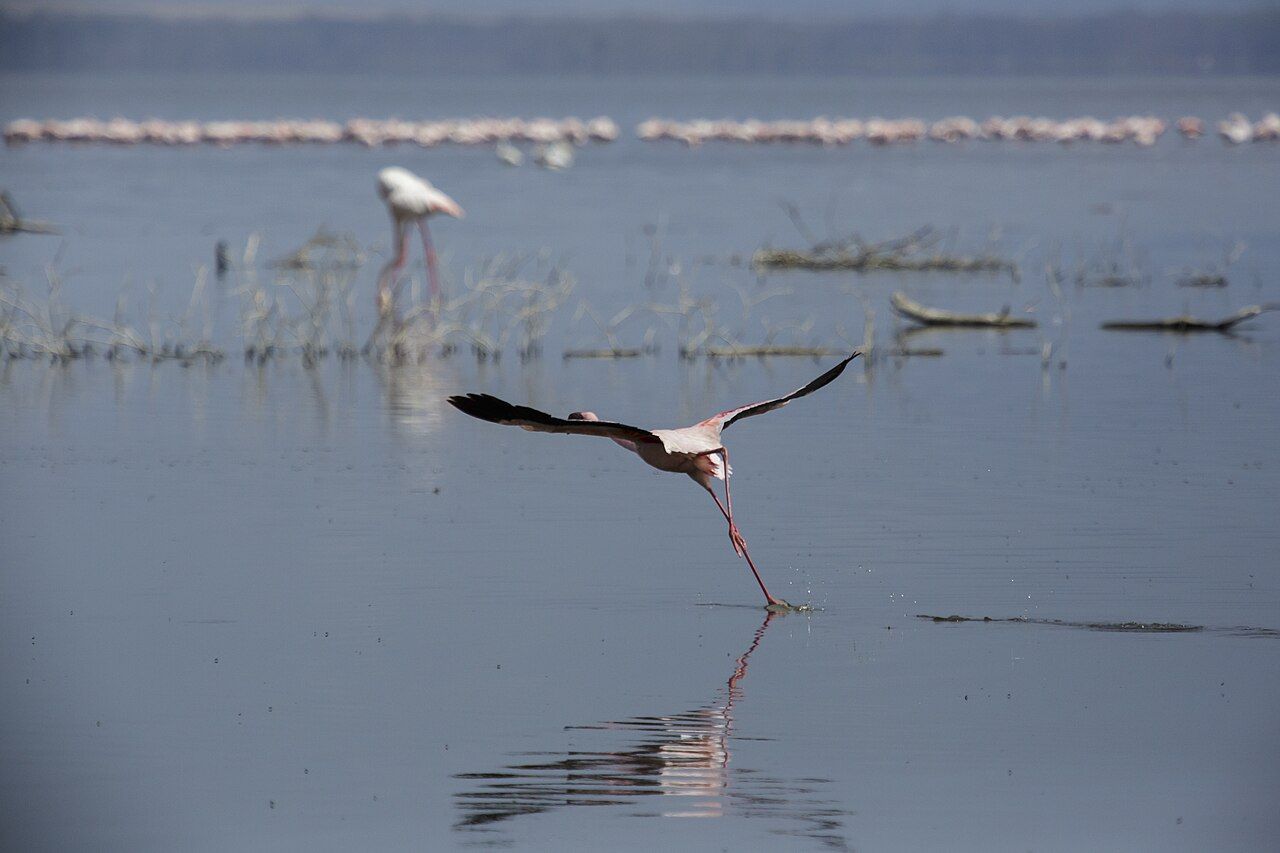
The lesser flamingos feed on the blue-green alga Arthrospira, which thrives in salty, alkaline water. Their numbers have swung from a few thousand to well over a million, depending on water levels and food. That is a rather large range for any visitor hoping for a fixed flamingo count. I find the uncertainty more interesting than a dependable pink spectacle. The lake is not obliged to arrange itself around anyone’s expectations.
From about 2010, the lake rose sharply. Shoreline woodland flooded, and the water was diluted. That matters because the flamingos depend on the conditions that support their food. It is a tidy chain of cause and consequence, except for the untidy scale of the change. Lake Nakuru’s birds are part of a system, not a permanent decoration around the edge. For a different flamingo setting, there is also flamingos breeding on salt pans.
The park’s other defining story is fenced. A rhino sanctuary was set up at Lake Nakuru in 1987, and both black and white rhinos live inside the park fence. I have a soft spot for conservation stories that do not pretend protection happens by magic. A boundary is not especially romantic; its purpose is more useful than that. Lake Nakuru’s history sits beside how white rhinos were saved, without needing to turn the fence into scenery.
Rhinos are not the only animals with a protected-population story here. Rothschild’s giraffes were brought to Lake Nakuru in 1977 to establish one. I like the fact that this detail is easy to overlook beside the lake’s more famous changes. It adds another layer to a place already asked to be bird sanctuary, national park and rhino refuge. The list is not elegant. It is, however, the point.
There are clear markers in the park’s wider geography too. Baboon Cliff gives a view over the whole lake basin; Makalia Falls lies at the southern end. Lake Nakuru was listed as a wetland of international importance in 1990. It is part of the Kenya Lake System in the Great Rift Valley, which received UNESCO World Heritage recognition in 2011. Its rhino story can also sit alongside another park restocked with rhinos.
 CC BY-SA 4.0 — Thomas Fuhrmann
The numbers: about 188 square kilometres; bird sanctuary in 1960; national park in 1968; rhino sanctuary in 1987; wetland listing in 1990; UNESCO World Heritage Site since 2011. I prefer the complicated version of Lake Nakuru.