Makgadikgadi: a lake left behind
The great pans of central Botswana are the remains of an ancient lake. In the dry season, a white crust; after good rains, flamingos.
- Country
- Botswana
- Extent
- about 16,000 sq km
- Ground
- salt pans and grassland
 CC BY-SA 4.0 — Diego Delso
“A white, flat crust that stretches to the horizon.” That is the dry-season Makgadikgadi. It is a spare description, and I like it that way. The place has no need of extra decoration.
The lake that went. The Makgadikgadi Pans are the remains of ancient Lake Makgadikgadi, which once covered much of northern Botswana. The present-day scale is easier to take in as a number than as a view. I prefer the view.
Two large pans. Sowa Pan and Ntwetwe Pan are the largest. Their names make a tidy pair; the landscape itself is less interested in tidiness. The dry-season crust is flat and white, with the horizon doing a lot of work.
Water, briefly. After good rains, Sowa Pan floods and becomes a breeding ground for tens of thousands of flamingos. The change from salt pan to breeding ground is the part I find hardest to picture, which is probably a failure of imagination rather than of the place. For another lake and its flamingos, there is a soda lake full of flamingos.
Grassland movement. One of southern Africa’s largest zebra migrations moves between the Boteti River and the Makgadikgadi grasslands. The pans are not only the white, open part of the story. Grassland has its own claim on the map.
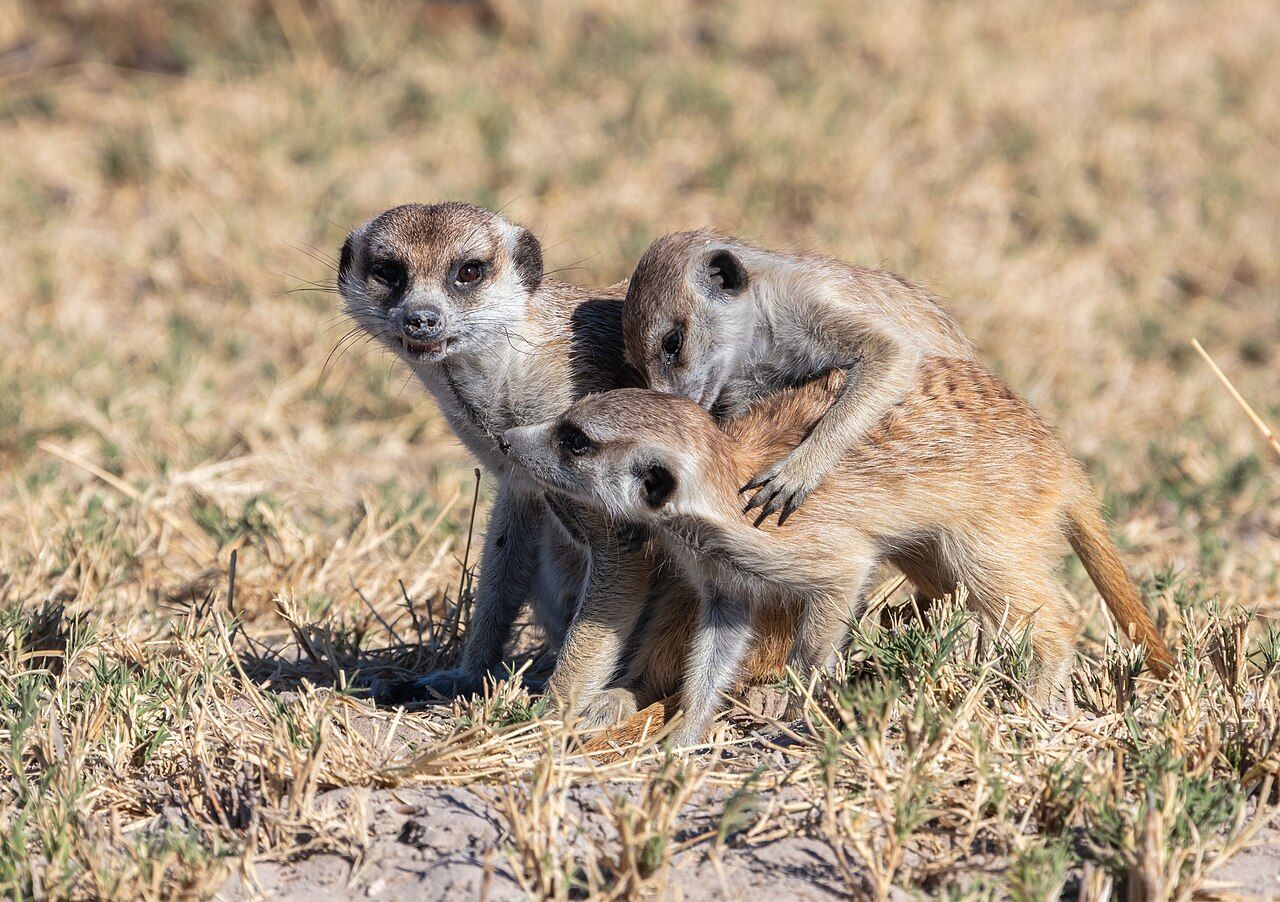
Edges count. Brown hyenas and meerkats live on the pan edges. I like that the account does not stop at the great flat centre. A pan, after all, has edges whether or not the view encourages anyone to look for them.
Older traces. Stone tools from the Stone Age have been found around the old shorelines. The lake is gone; traces of people remain around where its shores once were. It is a quieter detail than flamingos, but it stays with me longer.
Protected ground. Makgadikgadi Pans National Park and Nxai Pan National Park protect parts of the pans and grassland. For a neighbouring story of baobabs, I would turn to the baobab island.
For another great white landscape, there is Namibia's great white place. The numbers: about 16,000 square kilometres; salt pans and grassland.