Operation Rhino: from iMfolozi to beyond
In iMfolozi, a few dozen southern white rhinos became the beginning of a translocation effort that reached parks across southern Africa and beyond.
- Country
- South Africa
- Extent
- about 960 sq km
- Ground
- hilly savanna and river valleys
 CC BY-SA 4.0 — Bernard Gagnon
“a few dozen animals”
A small beginning
At the close of the 19th century, the southern white rhino had been reduced to perhaps a few dozen animals, mostly in the iMfolozi area. That is the scale this story begins with: not a broad population spread across a region, but a remnant in one corner of Zululand. I find the phrase “a few dozen” hard to read without pausing over how little room it leaves for confidence. The rest of the story is not a sudden rescue, but a deliberate attempt to make that surviving group count far beyond its original home.
The place behind the name
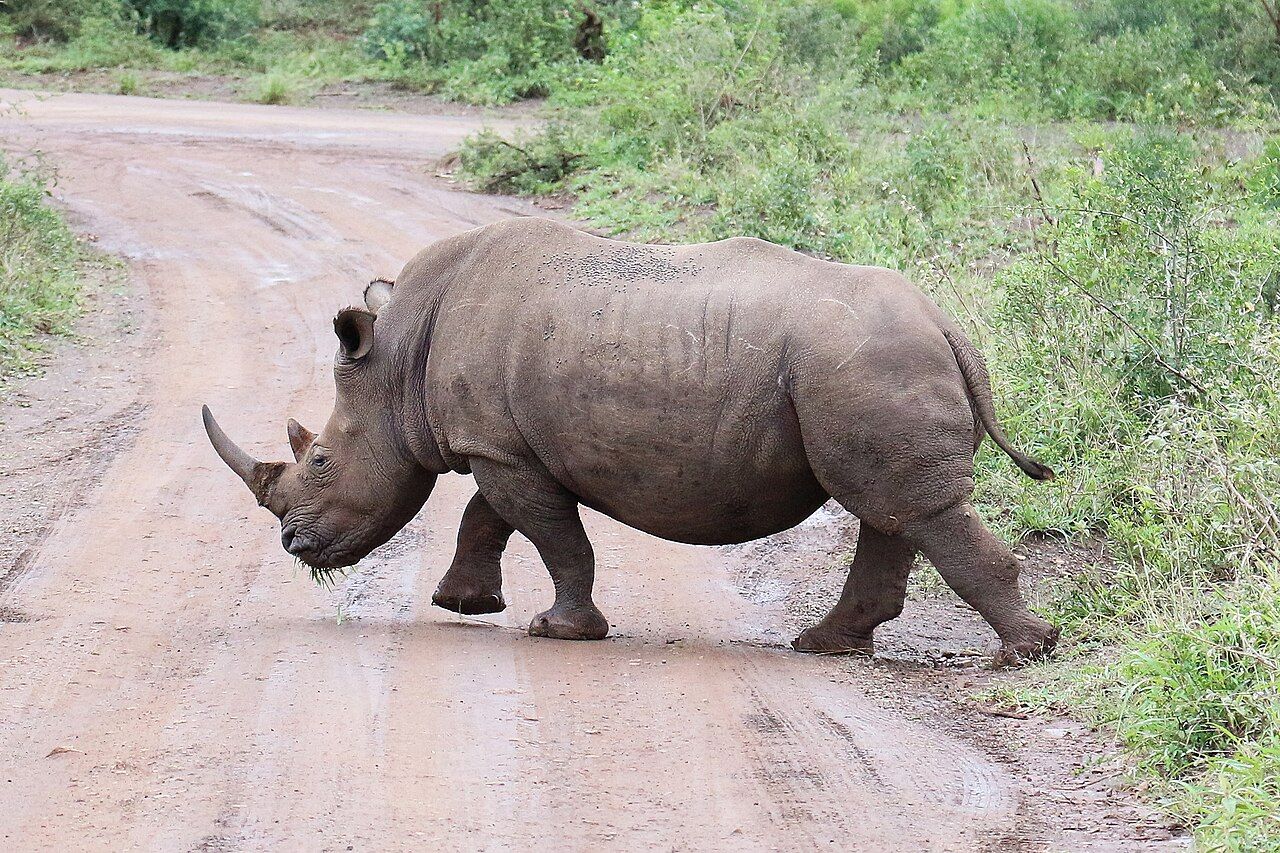
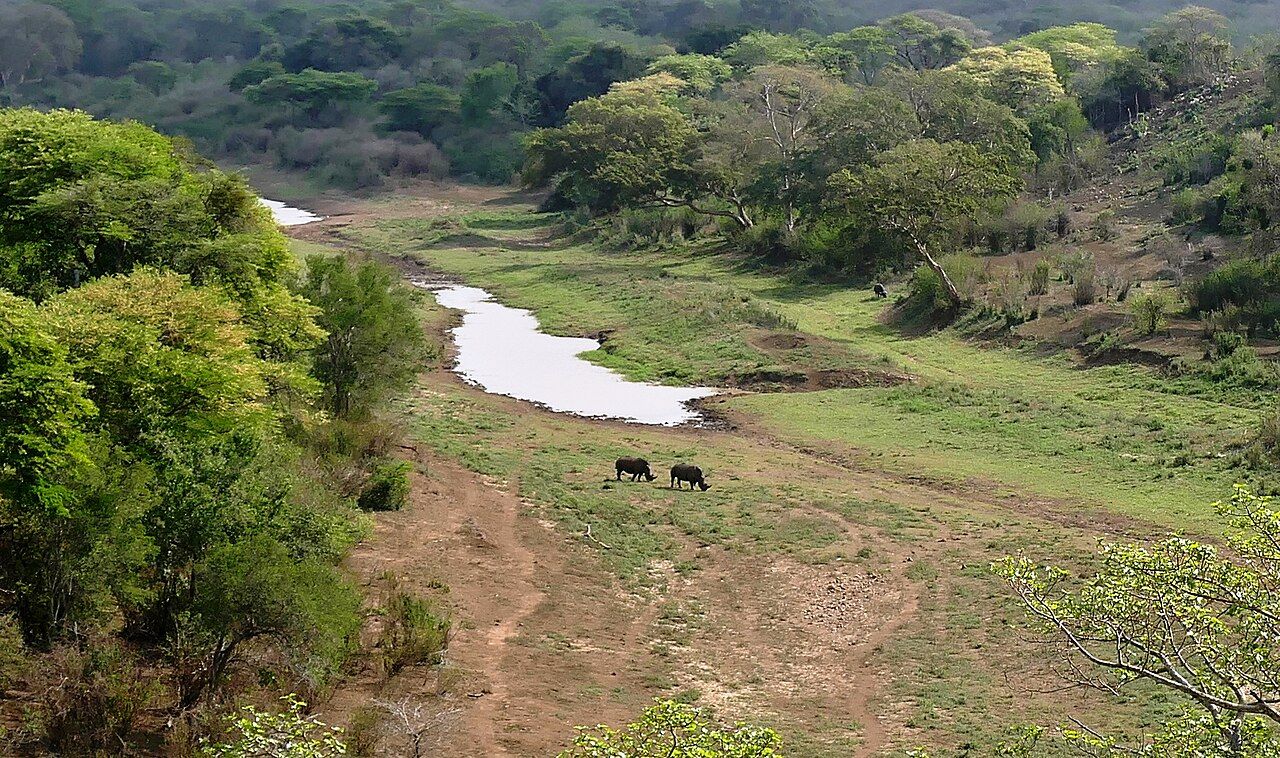
Hluhluwe and iMfolozi game reserves were proclaimed in 1895, among the oldest proclaimed reserves in Africa. Today, Hluhluwe-iMfolozi Park covers about 960 square kilometres in KwaZulu-Natal. Its terrain is hilly savanna and river valleys, a plain description that feels more useful than pretending a landscape is just a backdrop. The area was also a royal hunting area of the Zulu kingdom under King Shaka. Those layers sit alongside the rhino story, rather than tidily leading to it. Conservation history rarely arrives with a neat beginning attached.
A name with a dispute attached
Even the animal’s name carries a small argument. One explanation traces the name white rhino to the Dutch or Afrikaans word for wide, describing its square mouth, though that explanation is disputed. The useful distinction is in what that mouth does: the white rhino is a grazer with a broad, square lip, while the black rhino is a browser with a pointed, hooked lip. I like a detail that makes the difference plain without asking for a grand speech. A mouth, a feeding habit, and a name whose origin is not settled. Nature has not promised a tidy label.
Operation Rhino begins
Operation Rhino began in the early 1960s, with a clear purpose: move white rhinos from iMfolozi to other parks and reserves. The ranger Ian Player led the operation with his mentor and colleague Magqubu Ntombela. That pairing belongs in the account. The work was not simply a matter of deciding that animals should go elsewhere; the move itself had to be made possible. I find the scale of that reversal difficult to hold in the mind. A few dozen animals, mostly in iMfolozi, becoming the starting point for a project that would carry rhinos well beyond it.
Learning how to move them
The teams developed drug darts and transport methods that are still the basis of rhino translocation. It is a practical legacy, and perhaps less theatrical than the name Operation Rhino suggests. But methods matter. Without a way to move animals, the ambition to establish them in other parks would remain only an ambition. Here, ingenuity is not an ornamental part of the tale; it is the means by which the tale could travel. I have little patience for accounts that make conservation sound like a single brave decision. This was also about working out how to do the difficult thing, then making that knowledge usable again.
From one reserve to many
White rhinos from iMfolozi were used to restock Kruger National Park and parks across southern Africa and beyond. The phrase “and beyond” does a lot of work, but it is accurate to the reach of the effort. The animals did not remain a story about one reserve. They became part of restocking elsewhere, while iMfolozi remained the place from which the operation began. For me, that is the striking shape of Operation Rhino: a local population at risk, and methods developed there that helped carry rhinos into other parks. The map widens; the origin stays put.
The map widens; the origin stays put.
The scale of the return
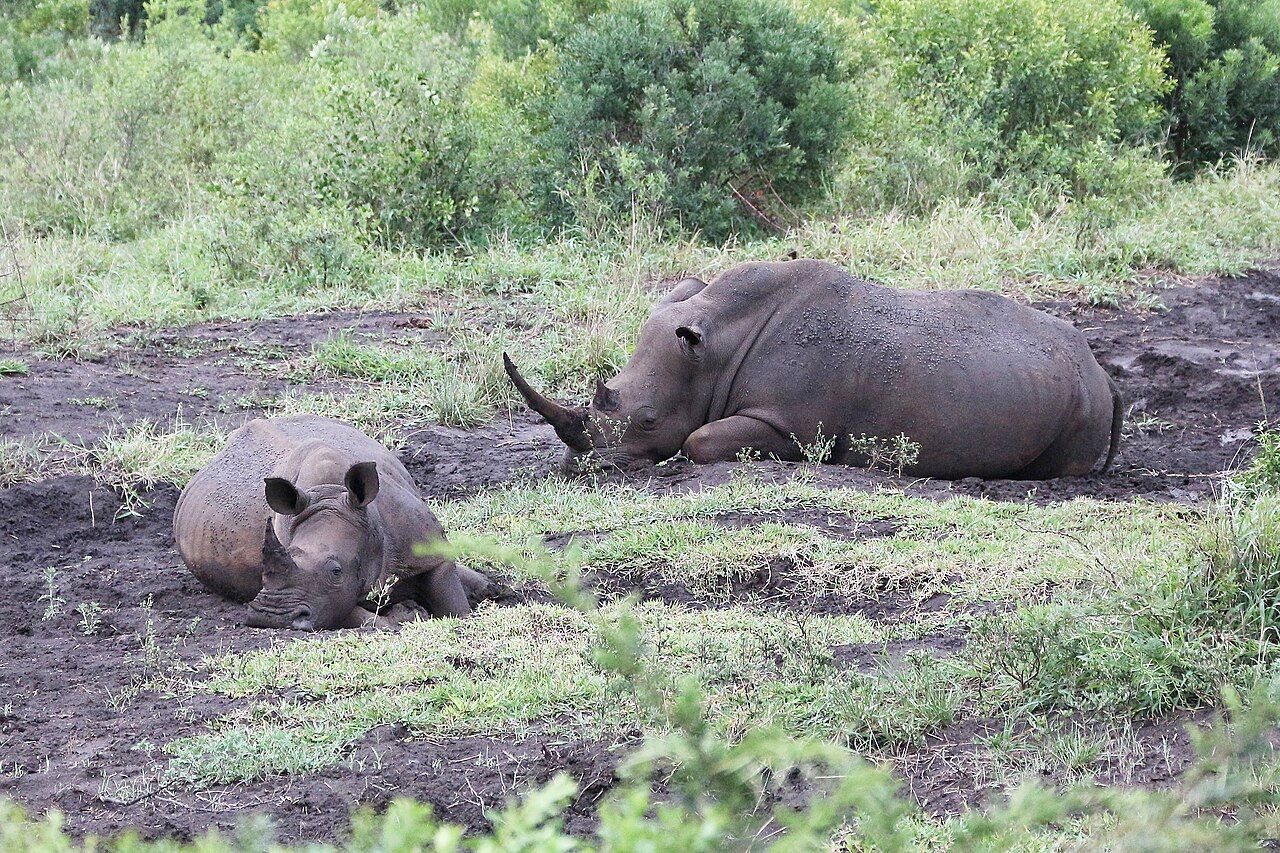
There were around 16,000 southern white rhinos in Africa in the early 2020s. Set beside the few dozen animals in iMfolozi at the close of the 19th century, that number gives the story its astonishing turn. It does not make the earlier danger less real, or turn the operation into a simple ending. It does show why the work of moving animals and developing methods deserves space in the account. Hluhluwe-iMfolozi Park is managed by Ezemvelo KZN Wildlife, the provincial conservation body. I would rather remember the achievement as a sequence of practical decisions than as a miracle. The former gives credit where it belongs.
 CC BY-SA 4.0 — Bernard Gagnon
For another view of the park, I would read about roadless wilderness inside the park roadless wilderness inside the park.
 CC BY-SA 2.0 — Bernard DUPONT from FRANCE
The name debate has its own useful comparison in a Rift Valley rhino refuge, while a different conservation history sits in the elephant poaching years.
The numbers: 1895; about 960 square kilometres; early 1960s.