The rhythm of a game drive
A day on the tracks is arranged around cooler hours, resting predators and park rules. The Swahili names add their own small rhythm to the road.
- Country
- Kenya / East Africa
- Ground
- tracks across grassland
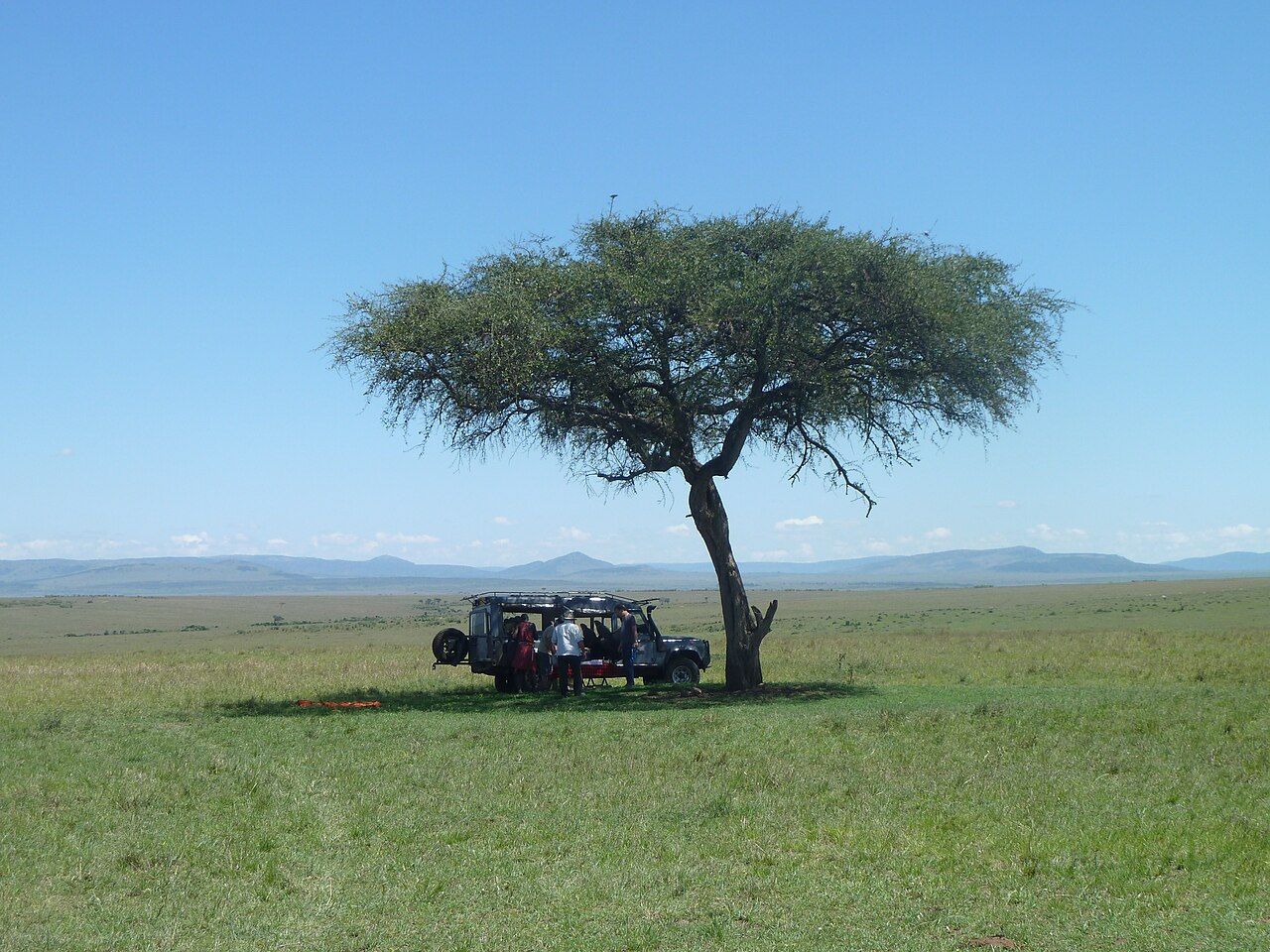 CC BY 3.0 — Toppazz
“Journey.”
That is the Swahili meaning of safari, a word Swahili took from the Arabic safar. A game-drive day does have the shape of a journey, though the schedule is less mysterious than the name. It usually begins around dawn, when animals are active in the cooler hours. I like a plan that admits the weather has a vote.
The vehicle is part of the day’s grammar. In East Africa, vehicles often have a pop-up roof; open-sided vehicles are common in southern Africa. I find the distinction more useful than grand claims about the drive. The roof tells you something about the kind of vehicle; the tracks tell you where it may go.
In Kenya’s national parks and reserves, vehicles are normally required to stay on marked tracks. Across grassland, that makes the route a plain fact rather than a suggestion. Night drives are generally not permitted inside those parks and reserves, so the day does not simply extend into darkness. The rules set a boundary. A safari, it turns out, is also a journey with limits.
Through the heat of the day, many large predators rest in shade. Then comes the late afternoon drive, again in the cooler hours when most animals are active. Drivers often look for vultures, alarm calls and grazers all staring the same way. I like this as a piece of field logic: not a promise of a sighting, just several signs pointing in one direction.
The road carries a small Swahili vocabulary with it. A lion is simba, an elephant tembo, a giraffe twiga and a leopard chui. A buffalo is nyati; a hippo is kiboko. Names are easier to keep in the head when they belong to animals the road might bring into view. The day has its own vocabulary too: dawn, heat, shade, late afternoon.
The numbers: drives usually start around dawn and again in the late afternoon; vehicles stay on marked tracks in Kenya’s national parks and reserves; night drives are generally not permitted there.
For a different pace, I’d read about going on foot instead; the wider calendar has its own rhythm in how rain sets the year, while gliding the Delta by dugout changes the mode of travel altogether.