The Maasai and their cattle country
Cattle, age sets, homesteads and shared land: a closer look at Maasai life across southern Kenya and northern Tanzania, without turning people into scenery.
- Country
- Kenya / Tanzania
- Ground
- plains and pastures
 CC BY-SA 4.0 — Erasmus Kamugisha
“Cattle: wealth and food.”
I keep returning to that plain pairing. Cattle are at the centre of Maasai life: counted as wealth, and as food. They provide milk; at ceremonies, meat and blood. It is an account of value with no need for decoration. I like that. It puts the animal, and the relationship around it, ahead of the familiar picture of a red cloth against open country.
The Maasai are a Nilotic people living in southern Kenya and northern Tanzania. Their language is Maa, also spoken in related forms by the Samburu and other groups. The connection with their northern Maa-speaking cousins is a reminder that language does not stop neatly at the edges of a single people. Nor should a short description pretend that it does.
Maasai society is organised by age sets. Young men pass through the stage of warriors, called ilmurran; the Eunoto ceremony marks their passage into senior status. Those names carry more weight than a tidy caption can hold. Still, I prefer a caption that says what it knows, rather than one that makes a whole society sound like a performance for passing eyes.
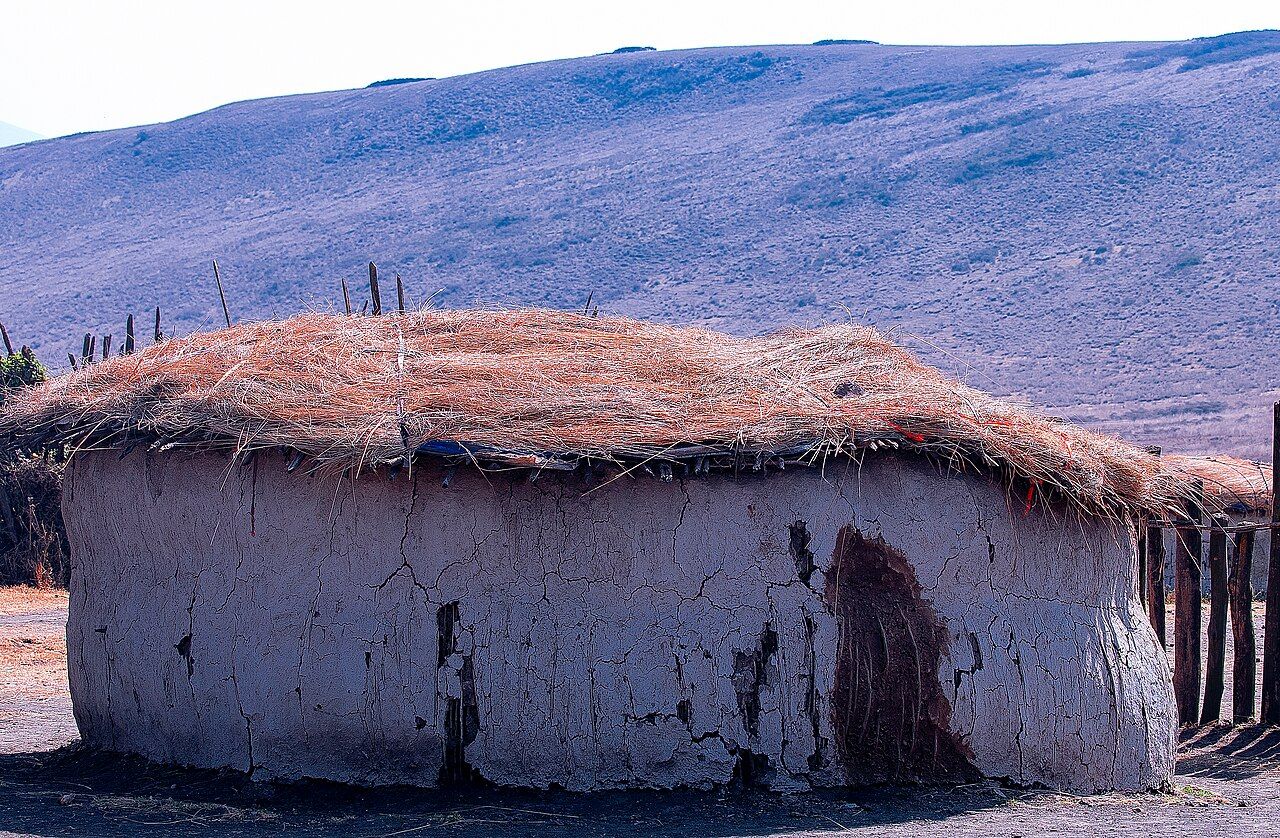
An enkang, a Maasai homestead, is a ring of houses inside a thorn fence. The fence protects cattle at night. Traditionally, women build the houses from poles, mud and cattle dung. There is a pleasing directness to the description: materials, labour, purpose. No need to turn a working home into scenery just because it can be described in a sentence.
The checked red cloth called shuka has been a widely recognised part of Maasai dress since the 20th century. Recognised, though, is not the same as understood. I find it useful to hold both facts together: the cloth is familiar to many people, and it belongs to a culture whose language, ceremonies and cattle life cannot be reduced to a single visible detail.
Land is part of this account too. Treaties made in 1904 and 1911 under British rule moved many Maasai off the central Rift Valley highlands. That history sits uneasily beside the neat idea of a landscape that simply continues unchanged. It also gives context to references to Maasai grazing in the highlands: land is not a backdrop, and grazing is not a decorative detail.
Next to the Mara reserve, many Maasai landowners have pooled their land into wildlife conservancies since the early 2000s. The conservancies pay them lease income. That arrangement makes the relationship between people and wildlife something lived through land and livelihood, not just a pleasing view. I would rather start there than treat wildlife as if it were the only subject in the frame.
There is a link to follow in the reserve named after them, but the people behind the name deserve more than a scenic aside. Cattle, language, age sets, homes and land all belong in the telling. Leave one out and the picture gets simpler. Usually too simple, which is a very convenient sort of wrong.
The numbers: 1904 and 1911; the early 2000s. Land is not a side note.