Amboseli’s elephants, known one by one
A long-running study follows individual elephant families beneath Kilimanjaro, while groundwater-fed swamps give the story its setting and its staying power.
- Country
- Kenya
- Extent
- about 392 sq km
- Ground
- swamps and dry lake bed under Kilimanjaro
 CC BY-SA 4.0 — Lafleursauvage
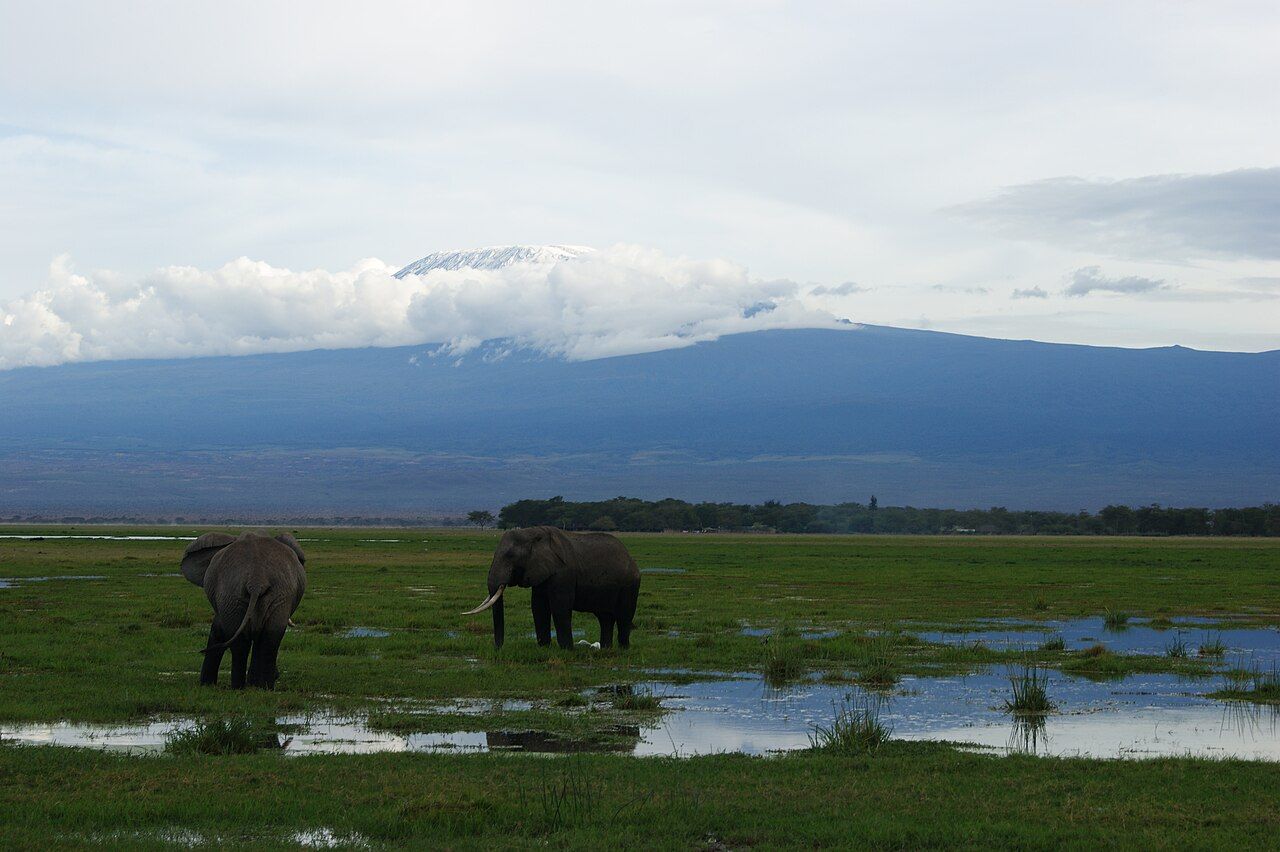
I have a weakness for places that refuse to be just a view. Amboseli has Kilimanjaro rising over it, open plains, and swamps that hold the elephants in the story even when the lake is dry. The name comes from a Maa word meaning ‘salty dust’. A tidy name for a landscape that is not especially interested in being tidy.
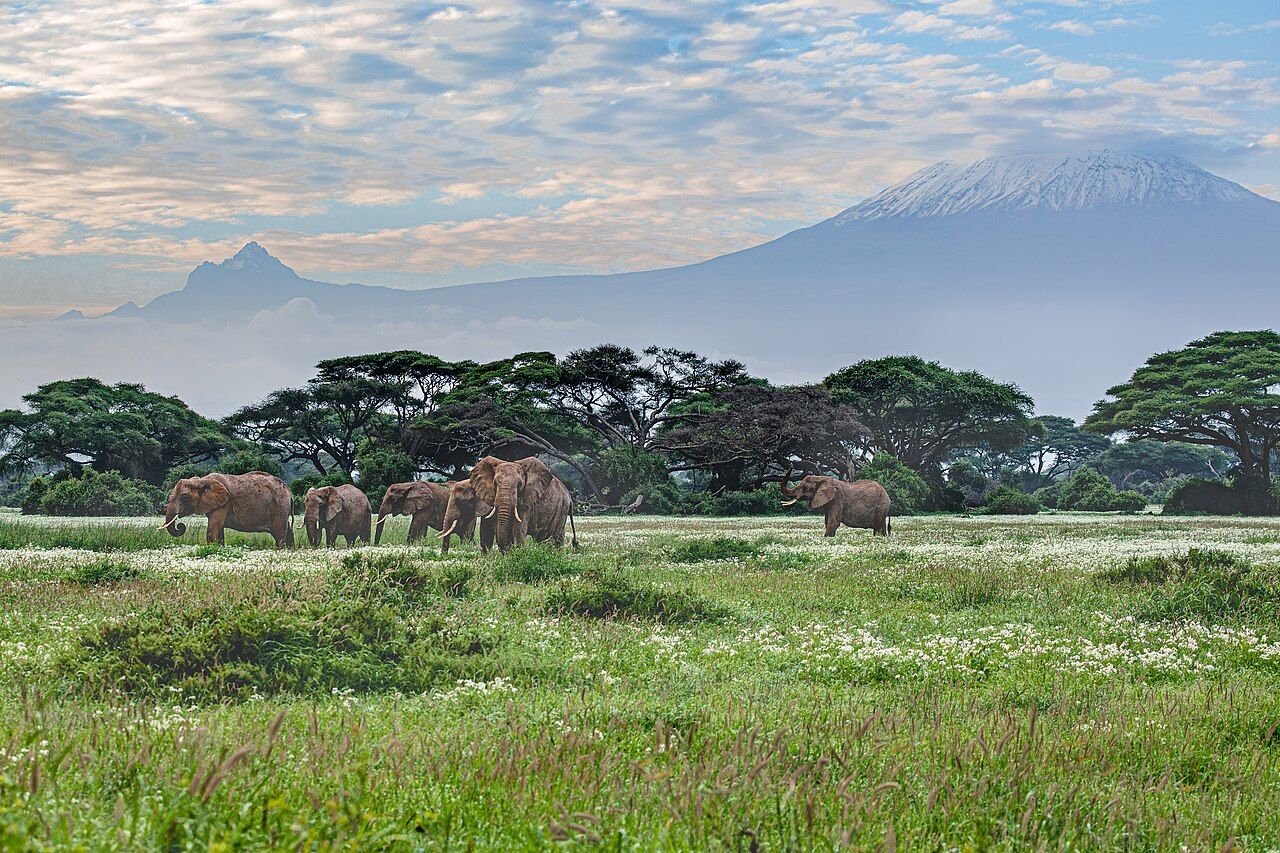
The pull of Amboseli, for me, is that its elephants are not simply a moving crowd. They have been followed as individuals, within families, for decades. That changes the scale of the place. The mountain may take the eye; the elephants make it stay.
 CC BY 4.0 — Ninaras
The mountain may take the eye; the elephants make it stay.
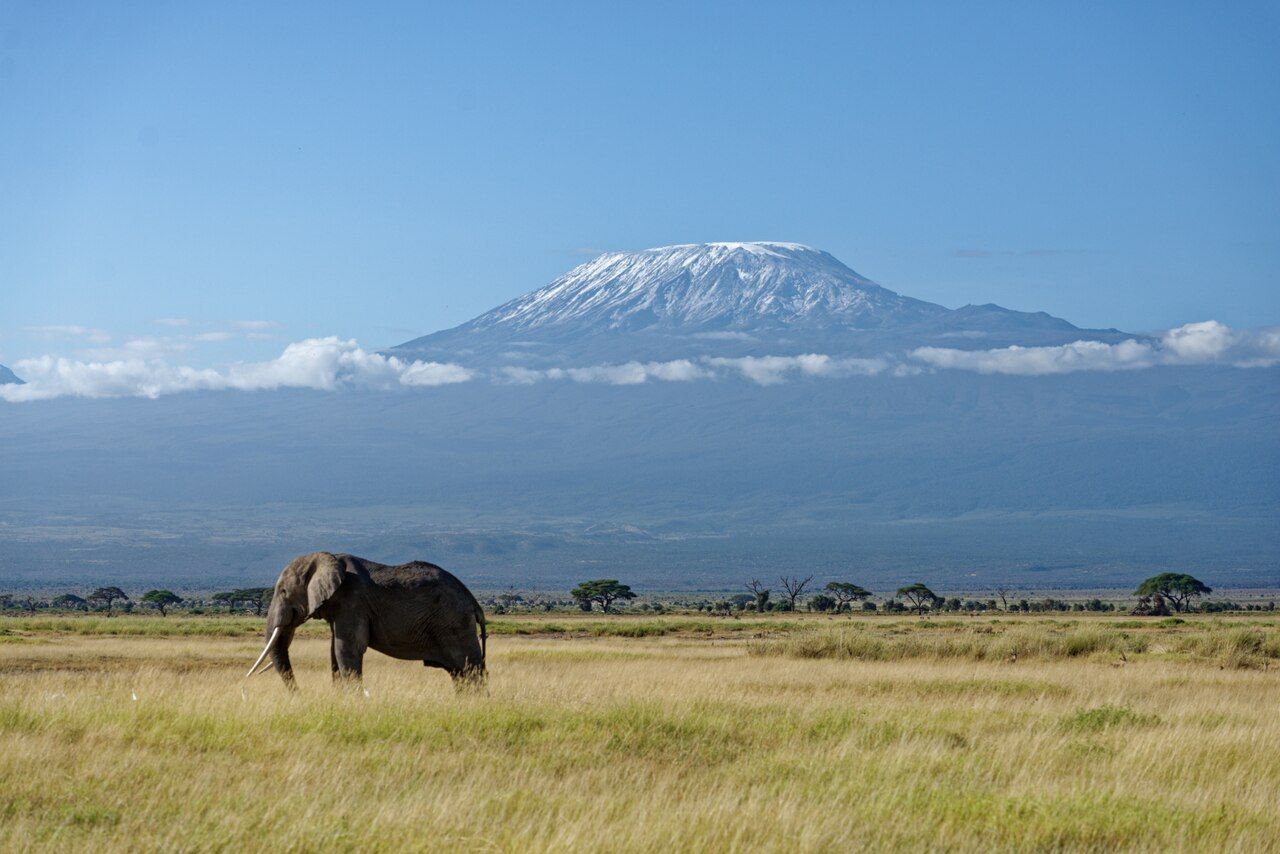
A place with a long view. Amboseli National Park covers about 392 square kilometres in Kajiado County, Kenya. Kilimanjaro, 5,895 m high and just across the border in Tanzania, rises over the park to the south. The scale sounds grand; the park itself is a defined patch of swamps and dry lake bed beneath the mountain. I like that contrast. The great landmark is not the whole story, and the small area does not make the elephants feel like passing extras. It gives the study a place to keep returning to, and a landscape that has more than one mood.
A study that stayed. The Amboseli Elephant Research Project began in 1972, started by Cynthia Moss and Harvey Croze. It has followed several thousand individual elephants, making it the longest-running study of wild elephants. That is a lot of attention paid to animals who do not arrange themselves into neat chapters for anyone. The point is not merely to count them, but to know them as individuals. I find that a more absorbing kind of record: less grand tally, more accumulated familiarity. It also means Amboseli is not just a place where elephants are seen. It is a place where their lives have been followed over time.
Names that carry a life. The matriarch known as Echo was studied for decades and died in 2009. There is something quietly arresting about that span: a name becoming attached to a life observed over and over, rather than a single sighting. It makes the elephants harder to flatten into a scenic herd, which is an easy habit when the landscape is doing so much of the showing off. The detail that matters is not that Echo was famous; it is that the research kept track of her as an individual. I would rather have that kind of attention than another sweeping adjective.
And a tusker called Tim. The great tusker Tim, whose tusks nearly touched the ground, died of natural causes in 2020. Even in a sentence, those tusks are difficult to ignore. So is the plainness of the ending. Tim is not just a description of size, and the story does not need to make his death into a fable. He was an individual in a population that has been studied closely, with his own place in the record. I like that the facts leave room for a reaction without insisting on one. The elephants are not symbols waiting for a visitor to supply a meaning; they are animals with histories.
Water that comes from elsewhere. The swamps of Amboseli, including Enkongo Narok and Longinye, are fed by groundwater that seeps from Kilimanjaro. The mountain and the wet ground are connected, though they do not look like they ought to be having a conversation. The swamps are a practical part of the elephant story: they keep water in the landscape beneath a dry lake bed. The lake, on the park’s western side, is dry most of the year and fills only after heavy rains. This is not a setting built around one permanent sheet of water. I find the groundwater detail more compelling than any postcard version of the place. The swamp is not scenery; it is the reason the story holds together.
A view, then the details. From the top of Observation Hill, the park’s swamps and open plains spread out below. It is an appealing view, but the project is what gives the panorama its human-sized measure: several thousand individual elephants, followed rather than simply gathered into one impressive total. That way of looking makes me think of Tanzania's dry-season elephant gatherings, though Amboseli’s story is particularly rooted in these families and these swamps. There are other elephant stories too, including largest elephant population on earth and Kenya's other great elephant range. I like the reminder that one landscape cannot stand in for all the others.
The record has hard years in it. Amboseli was made a national park in 1974 and a UNESCO biosphere reserve in 1991. Those designations sit alongside a less ceremonial fact: the severe drought of 2009 killed a large share of the park’s wildebeest and zebra and several hundred elephants. There is no useful way to make that sound gentle. It is a part of the place’s history, and the long-running study gives it weight beyond a passing mention. The wider history of elephants includes the year ivory was set alight, but here I keep coming back to the families followed over time. Records are not a cure for loss. They do make it harder to look away from what happened.
 CC BY-SA 4.0 — Fernando Anuang'a
The numbers: about 392 square kilometres; research began in 1972.
For me, the elephants are the reason to look beyond the mountain.