The mokoro and the Delta’s channels
A water-level view of the Okavango mokoro: BaYei history, changing materials, the poler’s ngashi and the small life along the channels.
- Country
- Botswana
- Ground
- shallow channels, reeds and lagoons
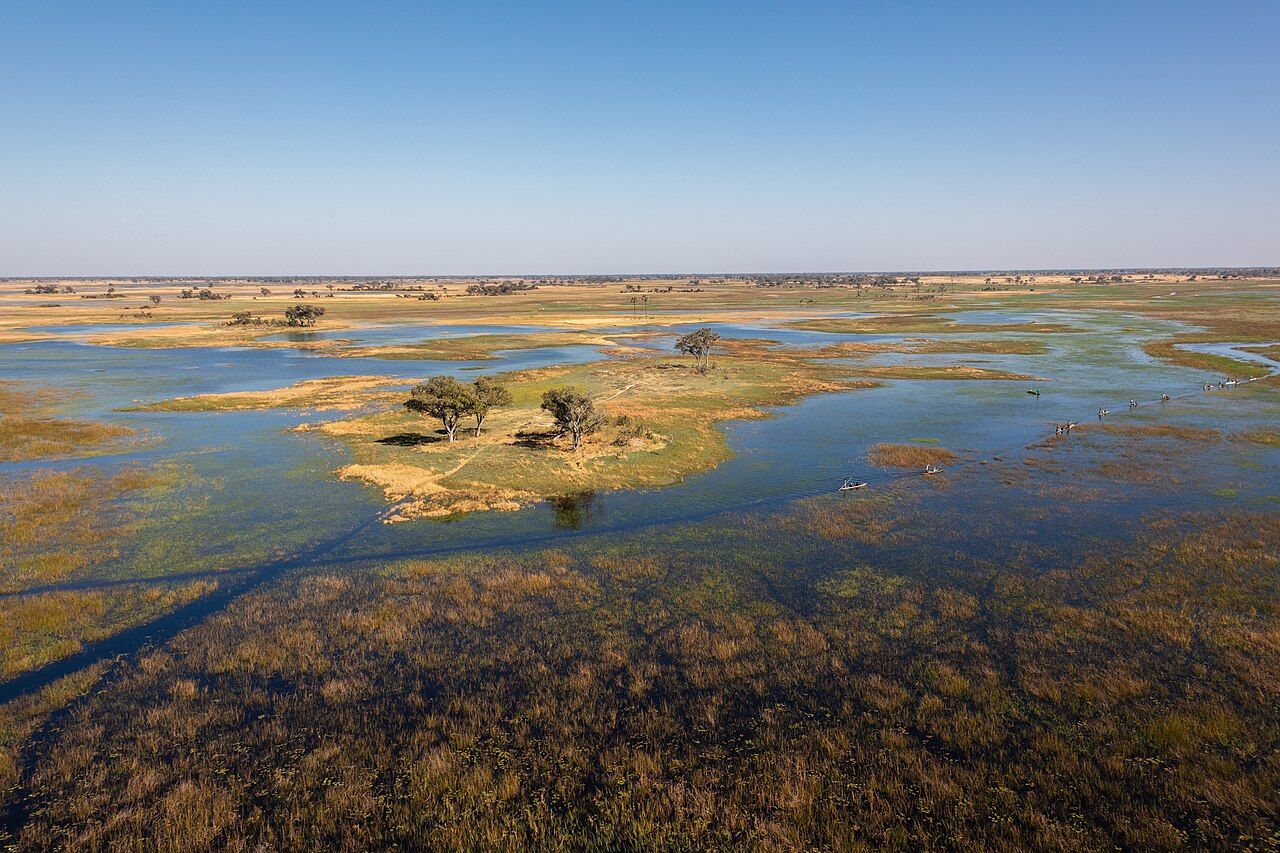 CC BY-SA 4.0 — Diego Delso
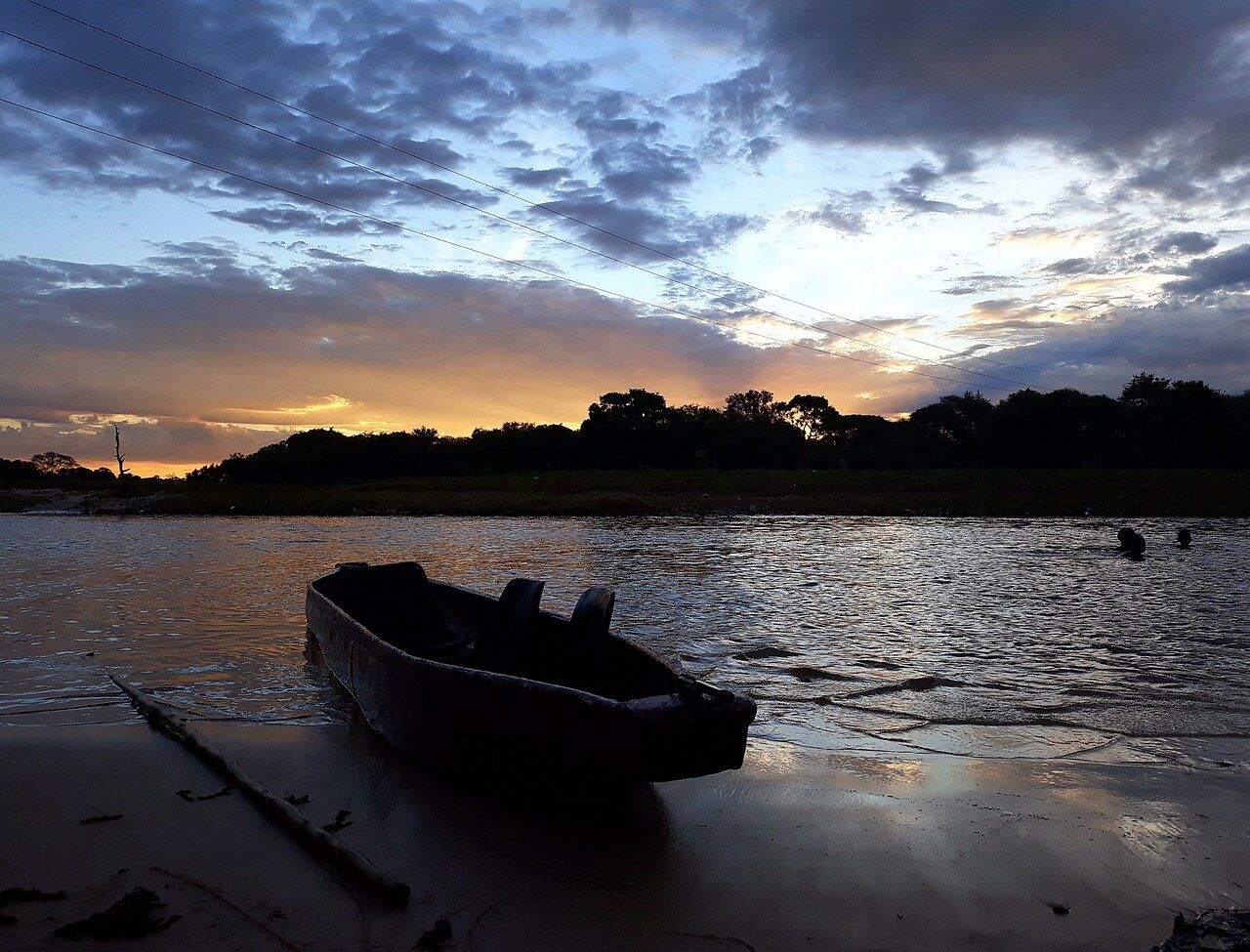
“Mokoro” is singular; “mekoro” is plural. A neat little distinction for a dugout canoe that brings the Delta into view at water level. I like the word’s tidy usefulness. One canoe, then many. The channels, meanwhile, are not obliged to be tidy.
The mokoro is a dugout canoe of the Okavango Delta. Its history here begins with the BaYei people, who came from the north in the 18th century and introduced it to the Delta. That is a clear beginning, though the view from a mokoro is less interested in beginnings than in what lies along the channel. The wider rhythm of the place sits in the yearly Okavango flood, a useful thought to keep alongside this small, close way of seeing it.
Traditionally, mekoro were carved from the trunks of large trees: jackalberry, sausage tree or kiaat. There is something direct about a boat made from a tree trunk. Also something that asks a great deal of the tree. Since the 1990s, many mekoro have been made of fibreglass to spare the Delta’s large trees. I like that the change is practical rather than grand. The craft remains a mokoro; the material has changed.
The poler stands at the back and pushes the mokoro along with a long pole called an ngashi. I picture the movement as a quiet conversation between pole, shallow channel and the person doing the work. The passenger gets the view; the poler gets the job of carrying that view forward. There is no need to make a grand comparison, though paddling on the Zambezi does make the mind wander briefly to other ways of moving by water.
Some channels used by mekoro are first opened by hippos moving between pools. That detail has stayed with me. A route through the reeds can begin with an animal making its way between pools, rather than with a tidy line on a map. The mokoro follows the shallow channels that are there. I find this more appealing than a landscape arranged to make itself easy to explain. The Delta is not a diagram, however useful diagrams may be.
Painted reed frogs, often no more than 3 cm long, cling to reeds along the channels. From water level, a small creature on a reed has a fair chance of becoming the whole subject. I like the change in scale: the wide channel, the reeds, then a frog small enough to make looking closely feel like a sensible use of time. This is not a grand sighting. It does not need to be. The detail is the point.
Day water lilies and night-flowering water lilies both grow in the Delta’s shallow lagoons. The African jacana walks on floating lily pads on its very long toes. In the permanent swamps, papyrus can stand 3 to 5 m tall. That is a generous cast for a quiet channel-side view: lilies at the surface, a bird walking across them, and papyrus rising beyond. I would take this close attention over the vehicle way of seeing animals when the subject is the channel itself.
 CC BY-SA 4.0 — Mmuso Nare
The numbers: the BaYei came in the 18th century; many mekoro have been made of fibreglass since the 1990s; painted reed frogs are often no more than 3 cm long; papyrus can stand 3 to 5 m tall.
A mokoro makes the small details hard to ignore, which is exactly the point.