Inside Ngorongoro, a crater with a life beyond its rim
A crater floor far below a cool, misty rim, with wildlife below and a much larger multiple-use conservation area beyond its edge.
- Country
- Tanzania
- Extent
- about 260 sq km (crater floor)
- Ground
- volcanic caldera with lake, swamp and grass
 CC BY-SA 4.0 — Erasmus Kamugisha
“The Ngorongoro Crater is a caldera formed when a large volcano collapsed about 2 to 3 million years ago.”
Morning at the rim
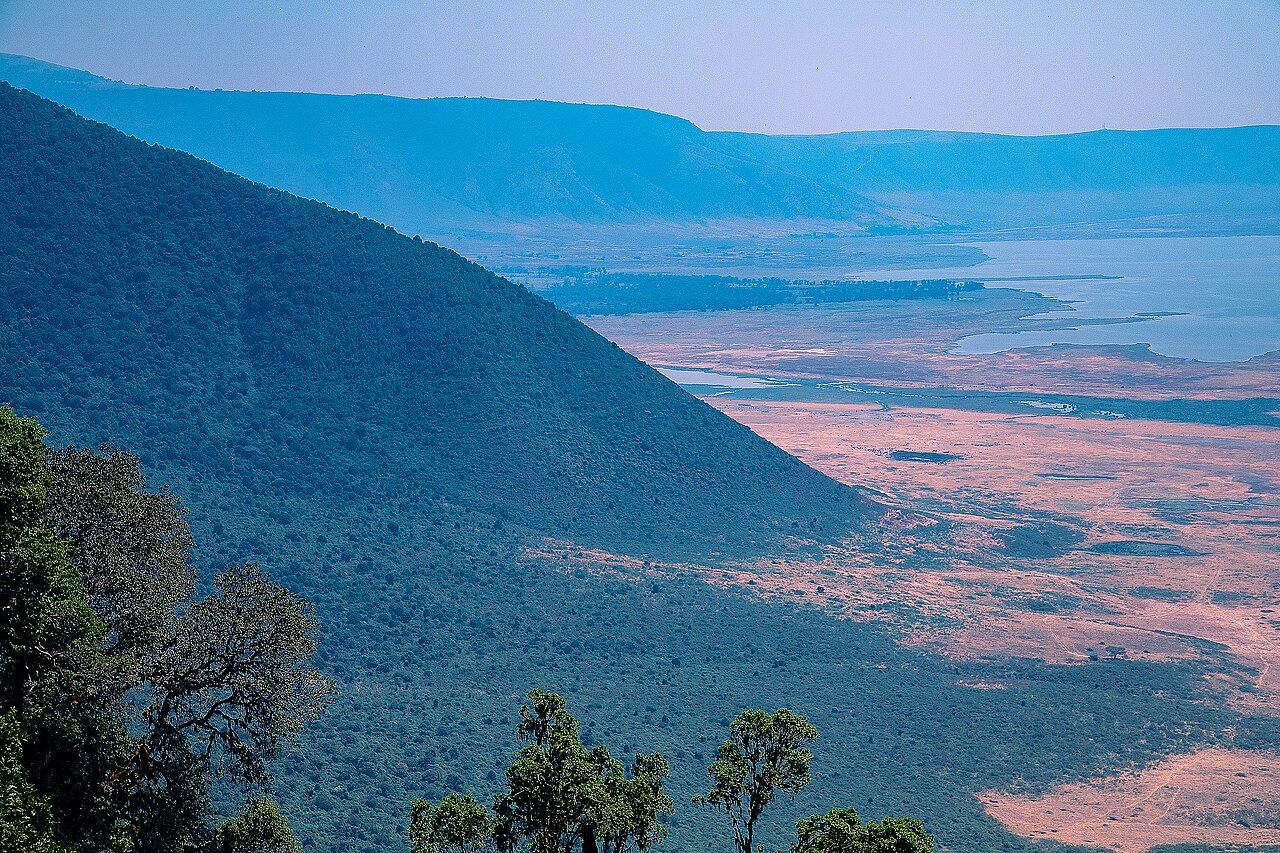
The rim is often cool and misty. I like that as an introduction: a little restraint before the crater opens below. The floor lies about 600 m beneath the rim, a change in level that makes inside feel less like a figure of speech and more like a way of arranging the day. The basin is closed by its own shape. Not by its history, or by the life around it.
The caldera formed when a large volcano collapsed about 2 to 3 million years ago. That is a difficult amount of time to hold in mind while looking at a landscape, so I settle for the simpler fact: the ground here is the aftermath of something enormous. Ngorongoro is commonly called the world's largest unbroken, unflooded volcanic caldera. A grand claim, and a suitably grand rim to contain it.
I find the word unbroken especially useful. It gives the crater a clear boundary without making it sound like an empty bowl. The floor covers about 260 square kilometres. Lake, swamp and grass occupy that space, each giving the idea of a single, sealed place a few qualifications. The crater is enclosed. It is not one thing.
A crater can feel closed without being empty of argument.
A crater can feel closed without being empty of argument.
Down on the floor
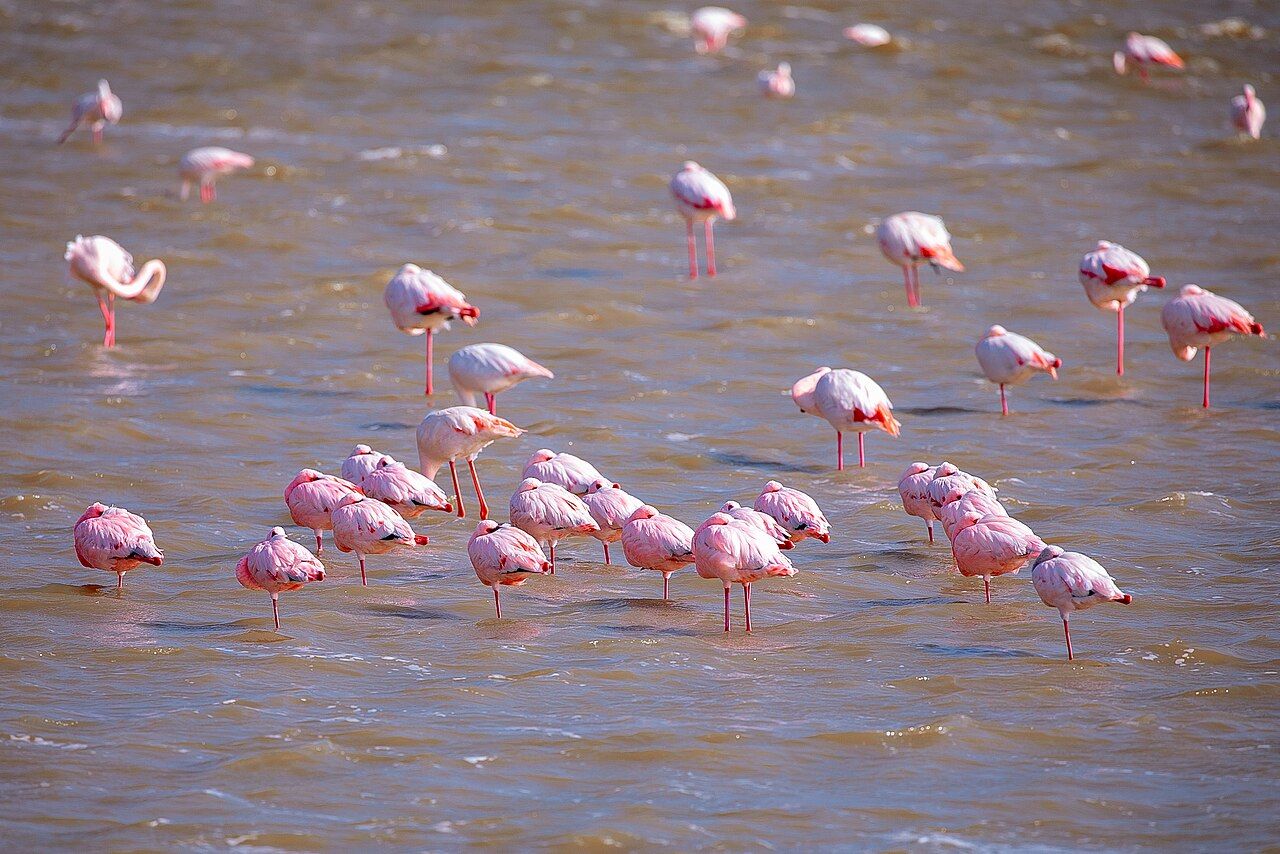
By the time I turn my thoughts to the floor, the scale has changed. Lake Magadi is a shallow soda lake, and it often holds flamingos. The word often is doing honest work there. Nothing in this basin needs to perform on cue for the place to make sense. Lake, grass and swamp are enough to explain why closed world is only a beginning, not a full description.
The Lerai Forest is made up mainly of yellow-barked fever trees. I like the specificity of that detail. A forest on a crater floor might sound like a grand category; yellow bark brings it down to something particular. The floor is not only a broad sweep of grassland, and the crater is not merely a geological shape with wildlife added as decoration.
Ngorongoro’s crater floor is among the rare Tanzanian places where black rhinos can be seen on open grassland. That feels like a strong reason to keep the word open in the sentence. Then there are the absences. Giraffes are absent from the crater floor. I have a soft spot for a destination that does not supply every familiar animal in every familiar setting. A boundary, after all, can make its own rules.
For a different kind of closed landscape, there is the idea of a pan instead of a crater. The comparison is less about ranking one shape against another than noticing how much a landform sets the terms. Here, the old volcanic collapse still dictates the frame. The animals, water and grass make their lives within it.
 CC BY-SA 4.0 — Erasmus Kamugisha
Beyond the rim
In the afternoon, the story has to move outwards. The Ngorongoro Conservation Area was created in 1959 as a multiple-use area where Maasai pastoralists may live alongside wildlife. That changes the meaning of the boundary. This is not simply a protected crater with a larger empty margin around it. The area includes human lives and livelihoods in the same frame as conservation.
The phrase Maasai cattle country points towards a wider conversation, but Ngorongoro’s own arrangement is unusually direct: pastoralists may live here alongside wildlife. I like that the definition refuses to make the landscape sound untouched. It is managed as a place where more than one kind of life belongs, which is a more complicated promise than a neat line on a map.
The conservation area covers about 8,292 square kilometres, far more than the crater floor. The Ngorongoro Conservation Area Authority runs it. That wider area also holds the Empakaai and Olmoti craters in the highlands north-east of Ngorongoro. The crater is the famous enclosure; it is not the whole account. A route of the mind can go on towards the fossil gorge below the highlands, or further still to the volcano country of another kind.
There are dates attached to this shared landscape, too. World Heritage Site recognition came in 1979; recognition as a mixed natural and cultural site followed in 2010. I prefer the second description for its refusal to separate the scenery from the people who live within it. Natural alone would be tidy. Tidy is not always the same as true.
Evening on the rim
As the day draws back towards the rim, the height becomes part of the story again. The rim stands at roughly 2,200 to 2,300 m and is often cool and misty. Below it, the crater floor holds lake, swamp and grass; beyond it, the conservation area takes in a much broader human and natural landscape. The enclosure remains impressive. Its edges are simply not the end of things.
Michael Grzimek is buried on the crater rim. He died in a plane crash in 1959 while filming the Serengeti. That small fact brings the grand scale of the caldera back to an individual life, without pretending the landscape can be reduced to one story. I leave Ngorongoro thinking less about a world cut off from everything else than about a world with a very visible edge.
My opinion: the crater is most interesting when the rim stops being the whole story.
The numbers: about 260 sq km on the floor, about 600 m below the rim; the conservation area covers about 8,292 square kilometres.