Tarangire’s baobabs and dry-season elephants
A dry-season list of river water, elephant gatherings and baobabs with moist fibre beneath the bark. Tarangire does not make dryness look especially simple.
- Country
- Tanzania
- Extent
- about 2,850 sq km
- Ground
- river valley, baobab and acacia woodland
 CC BY-SA 2.5 — Leyo
“The Tarangire River is the only permanent water in the area during the dry season.”
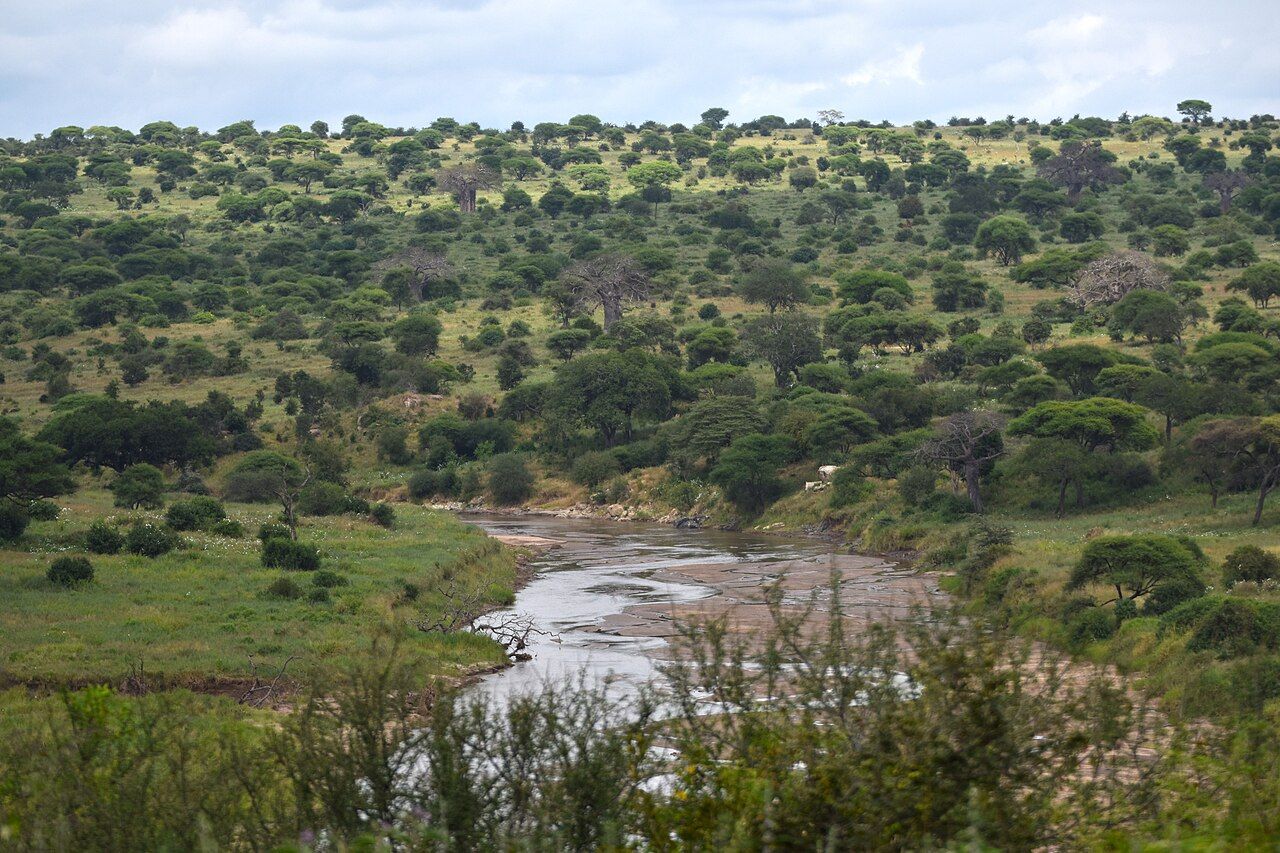
The river sets the terms. In the dry season, the Tarangire River is the only permanent water in the area. Animals move into the park from the surrounding Maasai Steppe to drink. It is a straightforward arrangement, which is perhaps why I like it: water is scarce, the river matters, and the animals have the same basic information. There is no need to pretend the season is subtle. Tarangire’s dry months put the river at the centre of the story.
Elephants arrive in numbers. Tarangire is known for gatherings of several thousand elephants in the dry season. That number makes the usual idea of an elephant sighting feel a bit modest. The animals come to drink at the river, and the gathering is part of a larger seasonal movement from the Maasai Steppe. I find this more interesting than treating elephants as a lucky interruption to the scenery. Here, their presence is the point, and the dry season explains why.
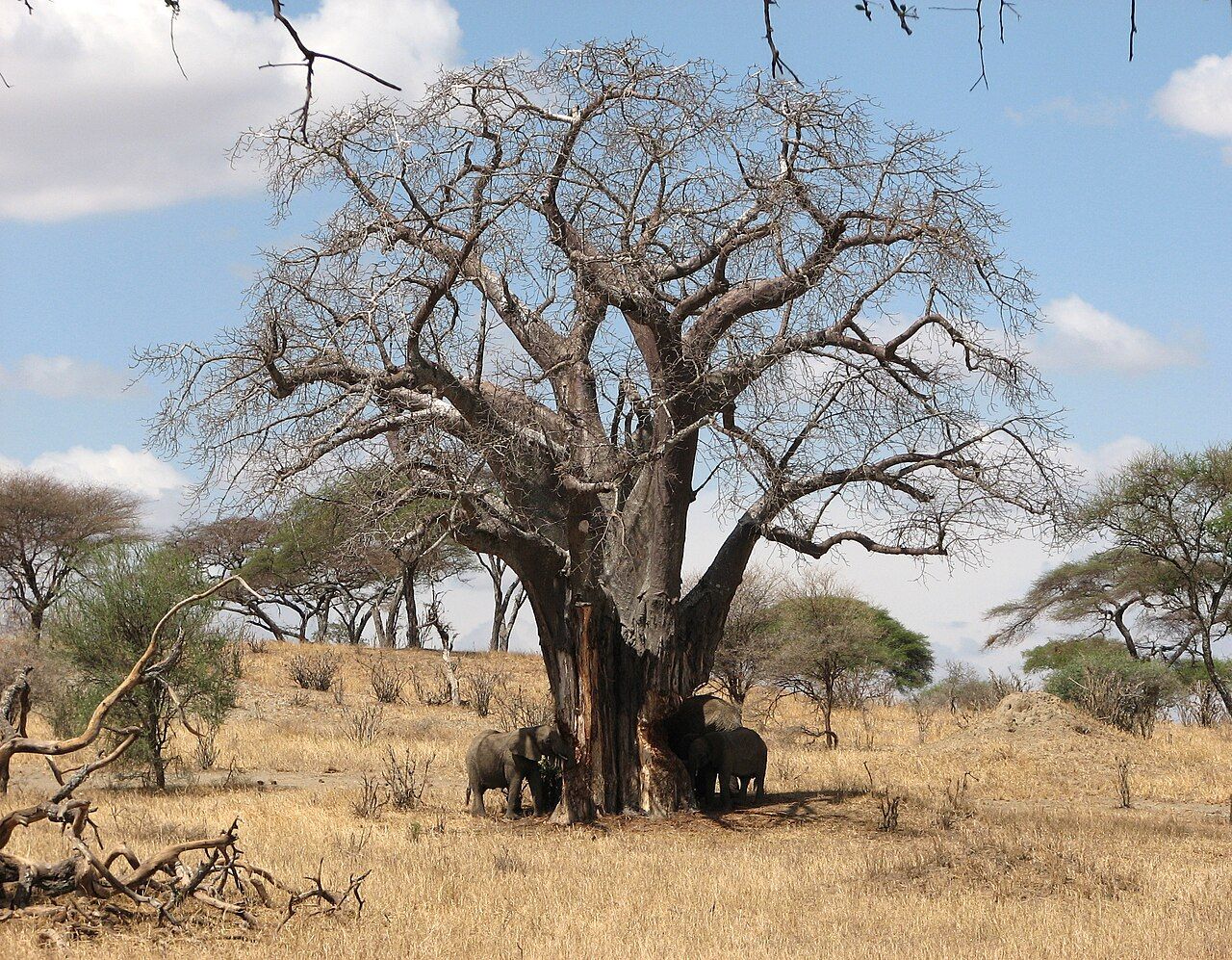
The baobabs are not decoration. African baobabs, Adansonia digitata, define much of the Tarangire landscape. Their trunks store water. In dry times elephants gouge the bark to reach the moist fibre inside. It is a practical exchange between tree and animal, though the tree may not have agreed to its part in it. I like that the baobabs are both a striking feature of the place and part of the animals’ response to the season. For a different baobab setting, there are baobabs on a pan island.
Dry does not mean empty. The Silale Swamp, in the park’s south, stays green into the dry season. I like this small complication to the picture: a dry-season park with a place that remains green. It does not cancel out the importance of the river, which is the only permanent water in the area, but it does stop the landscape from becoming one flat idea of dust and thirst. Tarangire has a river valley, baobab and acacia woodland, and this greener patch in the south.
Look up, as well as across. More than 500 bird species have been recorded in Tarangire National Park. The yellow-collared lovebird is found only in Tanzania and is common in the park. I have a weakness for a detail that is both very specific and easy to miss beside elephants and baobabs. The birdlife is not an extra paragraph added to make the park sound busier. It is another part of the place, and the lovebird gives that broad number a more particular face.
The season is the organising idea. Tarangire makes most sense to me through the way its water, trees and animals fit together in the dry months. The river draws animals in from the Maasai Steppe; elephants gather and work at baobab bark; the Silale Swamp stays green. The comparison that comes to mind is the elephant families of Amboseli, though Tarangire’s own character is firmly tied to its river and baobabs. For another river story, I would go on to Tanzania's wild south-west.
 CC BY-SA 4.0 — Bärbel Miemietz
The numbers: about 2,850 sq km; established in 1970; about 120 km by road from Arusha.