Sossusvlei and the red dunes
A clay pan, dunes that close around it, and the dead trees of Deadvlei: Sossusvlei has a way of making its names do the explaining.
- Country
- Namibia
- Extent
- about 49,800 sq km (Namib-Naukluft)
- Ground
- sand dunes and clay pans
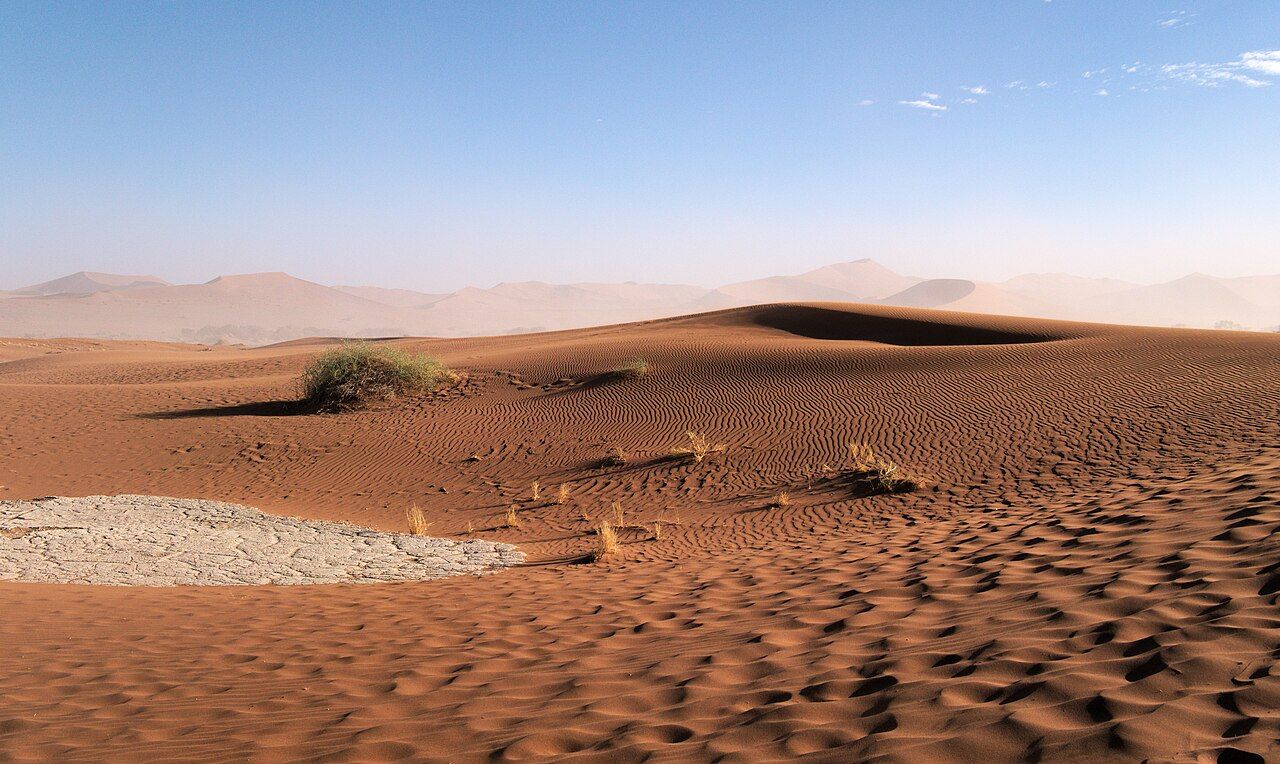 CC BY-SA 3.0 — Daniel Kraft
I keep returning to the name Sossusvlei. Roughly, it means ‘dead-end marsh’. There is something satisfyingly blunt about a place whose name tells you where the river stops. The Tsauchab River ends here and never reaches the sea. A marsh, though, is not the first thing the red dunes make me think of. Names, like travel expectations, can arrive with their own baggage.
Sossusvlei is a clay pan surrounded by red dunes in the Namib-Naukluft National Park. That is the simple arrangement: a pan, dunes closing around it, and the Tsauchab River ending there. It is also enough to keep the eye moving. The pan is not separate from the dunes; the dunes define its edges, and the place seems to hold two different kinds of stillness at once. I like that it does not need a more elaborate explanation.
The pan
The river reaches Sossusvlei only in years of unusually heavy rain. The qualification matters. The name carries a river all the way to the end of its story, but the river does not make that journey there every year. I find that a useful correction to the picture in my head: not a permanent river scene, but a place shaped by a river that reaches it only in those unusually wet years.
The Namib is often called the oldest desert in the world, and it has been dry for tens of millions of years. In 2013, the Namib Sand Sea was inscribed on the World Heritage List. Those are large facts, and I have no wish to pretend they make the clay pan easier to take in. They do give the landscape a timescale that is difficult to fold into an ordinary visit. The word “old” is doing a lot of work here.
The word “old” is doing a lot of work here.
The dunes
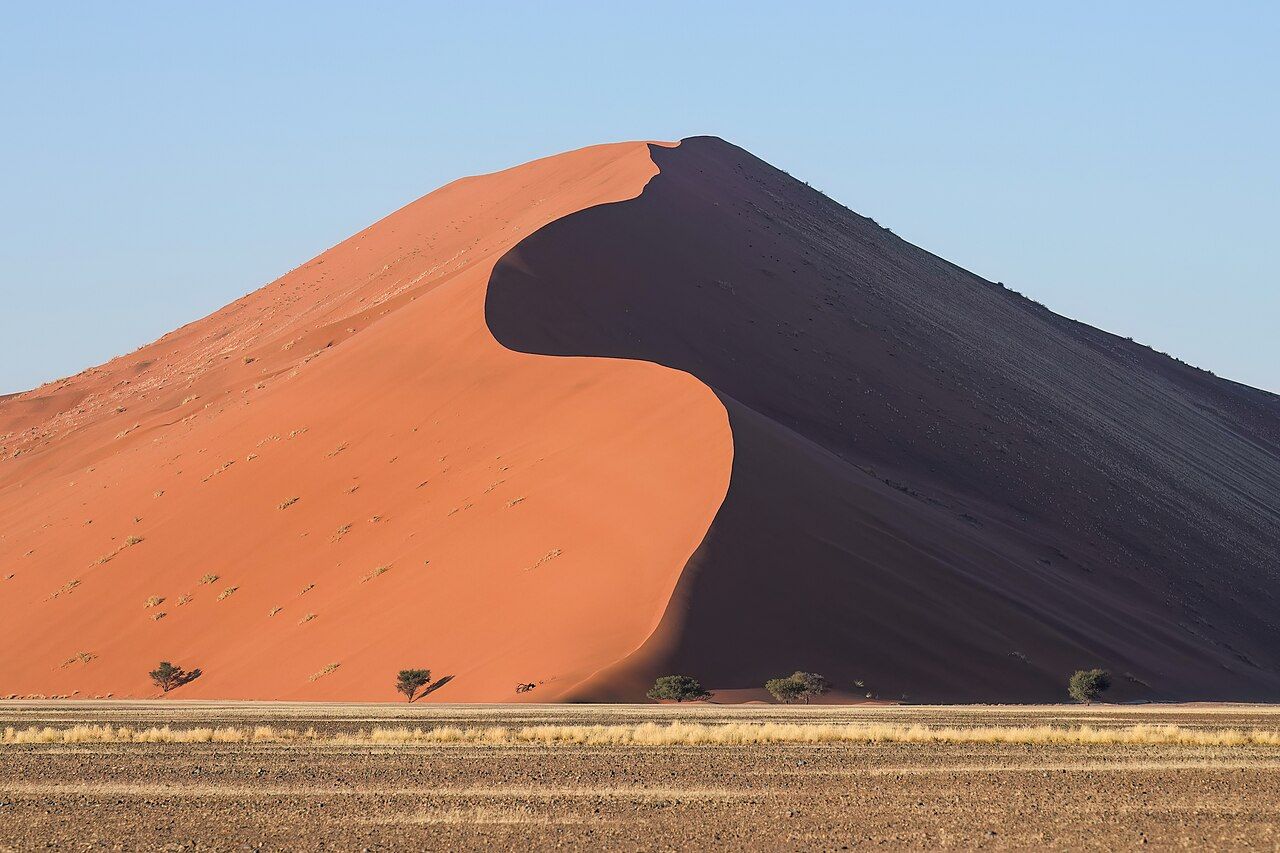
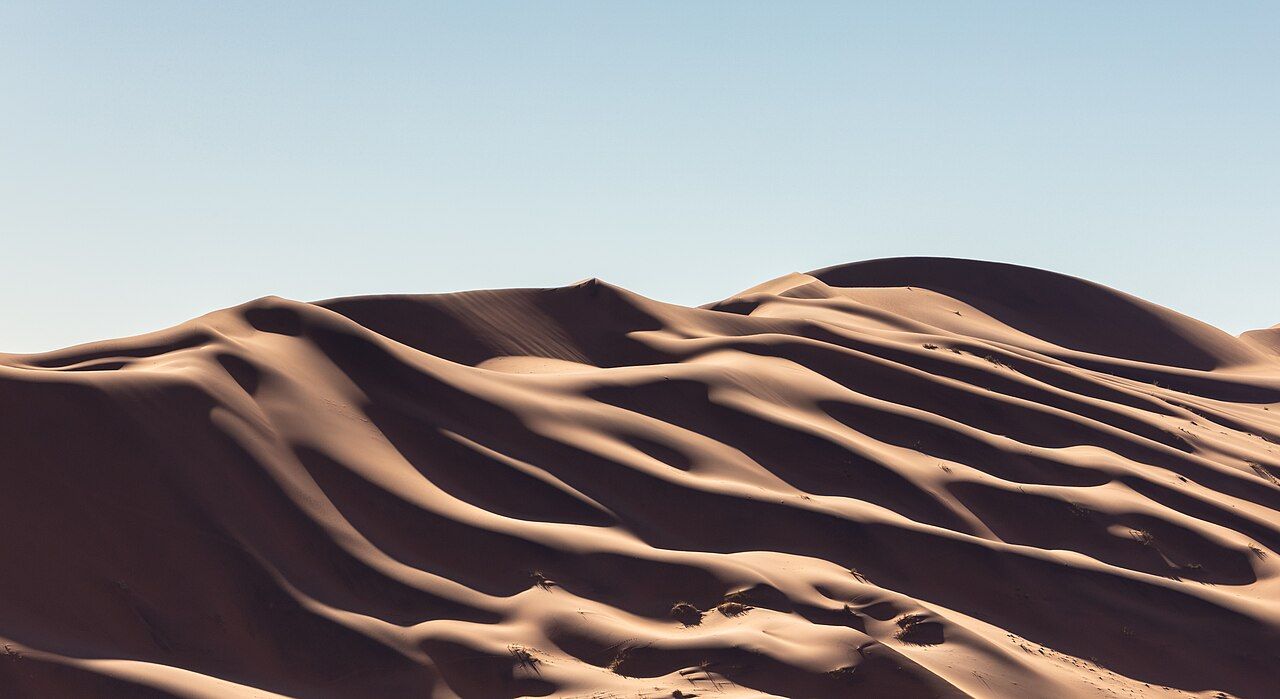
Some of the dunes around Sossusvlei rise more than 300 m. Big Daddy is among the tallest in the area. Even the names tell different stories: Big Daddy makes no attempt at modesty, while Dune 45 is named for its distance of about 45 km along the road from Sesriem. One name sounds like a boast; the other like a note made by someone who wanted the distance to stay clear. I have a preference for the second. It is easier to trust a label that admits what it is.
 CC BY-SA 4.0 — Giles Laurent
The scale can be awkward to imagine from a sentence. “More than 300 m” is a fact, but it does not shrink the dunes into something manageable. Nor should it. The red sides enclose the clay pan without making it feel like a tidy display. I like the tension between the plain fact of height and the much less orderly feeling of a landscape that keeps its own proportions.
There is a longer view of the region in the Kalahari's red sands the Kalahari's red sands, but Sossusvlei holds my attention for the way the dunes and pan belong in the same frame. The sand is not simply scenery behind the clay. It is the boundary, the scale and the reason the pan reads as a place apart. A neat description, perhaps. The land itself is less interested in neatness.
Deadvlei
Nearby, Deadvlei is a white clay pan where dead camelthorn trees have stood for several hundred years. The trees do not decay because the air is too dry. That is the explanation, and it is stark enough without any help from me. I am drawn to the mismatch: trees, but dead; a pan, but white; a length of time that is hard to picture, held in something that has not broken down.
I like Deadvlei best as a place where the details refuse to behave like a lesson. The trees are not there to make a grand point about time; they are dead camelthorn trees, still standing because the air is too dry for them to decay. That is already strange. Calling them a symbol would only make the facts less interesting. I would rather keep the plain description and let the white clay pan do the quiet work around it.
 CC BY-SA 4.0 — Diego Delso
There is another kind of tree story in trees on Botswana's salt pans trees on Botswana's salt pans. For another angle, there is life on desert fog life on desert fog. And for the desert's other edge, I would point to the Namib meeting the Atlantic the Namib meeting the Atlantic. Those are useful companions to this one, though the Sossusvlei story stays with its pan, dunes and trees. I am not inclined to ask it to be anything more.
Sesriem Canyon belongs to the same river story. The Tsauchab River cut it, and it is about 30 m deep in places. The name Sesriem refers to six leather straps that early settlers tied together to lower buckets into the canyon. It is a practical name with a practical origin. I like that, too. In a landscape so often reduced to size and age, six straps bring the explanation back down to something a person could tie together.
The pull of Sossusvlei, for me, is the contrast between what is immense and what is exact. Dunes more than 300 m high; a river that only reaches the pan in years of unusually heavy rain; trees that have stood for several hundred years because the air is too dry for decay. None of those facts needs dressing up. The place makes its own case, then stops where the river does.
The numbers: Namib-Naukluft National Park covers about 49,800 square kilometres; some dunes rise more than 300 m.