The desert elephants of the Kunene
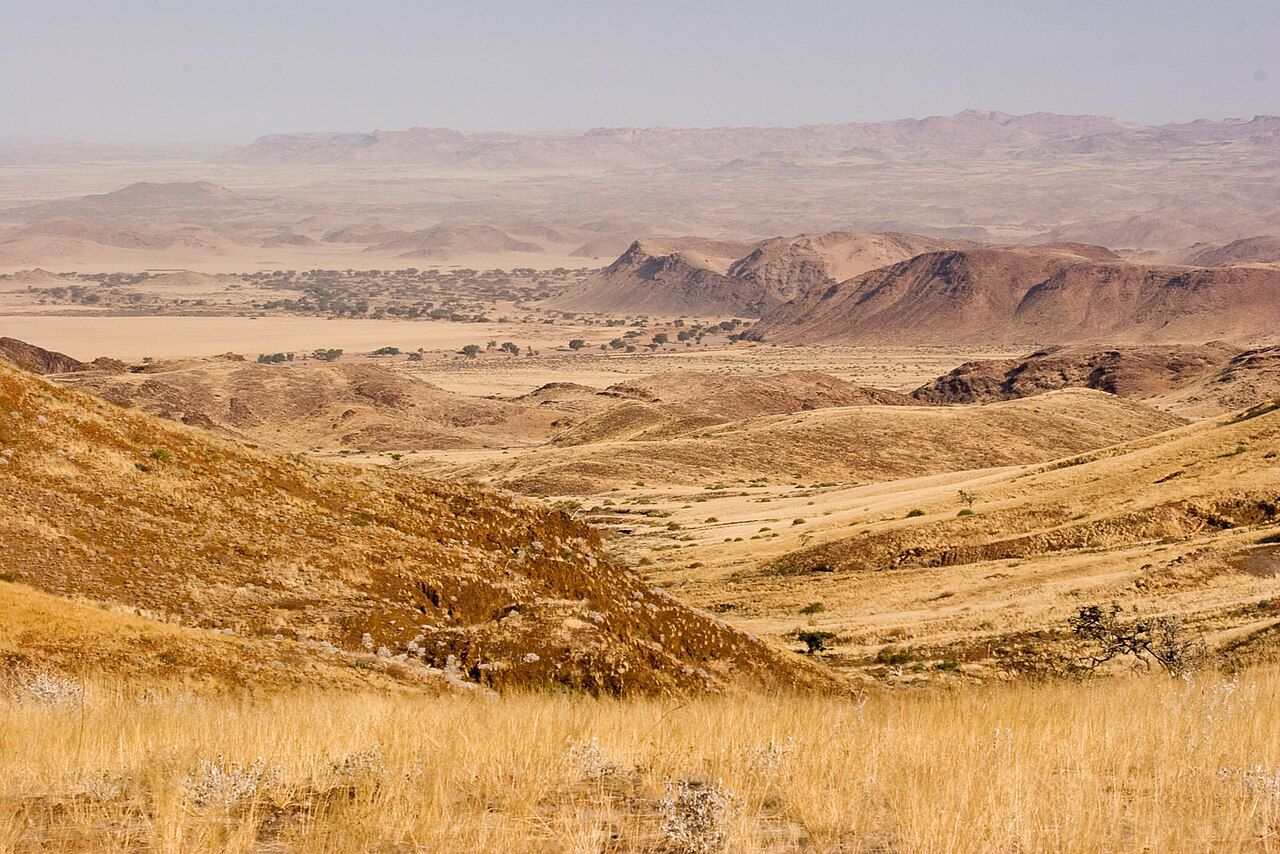
In north-western Namibia, elephants follow dry riverbeds that carry water underground. Lions, mountain zebra and black rhinos share a country with few easy answers.
- Country
- Namibia
- Ground
- dry riverbeds and rocky hills
 CC BY-SA 2.0 — Greg Willis from Denver, CO, usa
My first reaction to “desert elephant” is to hear a label doing rather a lot of work. It sounds like a separate creature, built for a separate world. It is not. Namibia’s desert elephants are African savanna elephants adapted to very dry country. The distinction is less dramatic than the name, which is probably why I like it.
Riverbeds
In the Kunene Region, in north-western Namibia, the old areas of Damaraland and Kaokoveld hold the dry beds of the Hoanib, Huab, Ugab and Hoarusib rivers. They carry water underground. The elephants follow them. A river can be dry at the surface and still matter greatly; the land is not obliged to make its usefulness obvious.
The riverbeds are not empty; they are routes, stores of water, and the shape of a life.
The riverbeds are not empty; they are routes, stores of water, and the shape of a life.
Desert elephants can go several days without drinking. Their herds are usually smaller than those in wetter parks, and they travel long distances between water and food. Sometimes that means several tens of kilometres in a day. I find the scale of that movement harder to picture than the word “desert”. The word is compact. The day’s walk, less so.
There is no need to turn this into a tale of heroic endurance. These are elephants adapted to the country they live in, not visitors bravely tolerating it. Still, a landscape where water runs underground and food can mean a long journey does not sound forgiving. It sounds like a place where the route matters.
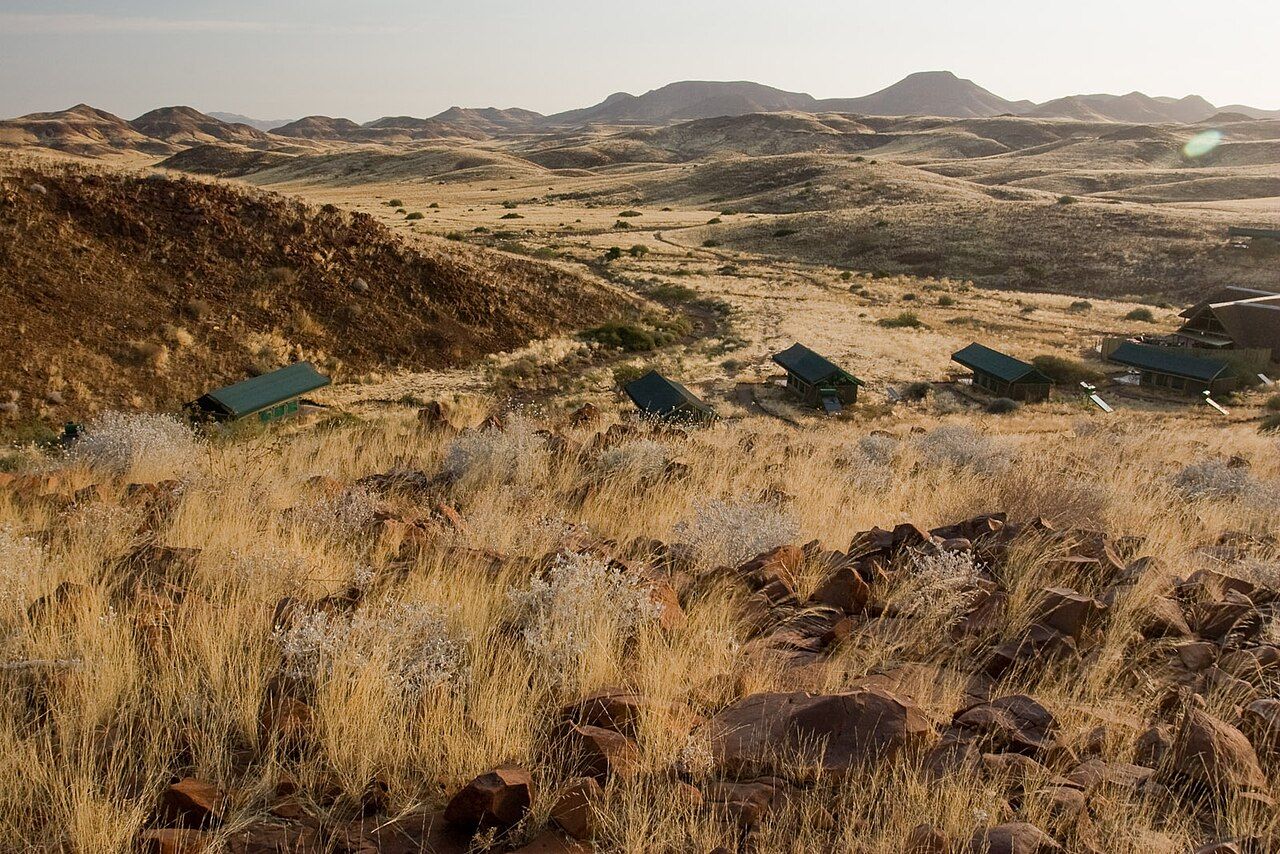
Sometimes it is tempting to think of a dry river as a line on a map and leave it at that. The elephants make the line more consequential. Water is underground, food is elsewhere, and the distance between the two is not a minor detail. I like this less romantic way of describing the country: not as a backdrop, but as a set of demands that animals have to meet.
 CC BY-SA 2.0 — Greg Willis from Denver, CO, usa
The name can encourage grand ideas about survival. I find the smaller details more persuasive: the size of the herds, the need to travel, the fact that a riverbed can guide movement even when its surface is dry. None of it needs an extra flourish. The landscape has already supplied enough work.
Other routes
The same dry rivers have become hunting ground for lions in the Kunene region. They have learned to hunt along the rivers and sometimes as far as the coast. That is a striking adjustment, and an unfussy reminder that the elephants are not the only animals reading the terrain. The riverbeds organise more than one kind of movement.
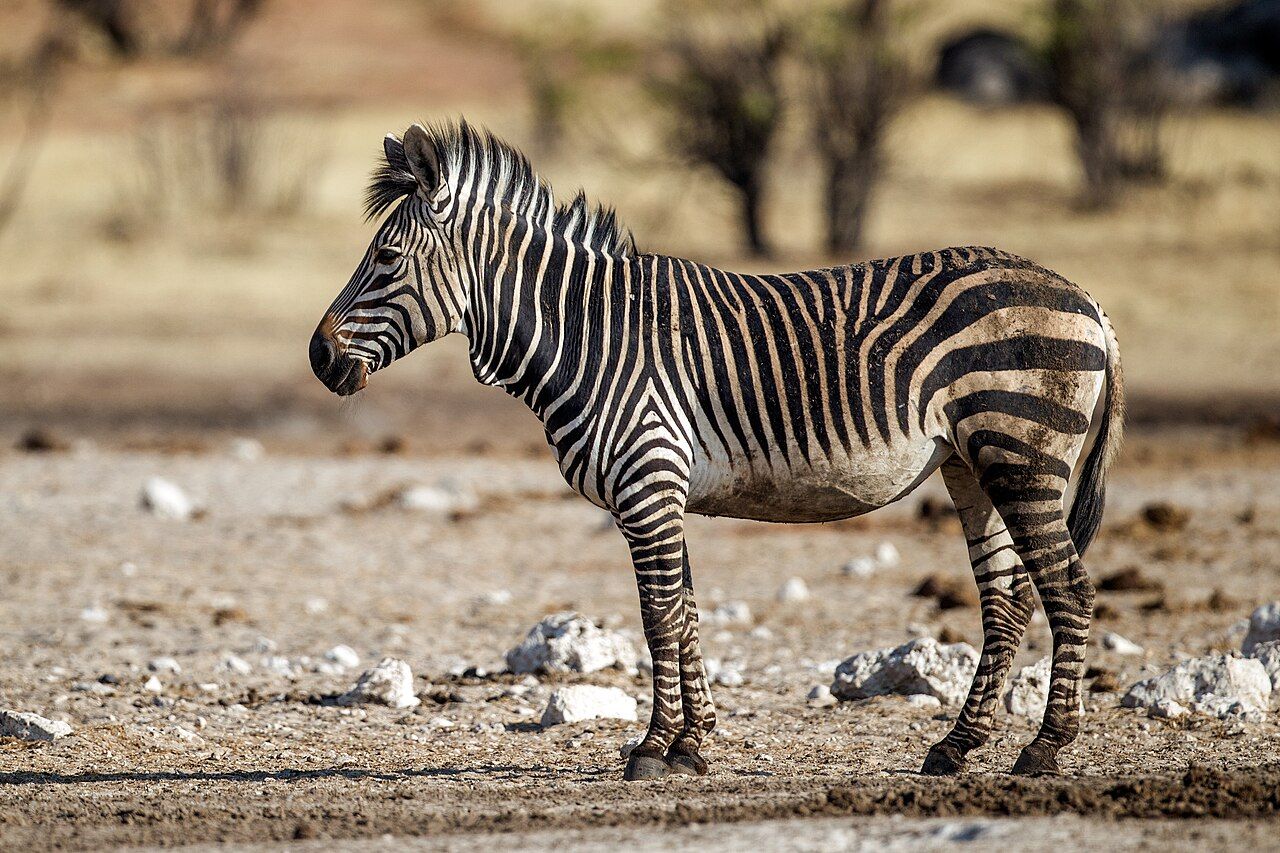
Hartmann’s mountain zebra lives in the rugged hills of the Kunene. The contrast is useful: riverbeds below, rocky hills beside them, different animals shaped around different parts of the country. I would rather keep that picture plain than pretend the land resolves itself into a neat wildlife scene. It is dry riverbeds and rocky hills, with life making use of both.
The old name Damaraland opens another line of looking, beyond the riverbeds and hills: Damaraland's rock engravings. And elephants elsewhere have their own landscapes; I have kept a note of elephants rising for pods and elephants under Kilimanjaro. These are pointers, not a claim that the places are alike. An elephant is not an explanation of every country it walks through.
Black rhinos in north-western Namibia live outside any national park, on communal land. That fact changes the frame. Wildlife here is not only a matter of what an animal can manage in a dry place; it is also a matter of where that place sits and who lives on the land.
 CC BY-SA 4.0 — Yathin S Krishnappa
People and land
Namibia’s laws of 1996 allowed communities on communal land to form conservancies and benefit from wildlife. The first communal conservancies in Namibia were registered in 1998. The dates make for a short, clear line of history. I am wary of making them stand in for the whole story, but they do show that wildlife and communal land are connected in the way this country has chosen to arrange things.
There is something useful in holding the animal story and the land story together without pretending they are the same thing. The elephants follow water and food; the black rhinos live on communal land outside national parks; conservancies are part of the country’s way of connecting communities and wildlife. It is a less tidy picture than a list of species, and a more honest one.
The Damara are one of Namibia’s oldest peoples and speak a Khoekhoe language with click sounds. That belongs in any account of this country, though it does not need to be pressed into service as a decorative detail beside an elephant. The words are specific enough on their own.
What stays with me is the practical shape of the place: dry riverbeds carrying water underground; elephants following them between water and food; lions learning to hunt along the same lines; mountain zebra in the rugged hills; black rhinos on communal land beyond national parks. Not a desert made empty by its name. A set of difficult routes, with different lives fitted to them.
For another small lesson in how dry country supports life, there is how Namib creatures drink fog.
The numbers: several days without drinking; sometimes several tens of kilometres in a day; laws of 1996; first communal conservancies registered in 1998.