Kgalagadi: red dunes and rivers that rarely flow
A shared park of iron-red dunes and two riverbeds that almost never run; in Kgalagadi, even the word river has a dry sense of humour.
- Country
- South Africa / Botswana
- Extent
- about 38,000 sq km
- Ground
- red dunes and dry riverbeds
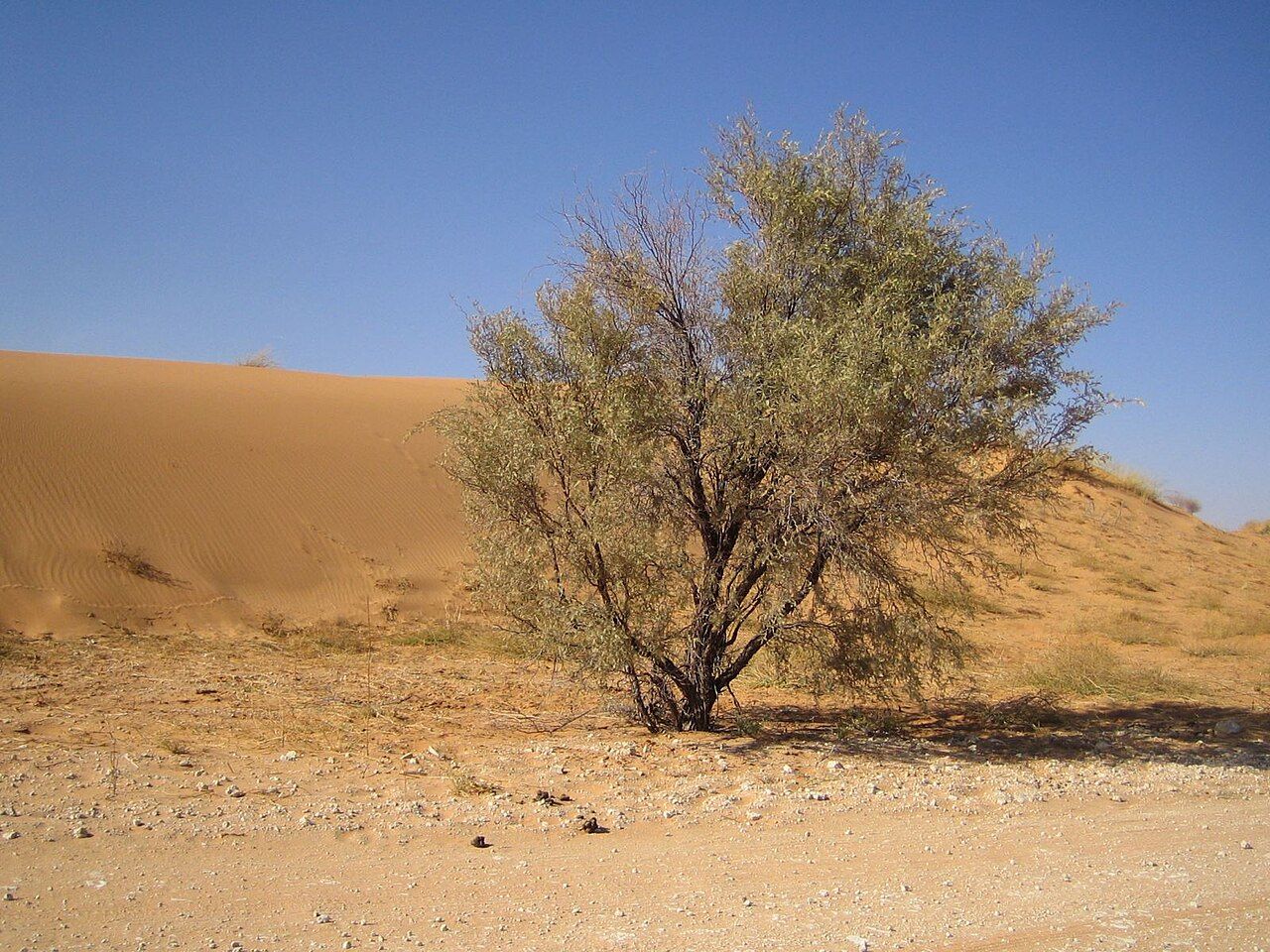 CC BY-SA 3.0 — Hansm
I have a small quarrel with the word river. It sounds so definite: a line of water, going somewhere. In Kgalagadi, the Auob and Nossob are riverbeds that flow only rarely, perhaps once in decades after exceptional rain. The name remains; the water is not obliged to cooperate. I find that arrangement rather honest. The park is shaped by what may happen, and by what is usually dry.
The Kgalagadi Transfrontier Park was formally opened in May 2000, joining South Africa’s Kalahari Gemsbok National Park with Botswana’s Gemsbok National Park. The South African park had been established in 1931. Kgalagadi became the first formally declared transfrontier park in southern Africa. Those are substantial beginnings for a place whose rivers spend so much time not flowing.
The Peace Parks Foundation, founded in 1997, has supported cross-border parks such as Kgalagadi. The park covers about 38,000 square kilometres, about three quarters of it in Botswana. A border here is something the park crosses, not a neat conclusion to its landscape. I like that the name describes a joined place rather than asking the dunes to observe a line on a map.
The dunes get their red colour from iron oxide coating the sand grains. It is a useful correction to the imagination: red, not by some grand dramatic gesture, but by a coating on each grain. I find the detail pleasingly modest. The comparison with Botswana's central sands may come to mind, or with the Namib's tallest dunes, but Kgalagadi has its own particular palette: red dunes, dry riverbeds, and the long reach of the two.
Most of the park’s roads follow the dry beds of the Auob and Nossob. Water and grazing collect there, which is why the routes follow the riverbeds rather than treating them as empty space. Dry is not the same as irrelevant. The beds organise movement through the park, and give a shape to the places where life gathers. It is a quiet sort of importance. No river required, apparently.
Gemsbok, springbok, blue wildebeest and red hartebeest live here. Black-maned Kalahari lions and cheetahs hunt along the dry rivers. Raptors are common too: martial eagles, bateleurs and pale chanting goshawks. The list has a pleasing range, from animals grazing to animals watching for a chance. I would rather linger over that than pretend the landscape needs embellishment. The facts are already doing the work. I find myself more drawn to the plain fact of the riverbeds than to huge communal bird nests: here, the organising detail is water and grazing collecting in the same channels. Nothing needs to be made busier than that.
The riverbeds make a good centre of attention precisely because they do not offer the usual picture of a river. They are dry, but water and grazing collect there; the roads follow them, and animals use them. Kgalagadi’s red dunes are not separate from that story. They sit alongside a landscape organised around rare water and the possibility of it returning.
My preference is for Kgalagadi’s dry rivers: less promise, more character.