Twyfelfontein’s engravings and the rocks nearby
A sandstone valley of animal engravings, the Lion Man, dolerite columns and shale darkened by volcanic heat.
- Country
- Namibia
- Ground
- sandstone valley
 CC BY 2.0 — Jean & Nathalie
I have a soft spot for names that sound less certain than the place they name. Twyfelfontein means “doubtful spring” in Afrikaans. A farmer who settled there in 1947 gave it that name. The Damara name is /Ui-//aes. Two names, and neither asks the rocks to explain themselves.
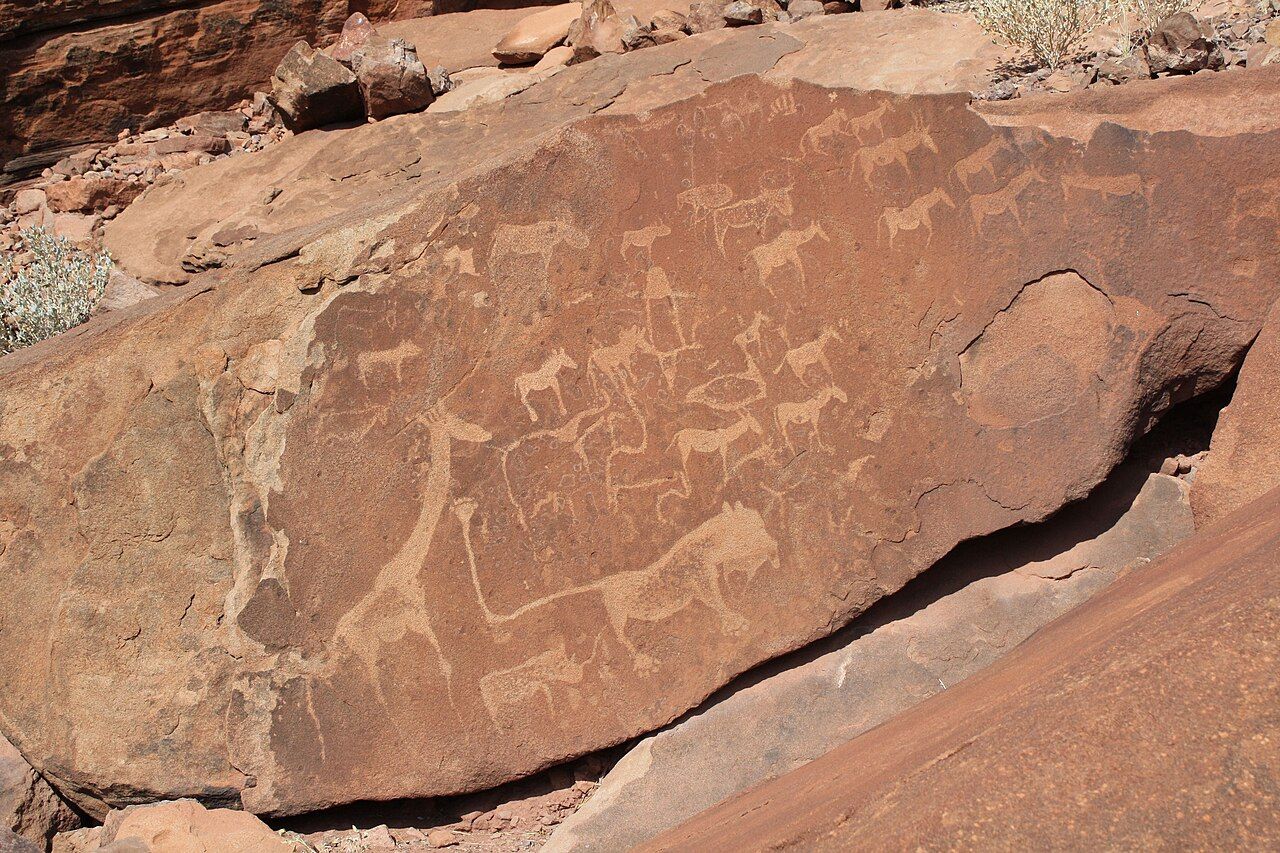
One of Africa’s largest concentrations of rock engravings lies in this sandstone valley in Damaraland: more than 2,000 figures. The engravings were made by hunter-gatherers over a period of perhaps 2,000 years or more. I find that span easier to sit with than to picture. A great deal of time, cut into stone.
The animals include giraffes, rhinos, elephants and lions. There are animal tracks too. The engravings do not offer just a gallery of creatures; the tracks leave room for the business of moving through a place. I like that small shift in emphasis. Stone is quite good at keeping a record without adding a caption.
The Lion Man is the detail that holds me longest. It shows a lion with five toes on each foot and a long, kinked tail ending in a paw print. It is an odd, precise combination. I would happily linger over that tail while the larger collection carries on being enormous.
In 2007, Twyfelfontein became Namibia’s first entry on the World Heritage list. The designation is the official part of the story. The engravings themselves are the part I keep returning to: animals, tracks, and the long patient work of making marks endure.
Nearby, the Organ Pipes are columns of dolerite exposed in a small gorge. The name is almost too helpful. Burnt Mountain has a less fanciful explanation: its dark colour comes from shale altered by volcanic heat. I like these neighbouring forms as a second act, though the engravings remain the reason to stop.
For other stories to keep in the same mental folder: Namibia's highest mountain, the painted hills of Tsodilo and elephants of the dry rivers. A useful reminder that stone, tracks and animals can each take the lead.
The numbers: more than 2,000 figures; perhaps 2,000 years or more. I like the engravings best; the rocks nearby make a respectable second act.