Kubu Island and Baines’ Baobabs
Granite, baobabs, stone walls and a fallen trunk still alive: Kubu Island and Baines’ Baobabs make a neat pair, without being the same story.
- Country
- Botswana
- Ground
- granite island on a salt pan
 CC BY 2.0 — abi.bhattachan
“Kubu means hippopotamus in Setswana.”
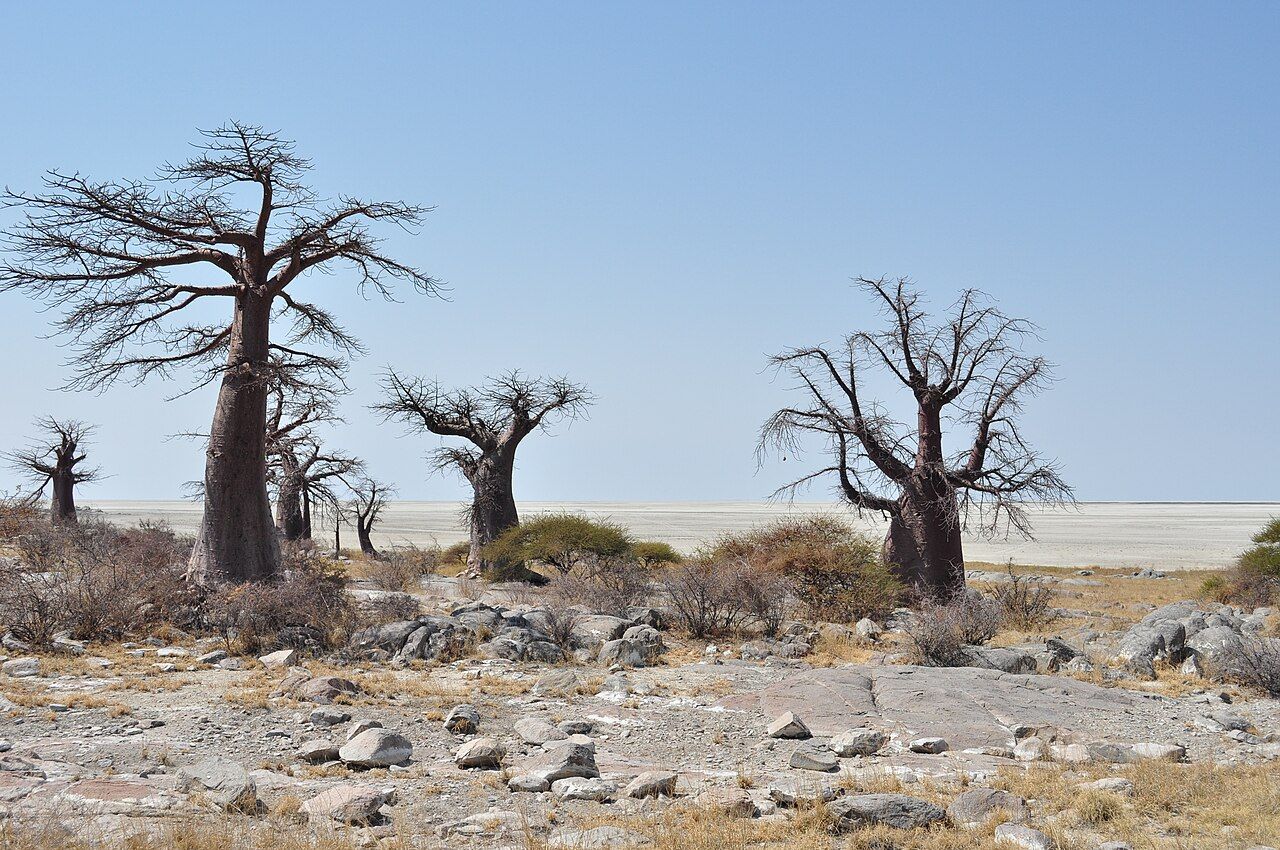
Kubu Island is a granite outcrop rising about 10 to 20 m above Sowa Pan. The description is almost stubbornly literal: an island, but in a salt pan, with no need for a sea to make the word work. The salt pans around the island make their own kind of setting.
Baobabs cover the island, some many hundreds of years old. That is a difficult age to take in neatly. I find myself more interested in the quiet mismatch: granite underfoot, old trees overhead, and a name that means hippopotamus. The place does not seem obliged to explain itself.
Kubu Island is a national monument and a sacred place for local people. Stone walls and Stone Age tools have also been found there. Those details give the island a human history alongside the baobabs; I would rather leave it at that than pretend a list of finds tells the whole story.
Baines’ Baobabs sit on the edge of Kudiakam Pan in Nxai Pan National Park. The artist and explorer Thomas Baines painted the group in May 1862. A painting gives a tree a particular sort of staying power: it lets the eye compare, even when the painter is long gone from the scene.
The trees look much as they did in Baines’ painting, and one fallen trunk is still alive. That small detail wins me over. Fallen, but living; a rather good correction to the tidy endings we like to give trees. I’d put the group beside Tanzania's baobab park and the dead trees of Deadvlei as a reminder that a tree need not be upright to hold attention.
My preference is for the fallen trunk: it refuses to behave like an ending.
The numbers: Kubu Island rises about 10 to 20 m above Sowa Pan; Baines painted the trees in May 1862.