Mana Pools and the winterthorn pods
In Mana Pools, winterthorn turns the late dry season into a time of fallen pods, and some bull elephants answer by reaching for the trees on two legs.
- Country
- Zimbabwe
- Extent
- about 2,196 sq km
- Ground
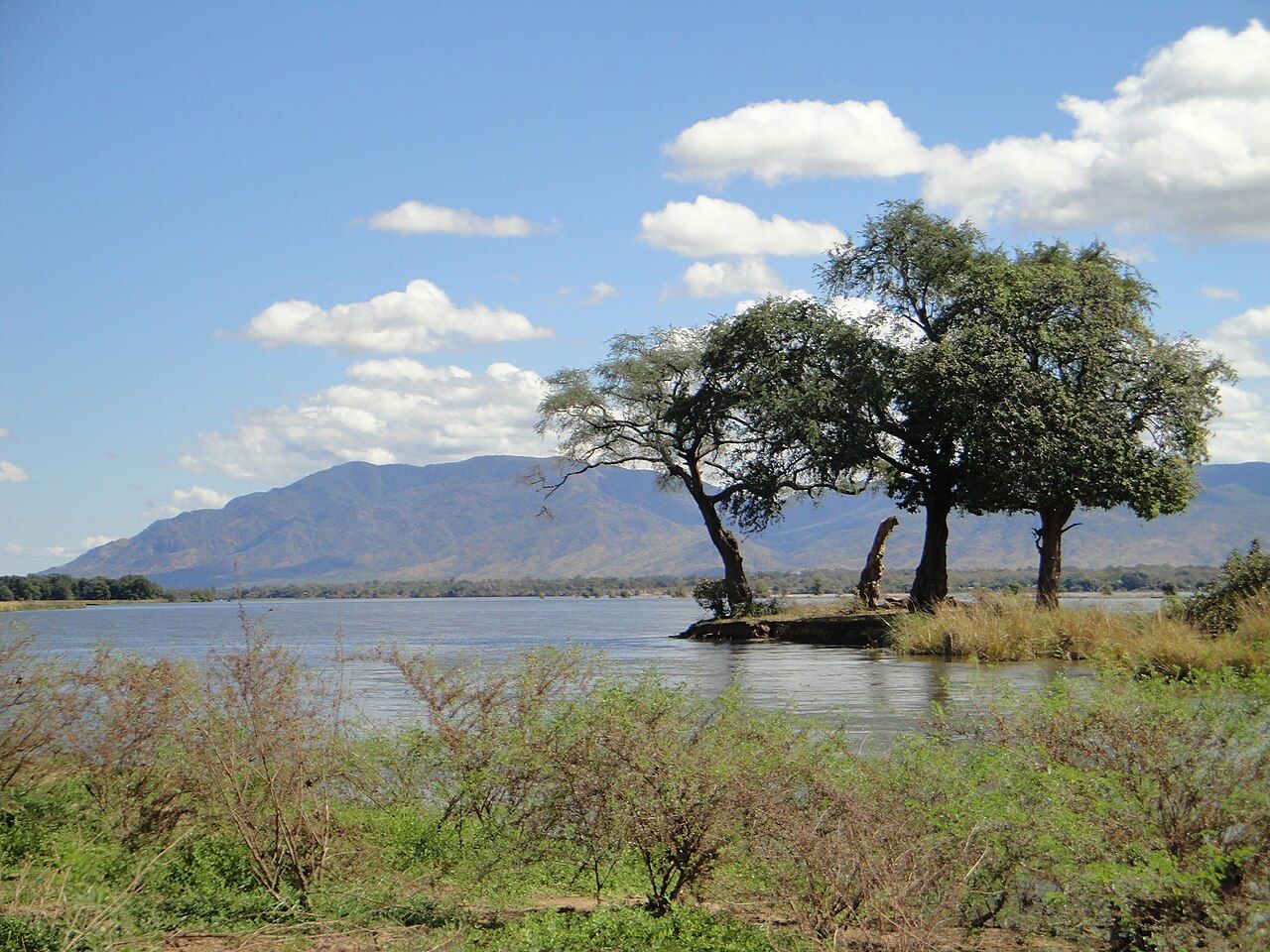
- floodplain woodland and river pools
 CC0 1.0 — Babakathy
“Four.”
That is the meaning of Mana in Shona: a plain name for the four main pools left by old river channels. I like a landscape that gives its defining feature a number and leaves the poetry to the elephants. The pools are Main Pool, Chine Pool, Long Pool and Chisasiko Pool. The park covers about 2,196 square kilometres on the Zimbabwean bank of the middle Zambezi, with floodplain woodland and river pools setting the terms. A tidy list of names, then a much less tidy food supply falling out of the trees.
The list
The pools. Mana means four, but the four pools are not the whole story. They are what remains of old river channels, a reminder that this floodplain has been shaped by a river with a longer memory than any visitor. Main Pool, Chine Pool, Long Pool and Chisasiko Pool are easy enough to recite. The more interesting point, for me, is how a name can hold both a count and a piece of landscape history without making a fuss about either. The park’s identity starts with water, even in the dry months when the trees begin offering a different kind of sustenance.
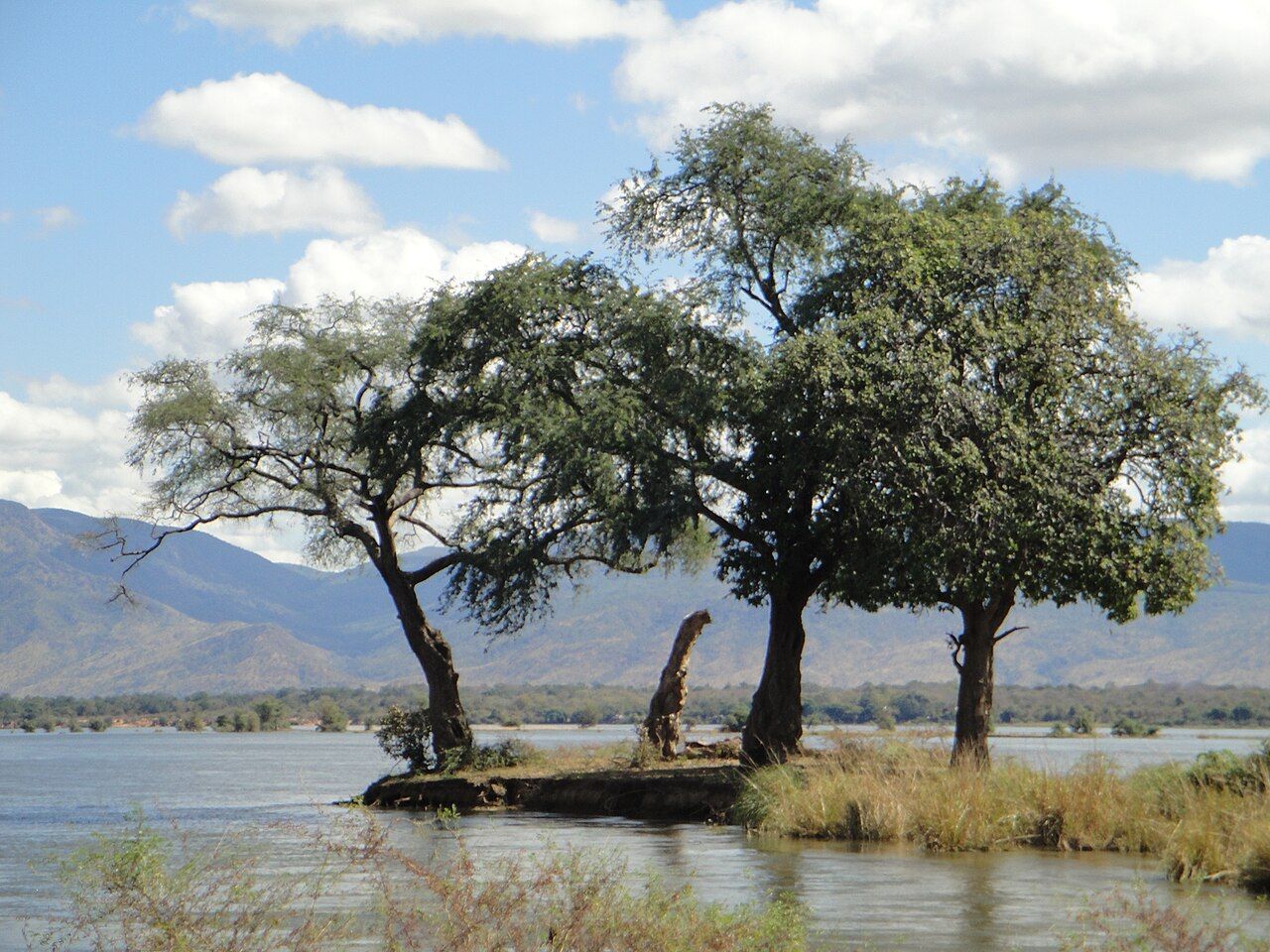
The winterthorn. Winterthorn trees, Faidherbia albida, dominate the floodplain woodland. Their seasonal habits are unusual: they keep their leaves in the dry season and drop them in the rains. I find this a pleasing refusal to follow the expected script. The tree is not merely scenery behind the wildlife; in the late dry season its pods become important food for elephants, antelope and baboons. In other words, the woodland is not waiting for the landscape to look impressive. It has a practical arrangement underway, and the pods are the part that tends to get noticed.
The reach. Some Mana Pools bull elephants rise onto their hind legs to pull pods and branches from the trees. It is an image with a built-in correction to the usual idea of an elephant as a creature that simply browses at ground level. The tree holds the food; the elephant works out how to get it. I would rather watch that problem-solving than ask the floodplain to supply a grander spectacle. The movement is striking enough in the facts alone. No extra drama required, which is fortunate, since the elephants have already taken care of the unusual part.
 CC0 1.0 — Babakathy
The pods fall; the animals feed.
The season. The pods fall in the late dry season, when they matter to elephants, antelope and baboons. That timing gives the trees a role in the park that is easy to miss if attention stays fixed on the pools. I tend to prefer this sort of detail: a change in what is available, and a change in how animals use the trees. There is no need to dress it up as a seasonal transformation. The pods fall; the animals feed. Yet that modest sequence gives the dry months their own logic, rather than making them sound like a pause between more important events.
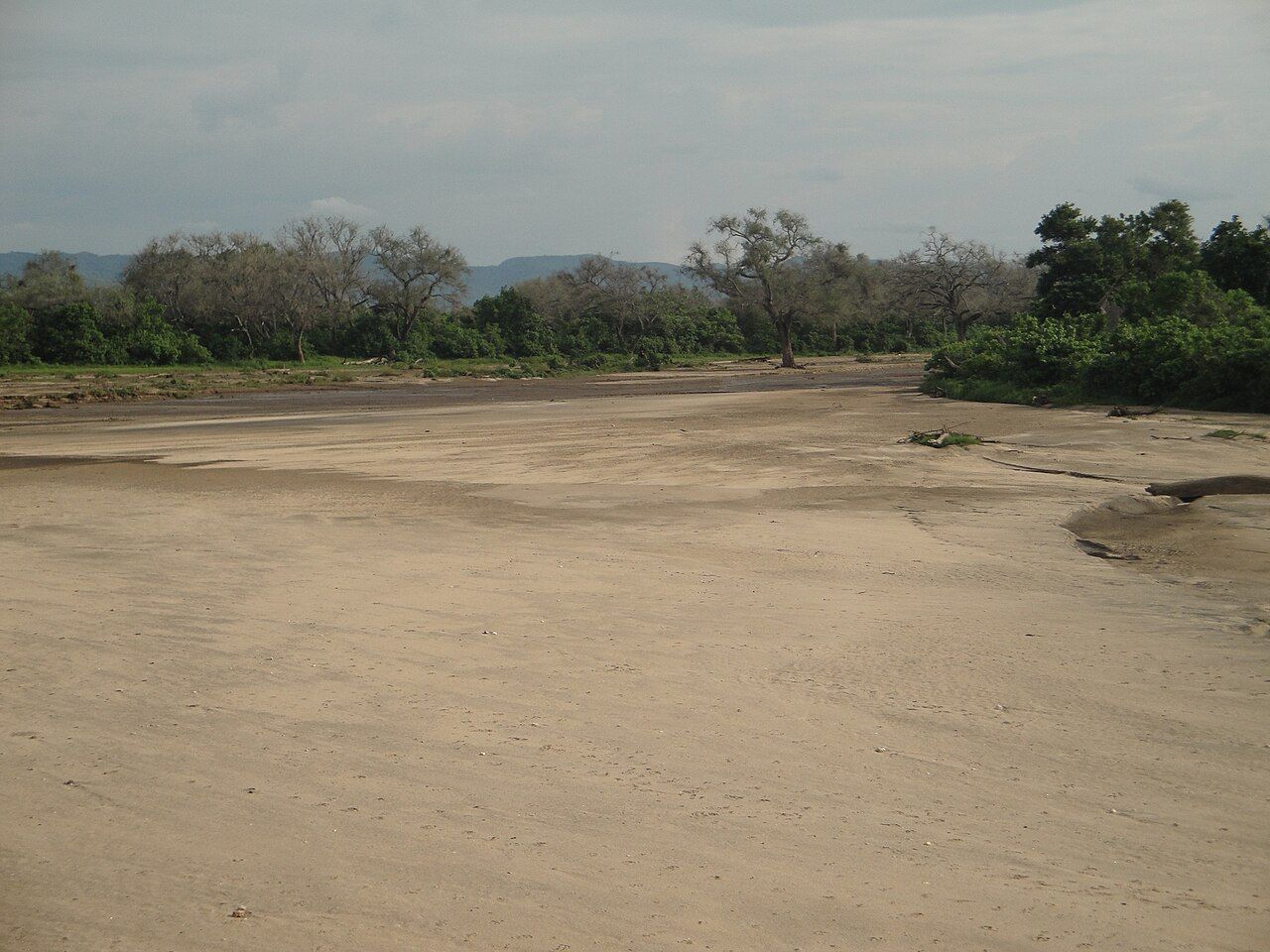
The altered floodplain. The Kariba Dam, completed in 1959, ended the Zambezi’s big floods and changed the regeneration of the floodplain trees. It is a substantial change to place beside the quieter story of pods and feeding. The pools recall old river channels; the trees now grow within a floodplain whose regeneration has been changed by the end of those big floods. I cannot make that sound like a neat before-and-after, because the facts do not offer one. It is enough to know that the woodland’s present character sits within a changed relationship with the river.
The freedom to walk. Visitors may walk without a guide in Mana Pools, a distinction shared by only a few parks in Africa. That fact changes the way I think about the place: the landscape is not only viewed from a distance, but can be encountered on foot. I would not pretend that walking makes the winterthorn or its pods more significant. It does make the park’s combination of woodland, pools and animals feel less like a picture arranged for someone passing through. The Zimbabwe Parks and Wildlife Management Authority manages the park; the freedom to walk is part of its particular character.
The entrance, and the wider story. Nyakasikana Gate is the main entrance from the escarpment road. Mana Pools, alongside the Sapi and Chewore safari areas, gained World Heritage Site status in 1984. Those are useful bearings, but I keep coming back to the winterthorn: a tree that keeps its leaves through the dry season, drops them in the rains, and supplies pods when they matter. It is a more convincing centre of the story than any grand label. For a different Zimbabwean park thread, there is Zimbabwe's largest park; for another elephant story, elephants of the Namib desert.
 CC0 1.0 — Babakathy
The numbers: about 2,196 square kilometres; 1959; 1984.
For the river across the way, read about the Zambian bank across the river.