The San of the Kalahari
A day’s thread runs from the San peoples’ languages to Tsodilo’s paintings, then to the long case for return to the Central Kalahari.
- Country
- Botswana
- Extent
- about 10 sq km (Tsodilo)
- Ground
- rocky hills above sand
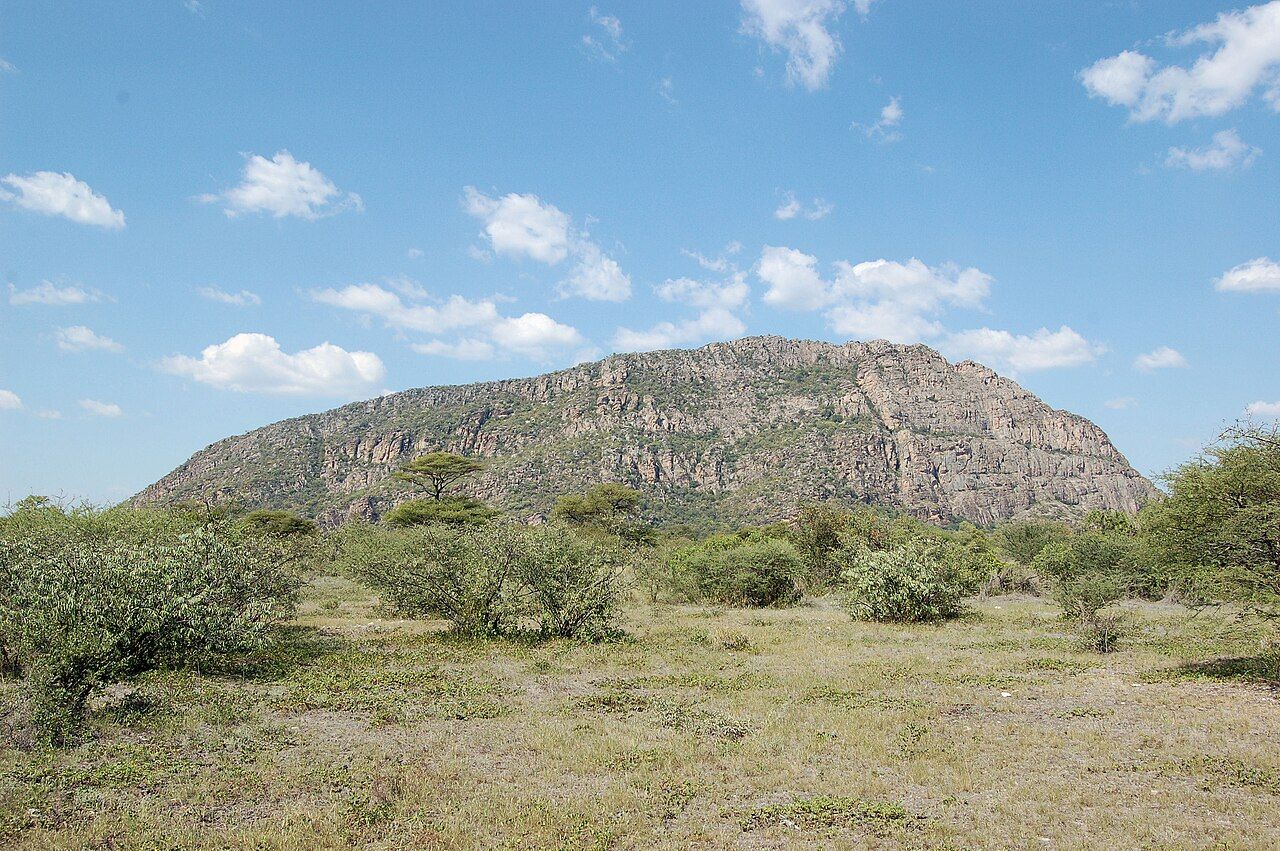 CC BY-SA 2.0 — Joachim Huber from Switzerland
“The Male, the Female and the Child.”
I begin the day with those names. Local people call Tsodilo’s hills the Male, the Female and the Child. The hills rise rocky above sand, in north-western Botswana. It is a useful beginning: a place is not only its measurements, even when the measurements are striking. Tsodilo holds more than 4,500 rock paintings in about 10 square kilometres. I can say that in one breath. Understanding what that means takes longer.
By morning, my thoughts have moved from the hills to the people whose history is part of this place. The San are the first peoples of southern Africa, with ancestry stretching back tens of thousands of years. “The San” is a broad name, not a single group name. San groups include the Ju/'hoansi, the G/wi and the G//ana, among others. Many San prefer to be called by the names of their own groups. I find that preference worth keeping in view. A convenient umbrella is still an umbrella; it does not make everyone beneath it the same.
The names carry some of the shape of the languages. San languages use click consonants, written with symbols such as /, // and !. On the page, those marks look spare and precise. I have no wish to make them into decoration, or to pretend that a few symbols amount to knowing a language. The herders of northern Kenya are another subject, not a stand-in for this one. Keeping that distinction clear is not difficult. Remembering to do it is the work.
Later in the day, attention returns to the paintings. In 2001, Tsodilo received World Heritage inscription. The designation is a fact; it is not the whole story. The visual record invites comparison, without making the histories interchangeable, with rock engravings in Namibia and rock paintings in Chobe's hills. I like the paintings at Tsodilo as a reason to pause over this particular place, rather than as a prompt to file every rock image under one grand heading. Grand headings are efficient. People, inconveniently, are not headings.
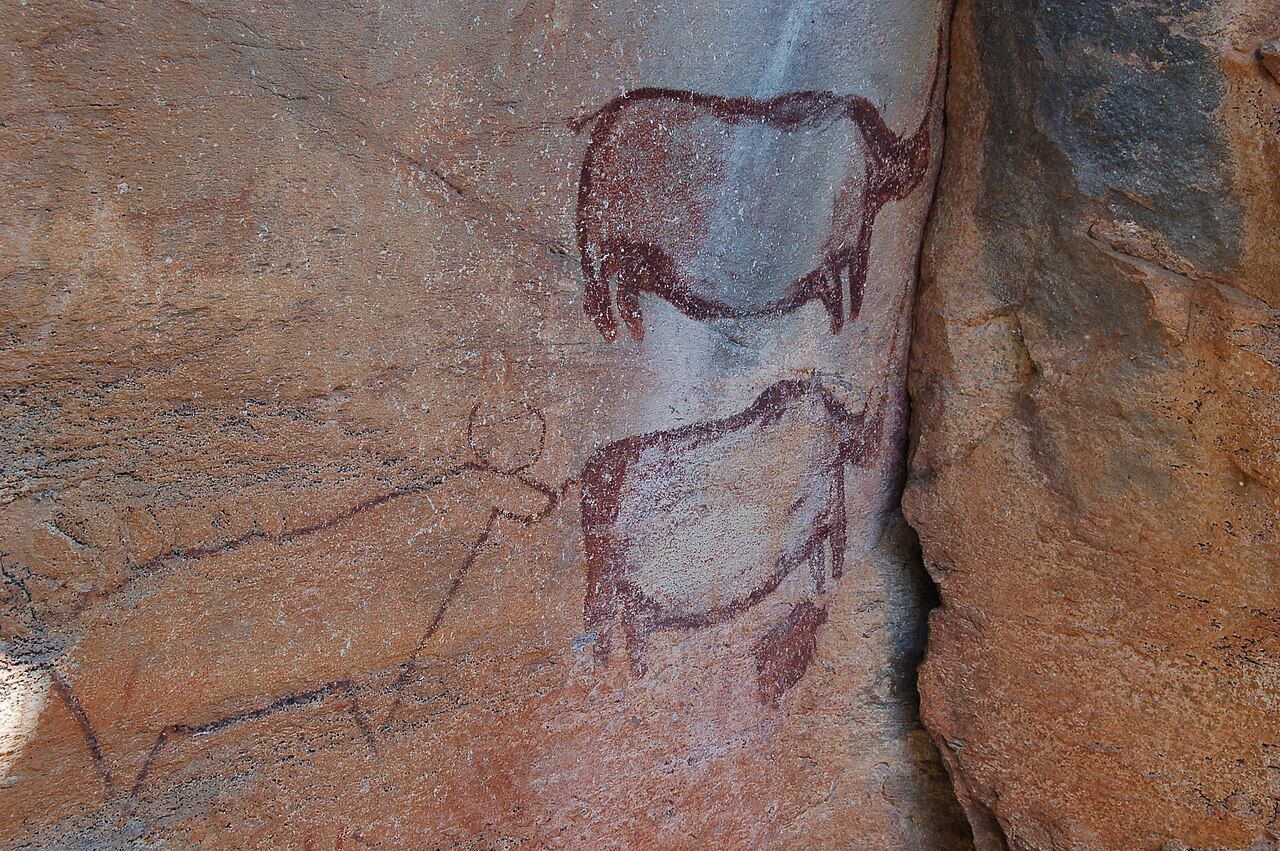 CC BY-SA 2.0 — Joachim Huber
There is another kind of reading in the facts here. San trackers can read animal behaviour from spoor that most people would miss. I keep returning to that small, exact distinction: spoor is there, but not everyone can read it. The knowledge is not made less real because a passer-by might not notice what is being read. It also makes a neat corrective to the habit of treating a landscape as empty until someone arrives with a label for it. I would rather leave the word “empty” unused.
By afternoon, the day’s line turns towards the Central Kalahari. Many San were moved out of the Central Kalahari Game Reserve in 1997 and 2002. In December 2006, Botswana’s High Court ruled that the San removed from the reserve they were removed from had the right to return. The ruling belongs in the story alongside the languages and the paintings, not in a footnote after them. A right to return is a clear phrase. It does not tell me, by itself, what every person’s life became after the ruling, so I will not fill that silence with a tidy ending.
By evening, Tsodilo and the Central Kalahari sit in my mind as connected parts of a story, but not interchangeable ones: one holds paintings in its hills; the other is named in a long case for return. The day has not made the history simpler. That is probably a better result than making it neat.
The numbers: about 10 sq km at Tsodilo; more than 4,500 paintings. I prefer the people to the neat summary.