The Savuti Channel that comes and goes
A channel stopped, a marsh became grassland, and the lions acquired a reputation that is not improved by darkness.
- Country
- Botswana
- Ground
- dry channel, marsh and rocky hills
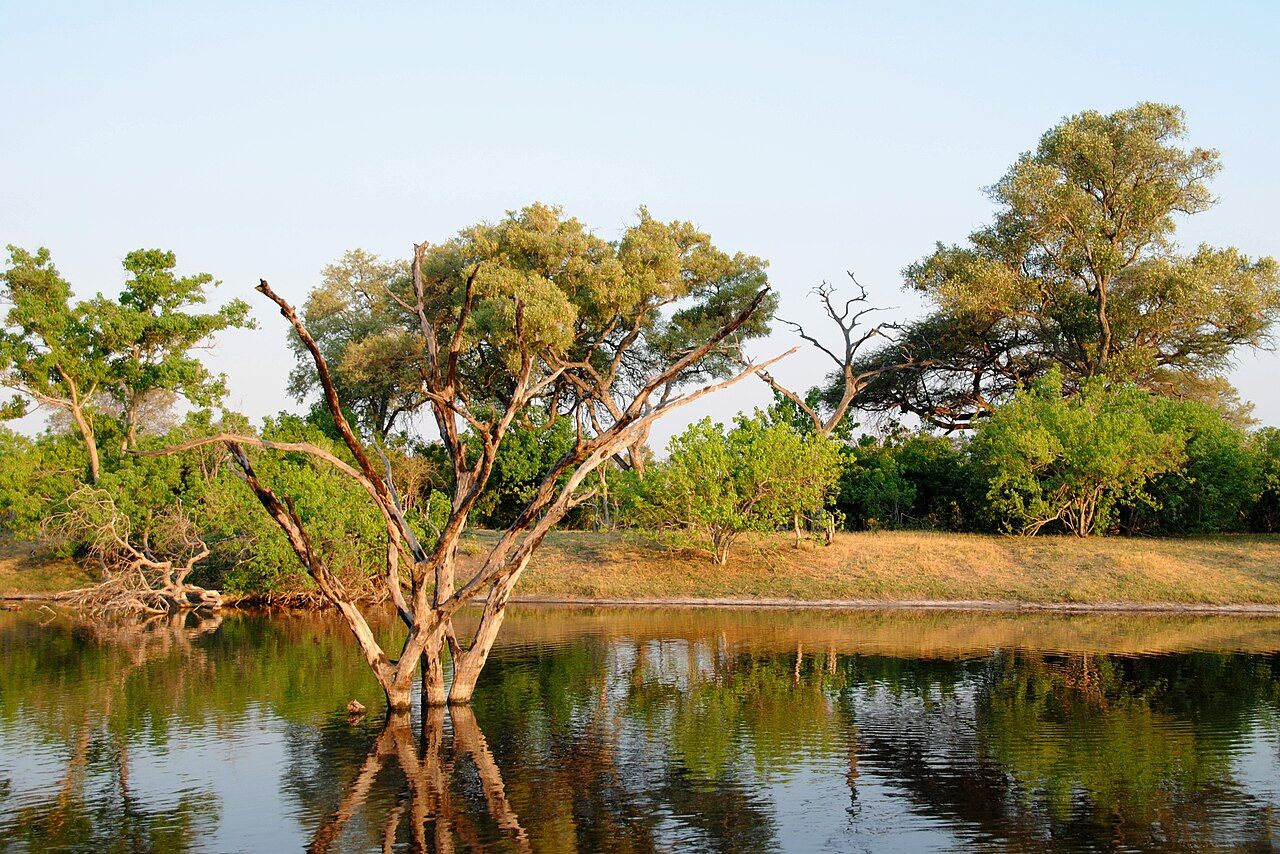 CC BY-SA 3.0 — diego_cue
I start the morning with the Savuti Channel’s most inconvenient quality: it does not feel obliged to stay a channel. It links the Linyanti system to the Savuti Marsh in Chobe National Park, which sounds reassuringly fixed. Then the history gets involved.
The channel stopped flowing in 1982. The marsh dried into grassland. By the time I reach this part of the story, the word “marsh” feels more like a memory than a promise. Dead trees killed by earlier floods still stand there, a record of water that once arrived and then, for a long while, did not.
By midday, the dates have turned into a puzzle. The channel began flowing again in 2008 and reached the marsh by about 2010. Its flow is thought to depend partly on small movements along the region’s geological faults. A small movement, with rather large consequences for what the marsh is. I find that more interesting than any neat explanation.
The Gubatsa Hills near Savuti hold San rock paintings. I think of them alongside the painters of the rocks, then back at the channel: two very different records of time, both asking for a slower look. Savuti lies on the dry road between Maun and Kasane. Even the phrase “dry road” seems to belong to a place where water has a complicated relationship with certainty.
By evening, the lions are the part of Savuti’s story that is hardest to file under ordinary wildlife behaviour. In the 1990s, lions here became known for hunting young elephants at night. Spotted hyenas and lions also compete closely for kills. There is no tidy moral in that, and no need for one. The animals are not performing a lesson for anyone.
I leave the day with the riverfront to the north in mind, and with the river the herds must cross as a reminder that a channel can be more than a line on a map. At Savuti, even the landscape’s nouns seem provisional.
The numbers: 1982, 2008, about 2010. I prefer a channel with fewer dramatic pauses.