Painted wolves: a day with the pack
A pack is a hunting unit with a breeding pair, painted coats and a decision-making system that puts sneezing to work.
- Country
- Southern and East Africa
- Ground
- savanna and woodland
 CC BY-SA 3.0 — Wegmann
I have a weakness for animals whose names sound as if they have already been described twice. The African wild dog is also the painted wolf, or painted dog. Three names, one animal; nobody seems to have felt the need to choose.
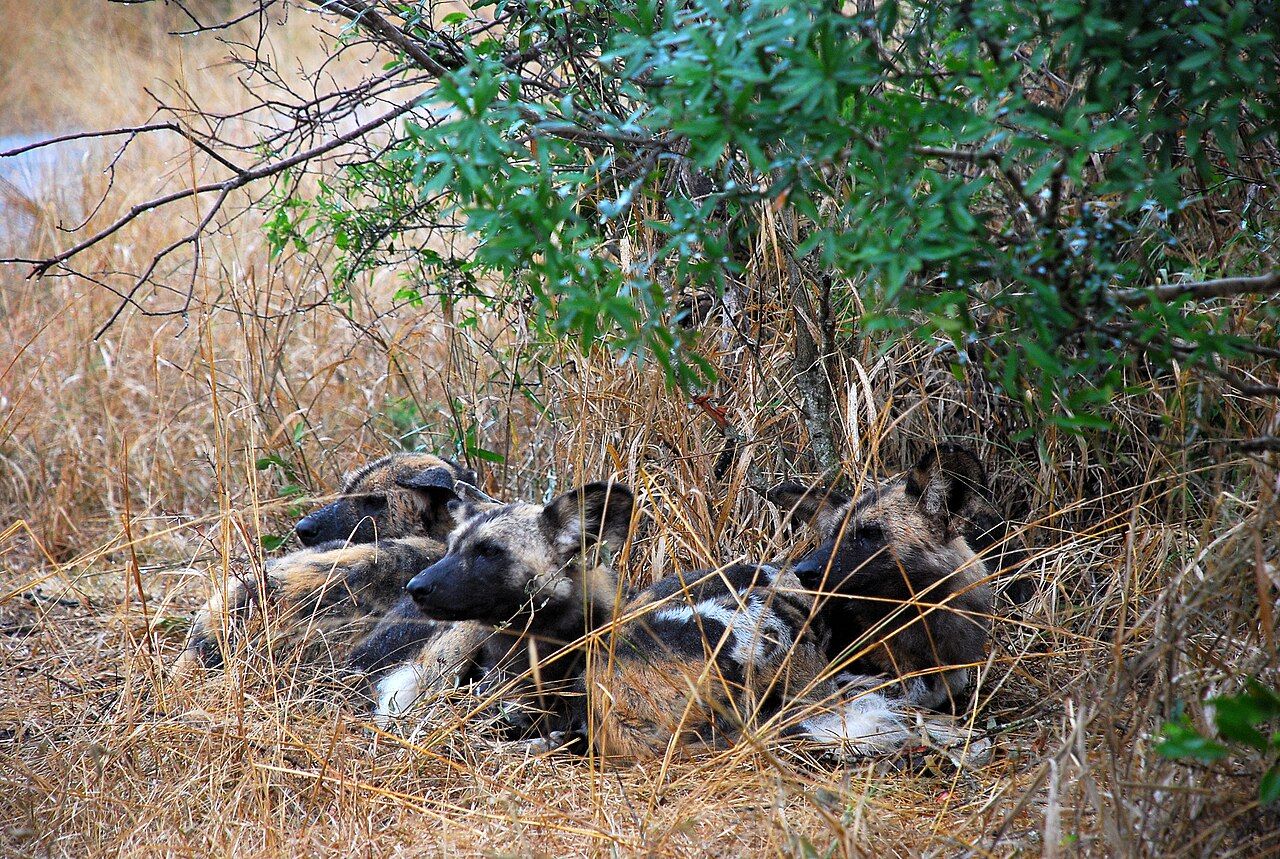
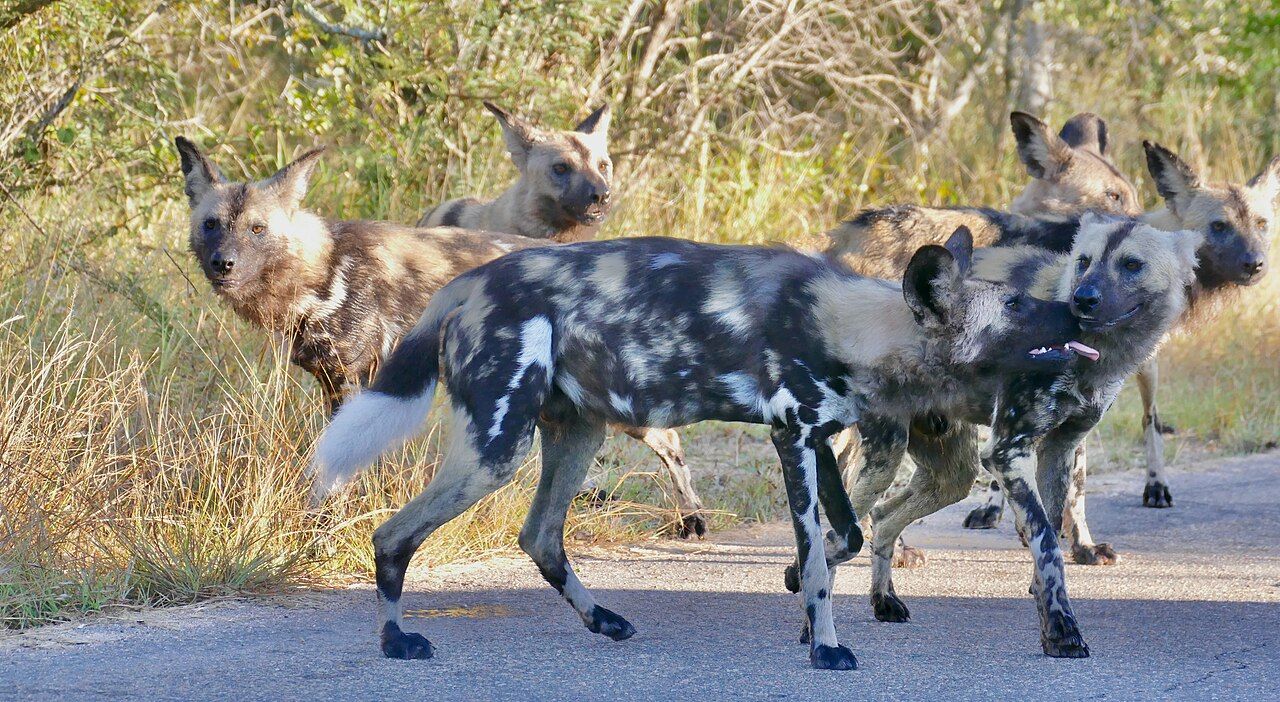
I start the morning of this account with the coat. Each dog has its own pattern of black, yellow and white patches. There is no standard uniform for the pack, which is sensible. Even a wild dog should be allowed a little individuality. The coat is the reason for the painted names; the less decorative detail is that the species is listed as endangered.
As the day moves on, the pack comes into view as a social arrangement rather than a collection of striking coats. Wild dogs live in packs, usually built around one breeding pair. The other members matter too. At the den, those that stayed behind receive meat regurgitated by pack members, as do the pups. A system with food brought back for those waiting has a certain plain efficiency. No grand speech required.
The den belongs in the story before the hunt, because the pack is not simply a set of animals taking off together. The needs of the pups and the adults that stayed are part of the picture. I like this practical detail. It makes the pack feel less like a slogan about teamwork and more like a group with actual work to do.
Then comes the decision to set off. A study in Botswana found that wild dogs ‘vote’ on whether to hunt by sneezing. The study was in 2017. I am fond of this arrangement. It is democratic, apparently, and has the advantage of being difficult to imitate in a meeting without looking unwell.
 CC BY-SA 2.0 — Bernard DUPONT from FRANCE
Once the decision is made, the hunt is mainly a matter of running prey down over long distances. The dogs need very large home ranges, often hundreds of square kilometres. That is a great deal of room to require, and a reminder that a pack’s life cannot be neatly contained within a small patch of map. The chase is not the whole day; feeding those at the den, and the space needed to keep going, belong to it too.
By the evening part of my telling, the map has widened. Strongholds include southern Tanzania, northern Botswana, Zambia, Zimbabwe and Kruger National Park. In southern Tanzania, there is the largest wild dog population. Botswana also has packs of the eastern Delta, and the phrase wild dogs back in Kenya offers another point on the map. These are not one continuous place for a species that needs room; they are the places named here where wild dogs still survive.
That survival is not secured by handsome coats. Diseases caught from domestic dogs, including rabies and distemper, have wiped out whole packs. Even the feet offer a small distinction: a wild dog has four toes on each foot, unlike a domestic dog, which has five on the front feet. A useful detail to finish on, though the larger figure is harder to shrug off.
The numbers: roughly 6,600 wild dogs left in the wild. I find that the least decorative fact of all.