Carmine bee-eaters on the Luangwa banks
The Luangwa’s sandy banks hold busy carmine bee-eater colonies, with tunnels, insect-catching and a great many nest holes. The valley has other birds to spare.
- Country
- Zambia
- Ground
- sandy riverbanks
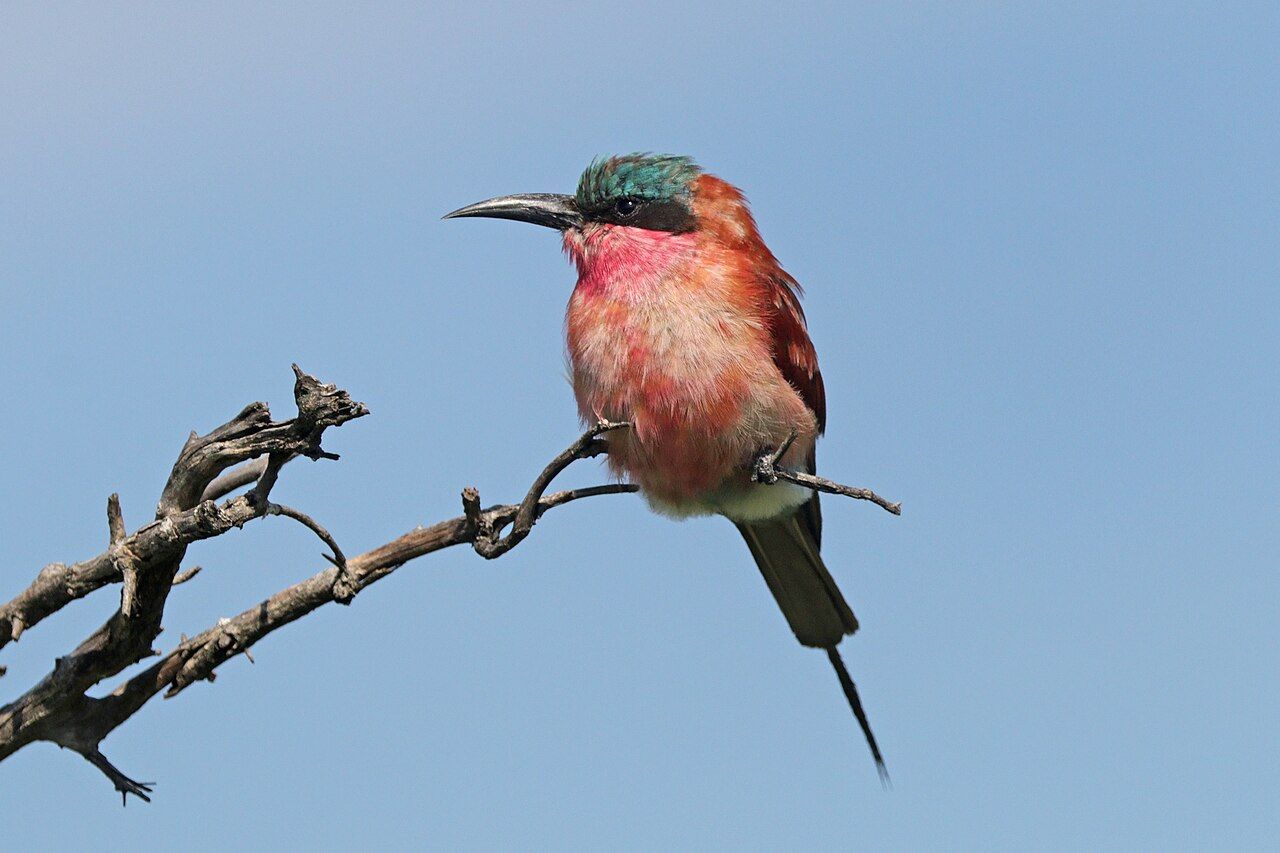 CC BY-SA 4.0 — Charles J. Sharp
“A nest chamber at the end.”
The bank is the address. The southern carmine bee-eater, Merops nubicoides, nests in colonies in vertical sandy riverbanks. I like the bluntness of this arrangement. No grand entrance, just a sandy wall and a great many small doorways.
There is work underground. Each bee-eater digs a tunnel into the bank, up to about 2 m long, with a nest chamber at the end. The colony’s visible face is all holes; the important part is tucked out of sight. A very practical division of labour.
Numbers gather. A single colony can hold hundreds or thousands of nest holes. Along the Luangwa, colonies are active roughly from August to November. I find the scale more striking than any grand description could make it. For another account of birds’ communal building, see communal nests in the Kalahari.
Lunch is airborne. Carmine bee-eaters catch flying insects, including bees and dragonflies. They knock out the sting before swallowing. There is a neatness to the procedure, though I would not care to be the insect. It is a small reminder that a bright bird may have a very matter-of-fact job.
Some take a ride. Some carmine bee-eaters perch on the backs of large birds, such as kori bustards, to catch insects those birds disturb. I like this arrangement: one bird does the walking, another takes the opportunity. The valley is evidently not short of ways to make a living.
The cast is larger. More than 400 bird species have been recorded in South Luangwa. Yellow-billed storks gather in the Luangwa lagoons as they dry, feeding on trapped fish. I have also written about the valley on foot. For a change of bird, there is Uganda's strangest bird.
The tunnels are the part I keep coming back to: a busy riverbank, with most of the work hidden inside it.
The numbers: August to November; tunnels up to about 2 m; more than 400 bird species recorded in South Luangwa.