Hwange's pumped pans
On Kalahari sand without permanent rivers, Hwange’s dry-season water story is less about rivers and more about boreholes.
- Country
- Zimbabwe
- Extent
- about 14,600 sq km
- Ground
- Kalahari sand, teak woodland and pans
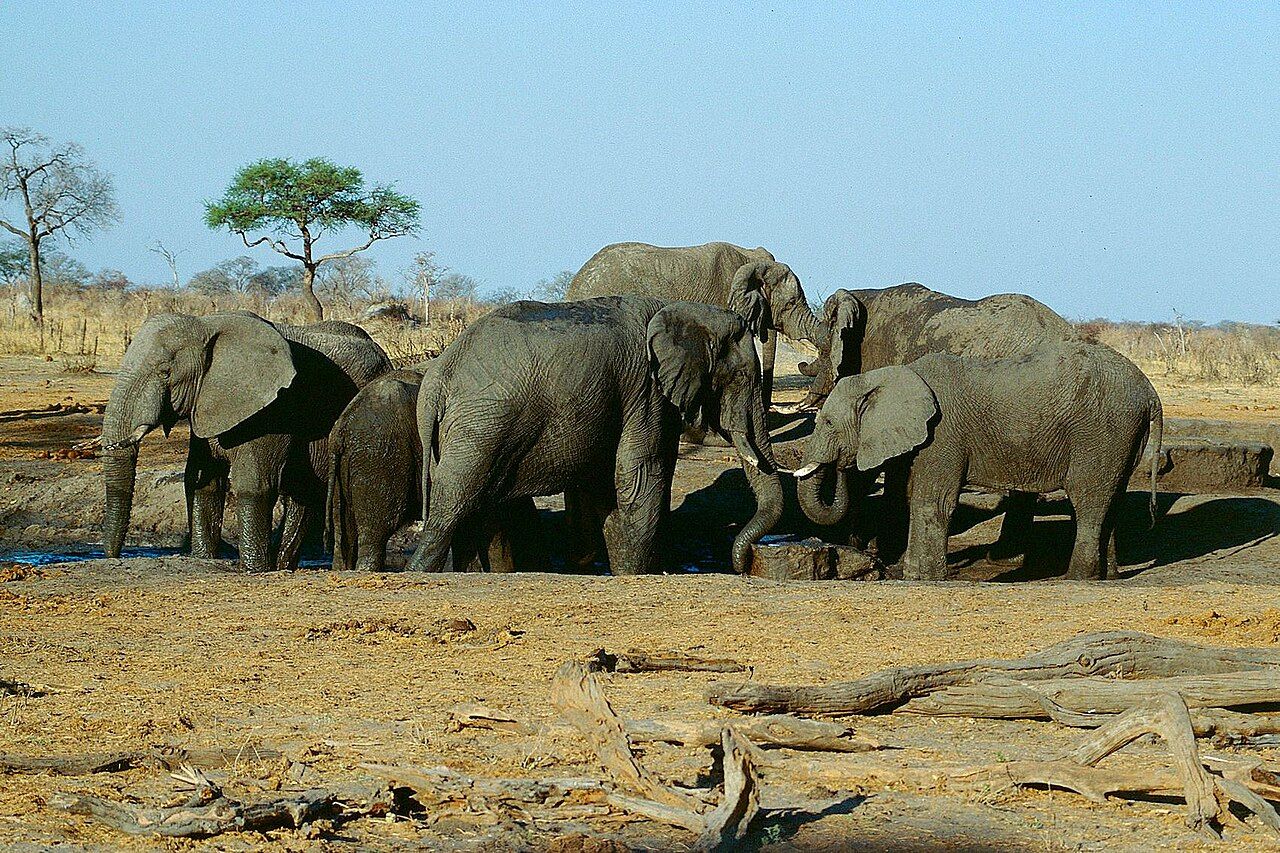 CC BY-SA 3.0 — Jürgen Kehrberger
I have a weakness for a story that refuses to make water sound more romantic than it is. In Hwange, the dry-season answer is a borehole, pumping into a natural pan. Not a grand river winding through the scene. A practical arrangement, doing its job while the rest of us admire the view.
Hwange covers about 14,600 square kilometres and is the largest park in Zimbabwe. Most of it lies on Kalahari sand, with no permanent rivers. That combination gives the pans more to do than simply decorate the map. Boreholes have kept animals in the park through the dry season since the 1930s. The useful bit is also the central story.
The park was set aside as a game reserve in 1928. Its first warden, Ted Davison, served from 1928 until 1961. It was called Wankie until 1982, and Hwange takes its name from a local chief. A place-name with a human history, then, alongside this very practical water system. I prefer that to pretending a park exists only as a collection of dramatic sightings.
At Nyamandhlovu Pan, there is a raised viewing platform over the water. The arrangement is refreshingly plain: a place to look out over a pan, in a park where water is pumped into natural pans. No need to embroider it. The word “borehole” may not be a show-off, but Hwange’s dry season would be a different story without it.
The elephant population is estimated at around 40,000 to 50,000. That is a substantial number to keep in mind when considering how much work the water system quietly does. I find the infrastructure more interesting than the usual urge to turn every large animal figure into a competition. Hwange has its own scale; it need not borrow one.
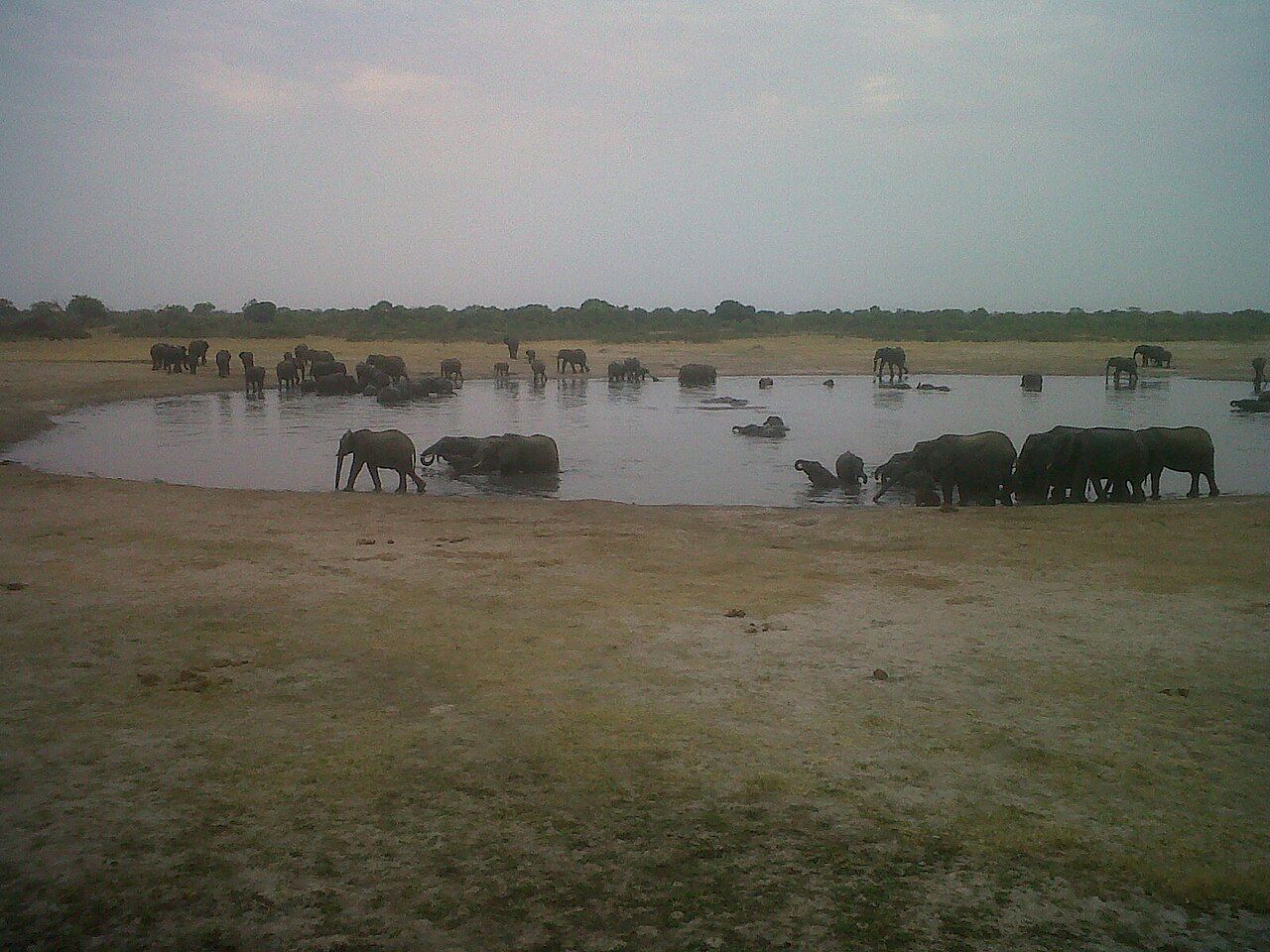 CC0 1.0 — Babakathy
Cecil, the lion studied in Hwange, was killed by a hunter outside the park in July 2015. It is a hard fact beside the patient, ongoing business of keeping animals in the park through the dry season. I would rather not reduce Hwange to one famous lion, but the story belongs in its record all the same.
The Bulawayo-Victoria Falls railway runs along part of the park’s north-eastern boundary. Another line on the map, and another reminder that the park is not a sealed-off idea. For a different view of large herds and water, I would follow on to Chobe's riverfront herds. The regional animal story also includes painted dogs of the region, without needing to make Hwange stand in for everywhere.
What stays with me is the contrast: Kalahari sand, no permanent rivers across most of the park, and water being pumped into pans since the 1930s. It is not a romantic solution. It is a durable one. If waterholes are the subject, waterholes in Namibia's great park make a neat next stop.
The numbers: about 14,600 square kilometres; around 40,000 to 50,000 elephants; borehole pumping since the 1930s.