The sociable weaver’s apartment block
A Kalahari bird builds a roofed community, and the spare chambers draw in tenants that make the weaver’s grand design feel less private.
- Country
- South Africa / Botswana / Namibia
- Ground
- camelthorn savanna
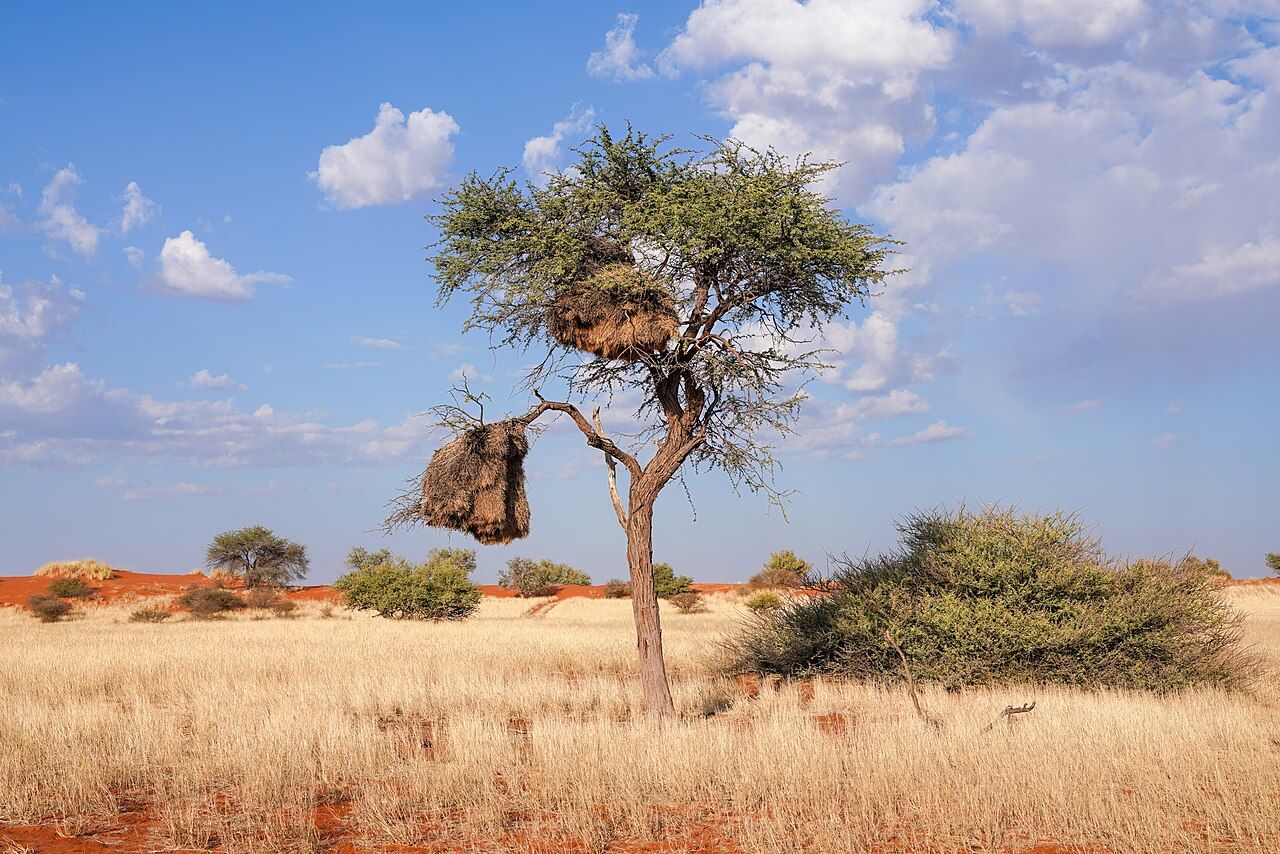 CC BY-SA 4.0 — Giles Laurent
“Many separate chambers under one thatched roof.”
The sociable weaver is a small bird of the Kalahari and neighbouring dry lands. Its nest is the largest communal nest built by any bird. I find the scale mildly unreasonable, in the best possible way: a structure with a clear front door is apparently too ordinary. The architecture is one roof, many chambers, and a great deal of shared address.
These nests are often built in camelthorn trees. More recently, telephone poles have joined the list. I like this practical shift from tree to pole. The weaver, it seems, is not fussy about the support, provided the apartment block can be assembled.
There is a long view to the arrangement. Some nests have been in use for many decades. I find my thoughts straying from the communal roof to the Kgalagadi's dry riverbeds, then back to a home that keeps its tenancy going across decades. A bird nest with a longer lease than most people manage.
The thatch is not merely decoration. It keeps the chambers cooler by day and warmer on cold desert nights. That is a useful bit of construction, rather than an ornamental flourish. The roof does what it says on the tin, though perhaps the tin would be a poor choice of material.
The spare rooms attract other residents. The African pygmy falcon, Africa’s smallest raptor, nests in sociable weaver chambers. It is an arrangement I would not have guessed from looking at the building plan. Elsewhere in my bird notes: a strange swamp bird. A useful reminder that birds rarely consult my expectations.
Not every neighbour is welcome. Snakes such as the Cape cobra raid weaver nests for eggs and chicks. The communal roof, then, is no guarantee of a peaceful building. I have a soft spot for the weaver’s ambition, but the property comes with a rather serious management problem.
And the Kalahari is not the only place my mind goes while thinking about birds and their chosen homes: bee-eaters nesting in riverbanks. The weaver’s version remains the one that gets me. Many chambers, one roof, and a structure still in use for decades. Quite a lot of neighbourhood for a small bird.
The numbers: a single sociable weaver nest can house more than 100 birds.
I would take this apartment block over a neat little nest, every time.