The Great Migration, month by month
The herds follow rain and fresh grass around the Serengeti-Mara ecosystem. The calendar is less a spectacle than a long, practical answer to where the grass is.
- Country
- Tanzania / Kenya
- Extent
- about 14,763 sq km (Serengeti NP)
- Ground
- short- and long-grass plains
 CC BY-SA 4.0 — Wolves201
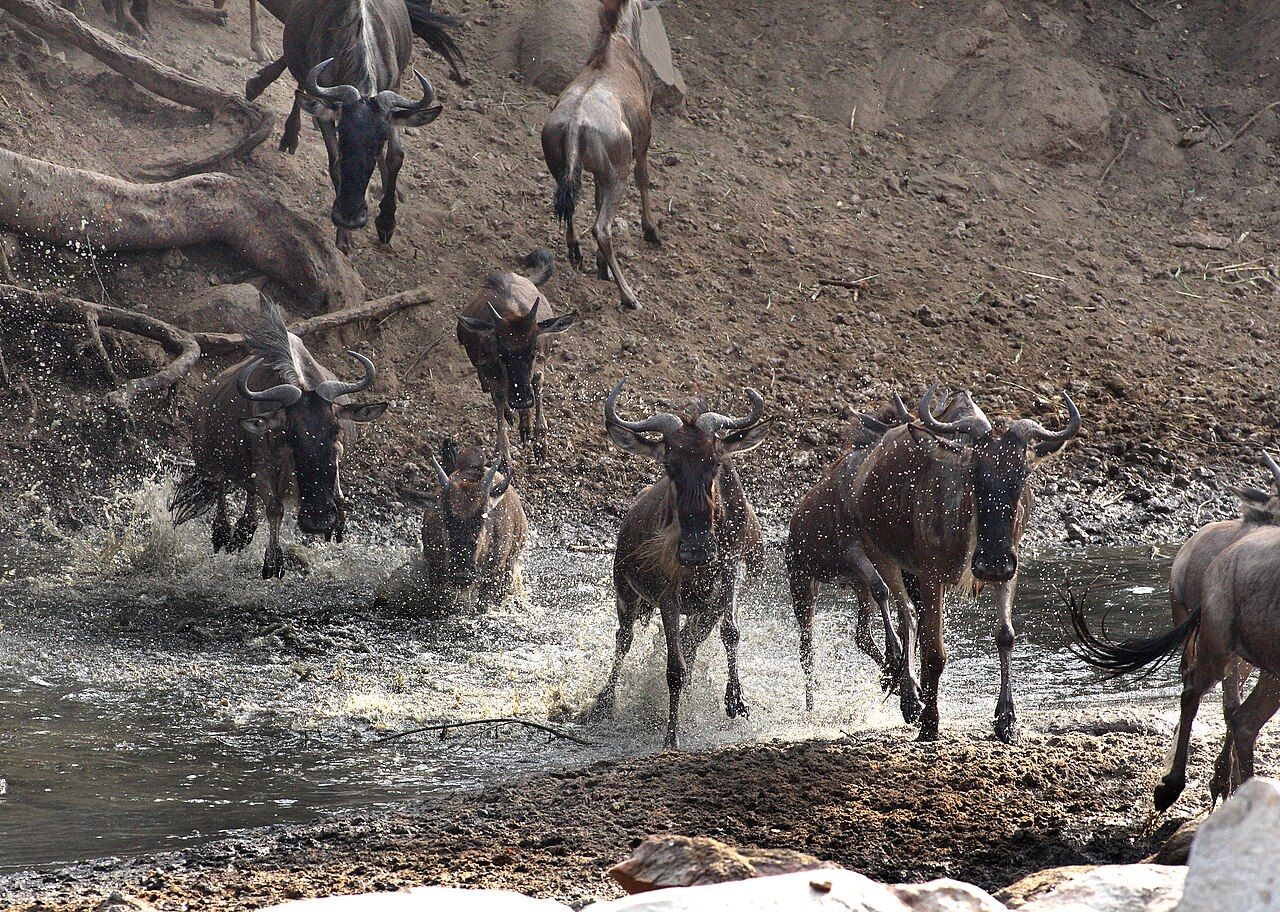
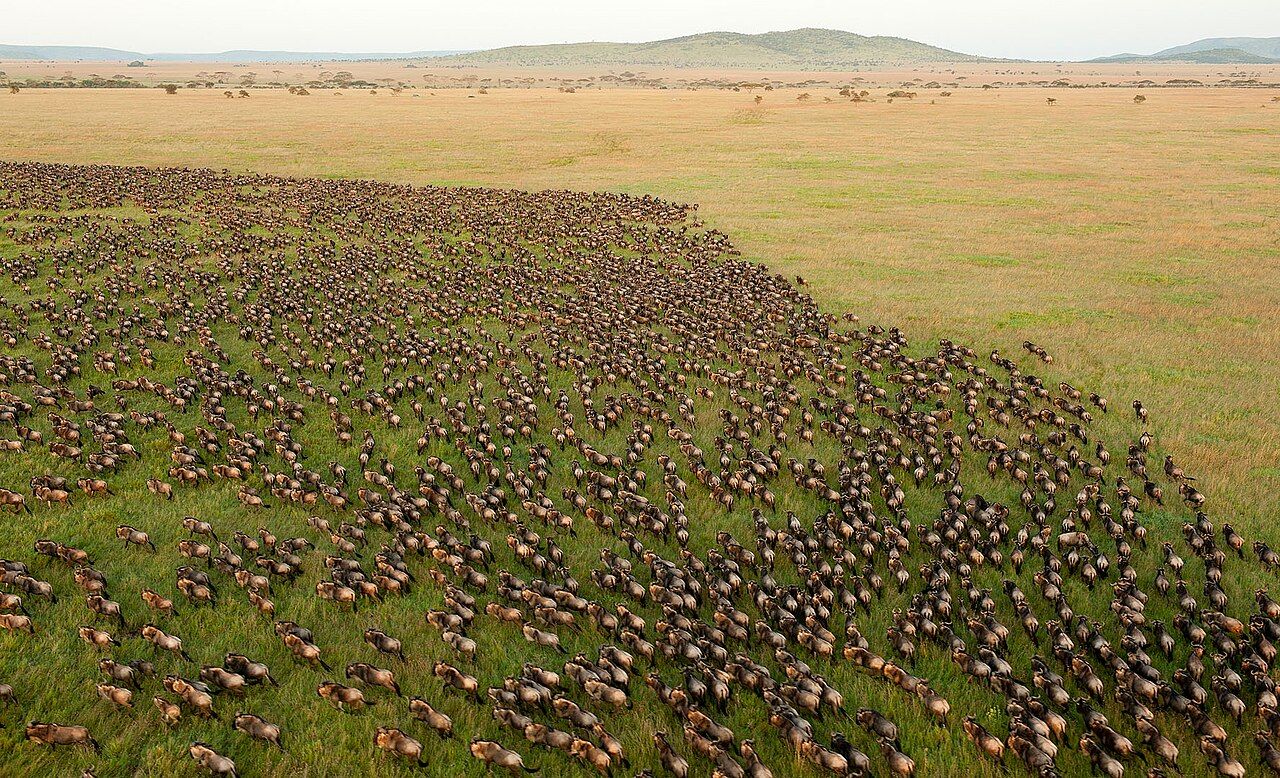
I used to picture the migration as one grand crossing, with a beginning, a climax and the sort of tidy ending a calendar likes. The actual loop is less accommodating. About 1.3 million wildebeest, roughly 200,000 zebras and many gazelles move through the Serengeti-Mara ecosystem each year, following rainfall and fresh grass in a broadly clockwise circuit between Tanzania and Kenya. The river crossings have their drama, but they are not the whole story. Grass is less photogenic. It does, however, get a vote.
The migration is a calendar written in grass, with rain holding the pencil.
 CC BY 4.0 — Daniel Rosengren
The migration is a calendar written in grass, with rain holding the pencil.
The calendar
December to January. From about December, the herds graze the short-grass plains of the southern Serengeti and the Ndutu area. This is the start of the southern part of the loop, not a curtain going up on a single event. The herds have followed rainfall and fresh grass here. The useful detail is the ground itself: these plains grow on volcanic soils rich in minerals, which suits lactating wildebeest. A landscape can be both immense and practical. The wildebeest appear to have made their choice.
February. Most wildebeest calves are born within a few weeks around February. At the peak, several thousand are born a day. That is a great deal of new life concentrated into a short stretch of the calendar, and it makes the southern plains more than a place to graze. The mineral-rich volcanic soils suit lactating wildebeest; the calving period belongs in the same picture. The word “migration” tends to make me think only of movement. February is a good reminder that the loop has pauses with a purpose.
March. The herds continue grazing the short-grass plains of the southern Serengeti and Ndutu area through about March. I like this part of the calendar because it resists the temptation to turn every month into a separate attraction. The herds are still following the grass, and the southern plains remain the setting. For another view of this part of the map, there is crater beside the calving plains. The calendar is broad rather than exact; the facts are not asking for a daily itinerary.
April and May. As the plains dry out in April and May, the herds move north-west towards the Western Corridor. It is a shift in direction prompted by drying grass, not a dramatic change of character. The migration’s organising principle remains rainfall and fresh growth. I find that less glamorous than the idea of a herd on the march, and more convincing. A long loop across Tanzania and Kenya is not a performance arranged around a convenient viewing point. It is movement in response to conditions.
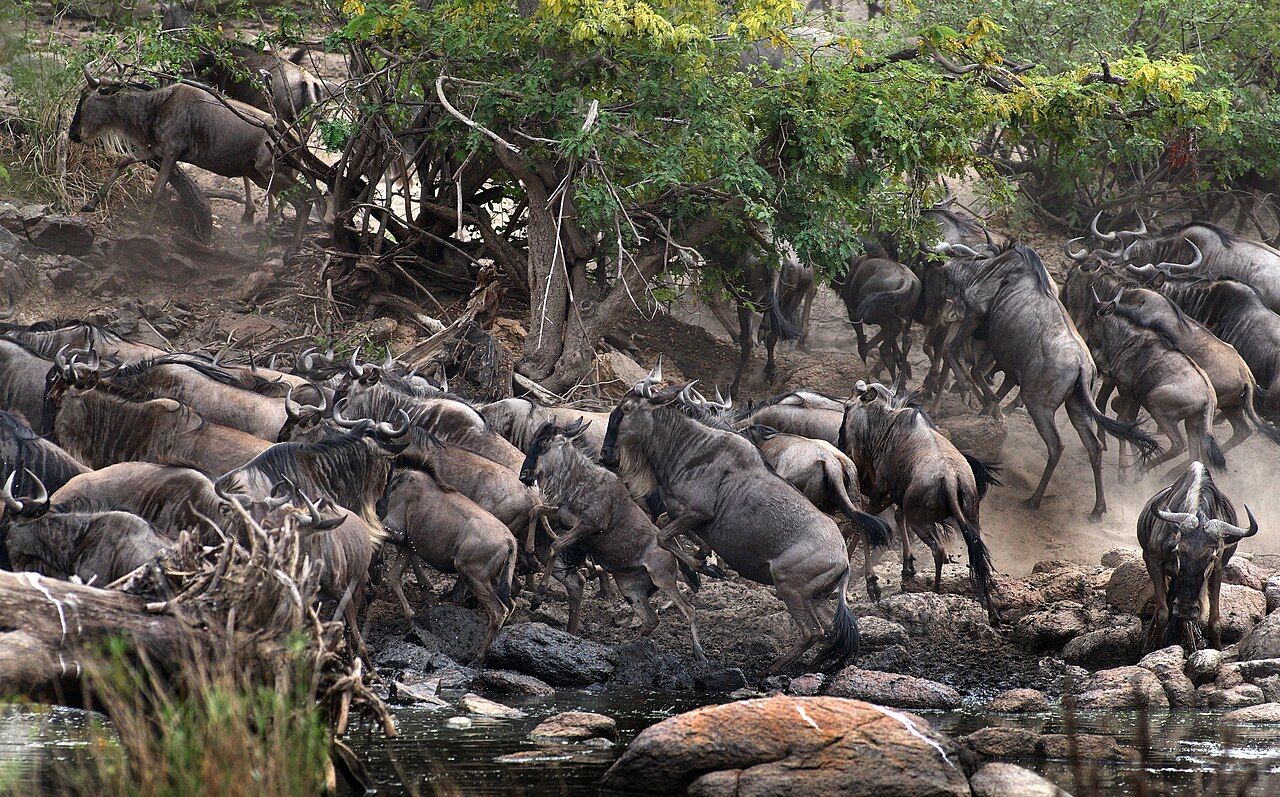
June. Around June, the herds cross the Grumeti River in the Western Corridor. The crossings have their own pull, and drama at the Mara crossings is another chapter in that river story. Still, June belongs to the Western Corridor and the Grumeti River; the Mara is not a substitute for the whole annual loop. I would resist treating a crossing as the plot and everything else as the prologue. The herds have already travelled through the southern plains, and they have further ground ahead.
July to October. Much of the migration grazes the northern Serengeti and Kenya’s Maasai Mara from July to October. This is the stretch most likely to be reduced to one famous scene, which seems a little unfair to four months of grazing. The herds are still moving through the ecosystem in response to rain and fresh grass; the map has simply carried them north. Other stories belong to this wider landscape too, including far-ranging pack hunters. The migration does not need to be the only thing happening to remain the main subject.
November. With the short rains of November, the herds move back south towards the calving plains. It is the return leg of the broadly clockwise loop, and a reminder that “annual” does not mean a neat circle drawn with a ruler. The movement follows rainfall and fresh grass, so the month names are a guide to the pattern rather than separate scenes with hard edges. For the weather behind this turning of the calendar, see the two rainy seasons explained.
The larger frame. Serengeti National Park was established in 1951 and covers about 14,763 square kilometres. The inscription is noted as: UNESCO World Heritage list in 1981. Serengeti comes from the Maa word siringet, meaning “endless plains”. Bernhard Grzimek’s film Serengeti Shall Not Die won the Academy Award for best documentary in 1960. Those facts sit behind the calendar, but do not replace it. The park’s name gives a sense of scale; the yearly loop gives that scale a direction.
 CC BY-SA 4.0 — Wolves201
The crossing is a scene; the grass is the reason the story keeps moving.
The numbers: about 1.3 million wildebeest; roughly 200,000 zebras; about 14,763 square kilometres for Serengeti National Park.