Olduvai Gorge and the footprints at Laetoli
A plant gives Olduvai its name; ash and sediment hold a long record beneath it. At Laetoli, footprints preserve upright walking from long before stone tools.
- Country
- Tanzania
- Extent
- about 48 km long gorge
- Ground
- eroded ravine on dry plains
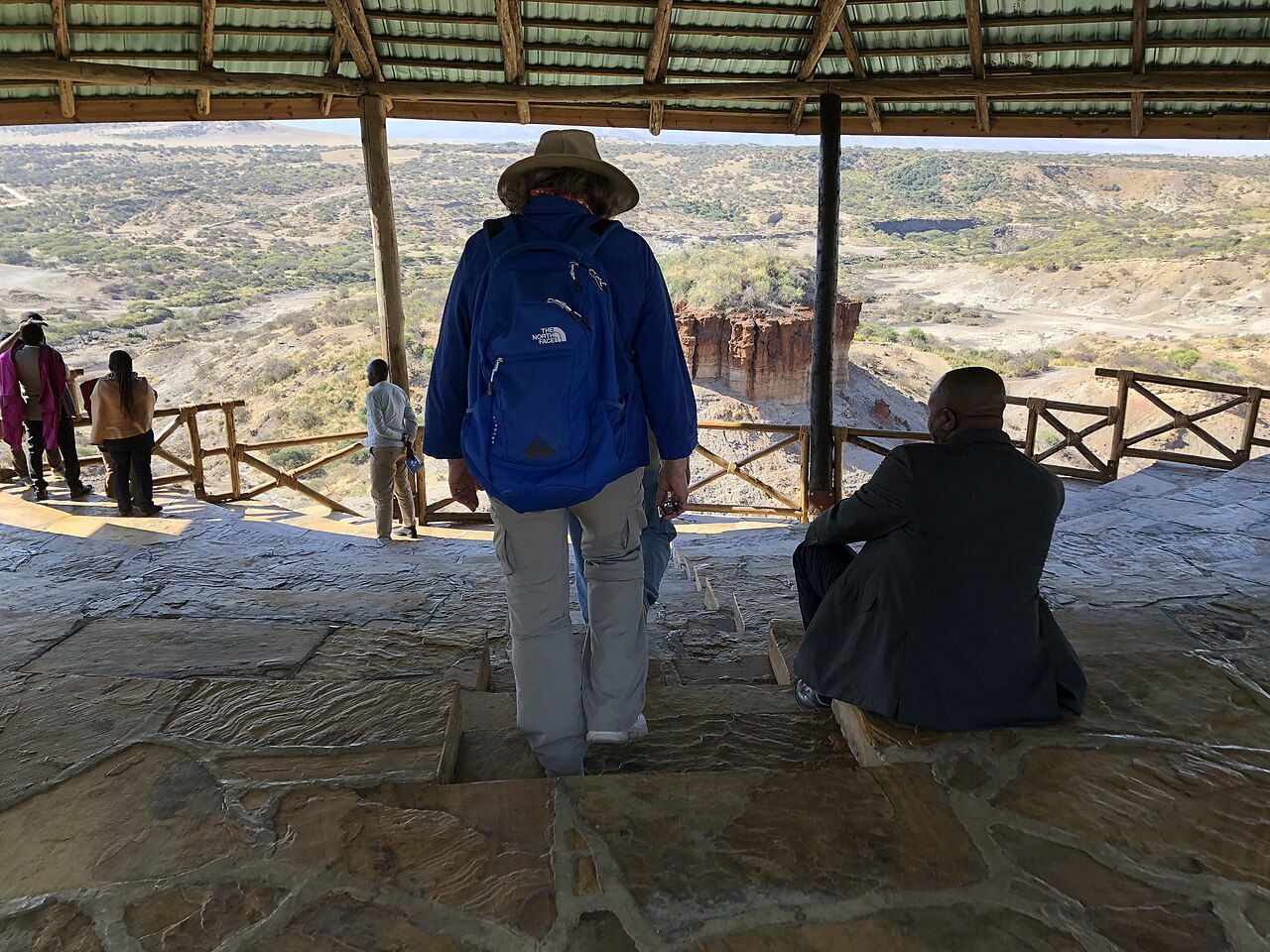 CC BY-SA 4.0 — Kufundisha
I keep getting caught by the name before the fossils. Oldupai refers to the wild sisal plant, Sansevieria ehrenbergii, that grows in the gorge. A plant, then a ravine, then a record measured in millions of years. It is a pleasingly un-grand beginning for a place whose name carries so much weight. I prefer it to grand beginnings, which tend to arrive with a lot of luggage.
Olduvai is a steep ravine about 48 km long in the eastern Serengeti plains, inside the Ngorongoro Conservation Area. The terrain is an eroded ravine on dry plains: not a phrase that needs much decoration. The shape of the place does some of the explaining. It is easier to think of layers here than of one neat moment, one discovery, one name on a label.
Layers of volcanic ash and lake sediment in the gorge span roughly 2 million years. That is the scale that makes my usual sense of time feel rather overconfident. A layer is not a tidy chapter heading. It is a piece of the record, and the record asks for patience. I find that a welcome correction to the urge to turn every important place into a single dramatic scene.
A museum stands on the rim of Olduvai Gorge above the main excavation sites. Its position is a useful reminder that the story is not only inside the ground, nor only in the names attached to finds. The gorge itself is the setting for the work. I like that the museum is described by where it stands, above the sites, rather than by any claim that it can make the scale feel simple.
On 17 July 1959, Mary Leakey found the skull known as Zinjanthropus at Olduvai. It is now Paranthropus boisei. The change in name is a small lesson in how settled things are not always settled. The find has its date, its place and its old name; the newer one sits beside it. The sequence makes its point without fuss. No need to pretend a label is the whole story.
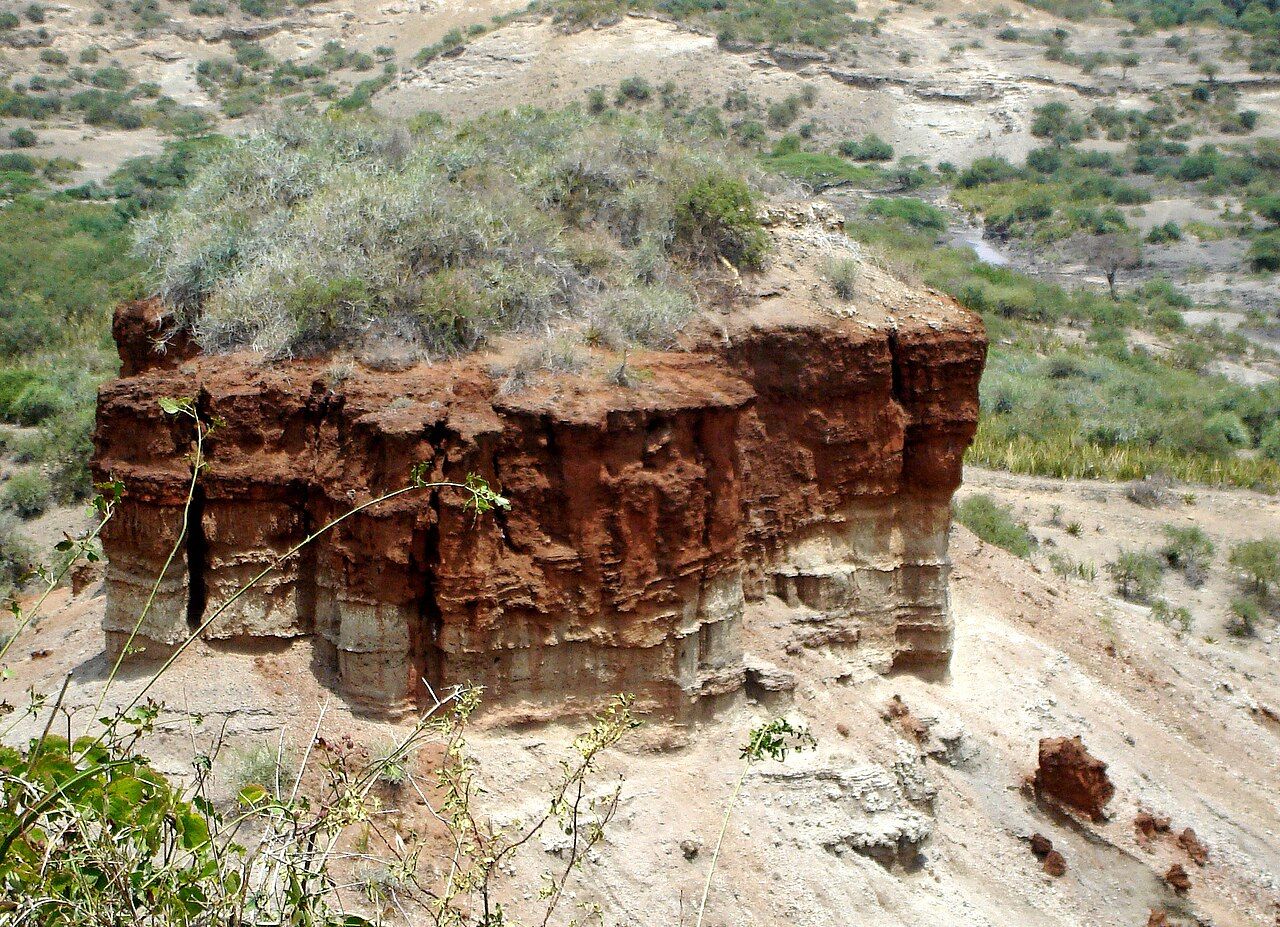 CC BY 2.0 — gailhampshire from Cradley, Malvern, U.K
Louis Leakey and colleagues named Homo habilis in 1964 from fossils found at Olduvai. Simple stone tools found there gave their name to the Oldowan tool industry. The tools are simple; the consequences of naming a whole industry after them are not. I find this part particularly good at resisting a clean dividing line between discovery and interpretation. Even a name can keep doing work after the find itself.
South of Olduvai, at Laetoli, a team led by Mary Leakey found fossil hominin footprints in 1978. The footprints were left in volcanic ash about 3.6 million years ago. Their trail shows upright walking on two feet long before stone tools appear in the record. That order stays with me: walking, preserved in ash, before the tools. A track can make a fact feel close without making the time behind it any less immense.
Olduvai and Laetoli make different kinds of evidence do their quiet work. One is layers of ash and lake sediment; the other, a trail in volcanic ash. Neither needs me to improve it with a grand conclusion. For a different kind of mark, there is ancient art carved into sandstone. The wider Ngorongoro story also keeps pulling me towards the caldera next door.
For another long record made through looking closely, there is decades of chimpanzee research.