Volcanoes, gorillas and Dian Fossey in Rwanda
A chain of volcanoes, a research centre between two peaks, and a yearly naming ceremony: the mountain story is not short of names.
- Country
- Rwanda
- Extent
- about 160 sq km
- Ground
- volcanic slopes, bamboo and montane forest
 CC BY 2.0 — Nina R
“Gorillas in the Mist”
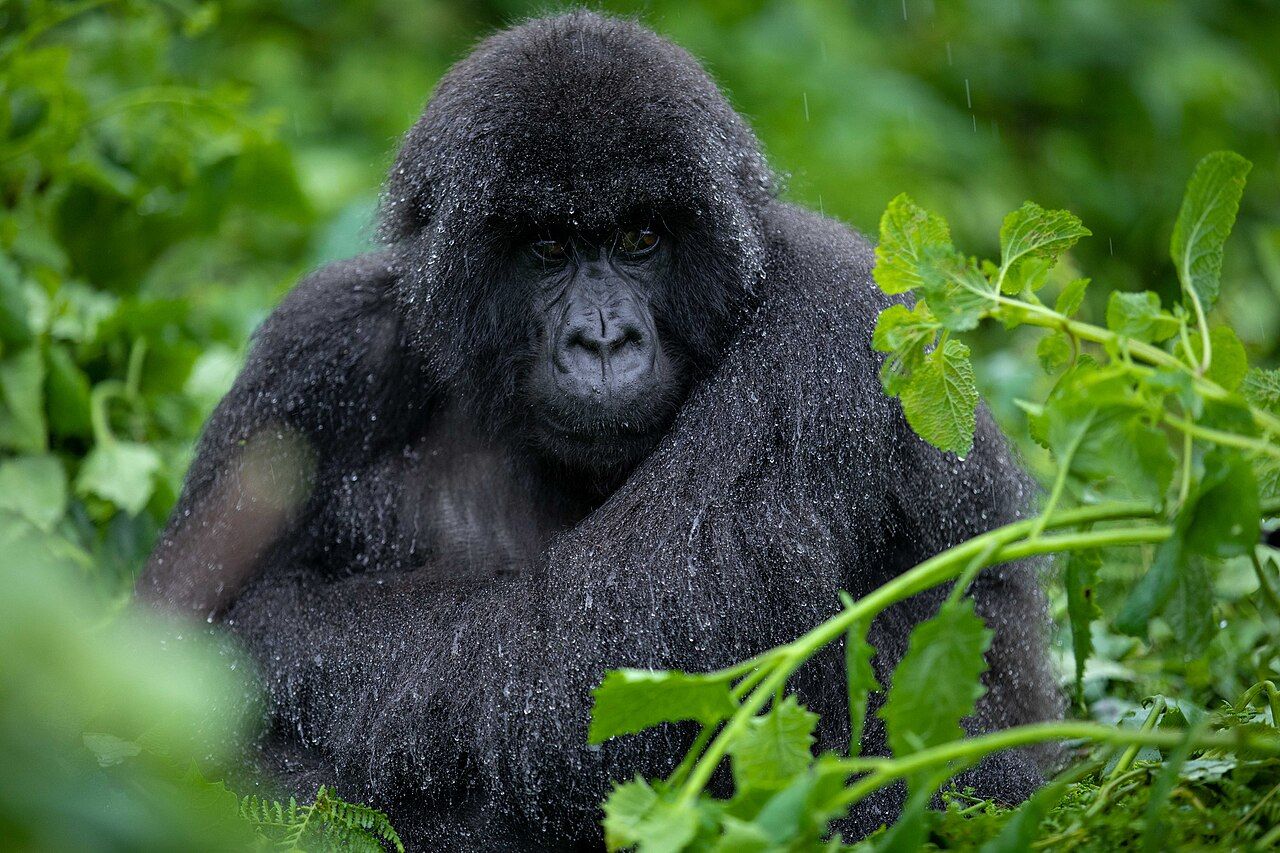
The title of Dian Fossey’s book has the economy of a good mountain name. Her work is here too: in the research begun at Karisoke, and in the gorillas buried beside her. Volcanoes National Park holds the Rwandan side of the Virunga volcanoes. That is a lot of landscape and history to fit into one park. I find it helps to take them one point at a time.
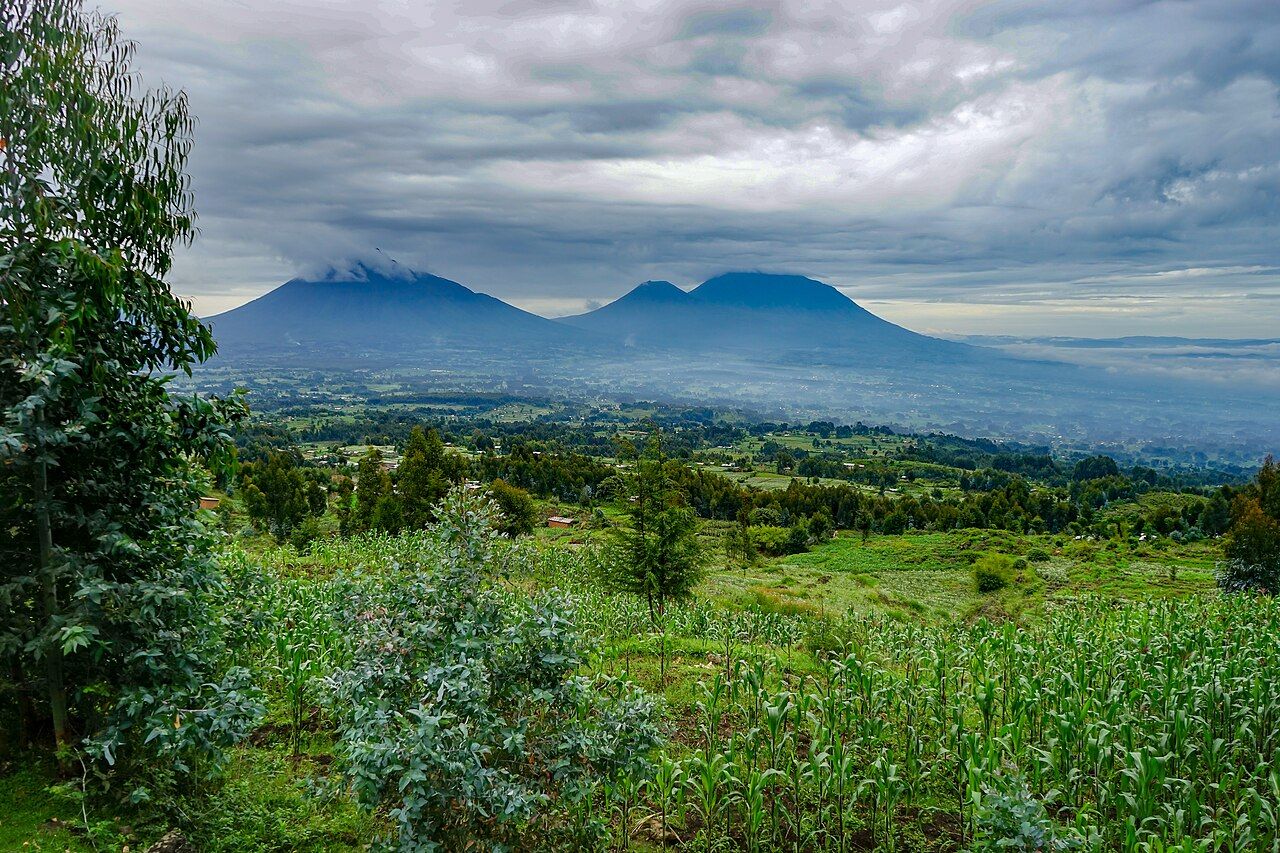
The park is in north-western Rwanda, protecting the Rwandan side of the Virunga volcanoes. The chain has eight major volcanoes on the borders of Rwanda, Uganda and the Democratic Republic of the Congo. A shared range makes for a more interesting map than a mountain standing by itself, though maps are not famous for conveying the feeling of a place. The linked story of Uganda's gorilla forest belongs in the same broad conversation. This is not a row of isolated peaks; the borders run through a connected chain. The park covers about 160 sq km, with volcanic slopes, bamboo and montane forest; that is a compact area for a chain with such a large geological presence.
There is a long history behind the park. Albert National Park, created in 1925 and covering the Virunga volcanoes, was the first national park in Africa. Volcanoes National Park now protects the Rwandan side of that chain. I like the way those two facts sit together: a landscape whose protection has a history, and a present-day park with a defined piece of the range in its care. The Rwanda Development Board manages Volcanoes National Park. Even a mountain story, it seems, eventually needs a line in an organisation chart.
Karisimbi is the highest of the Virunga volcanoes, at 4,507 m. Mount Bisoke has a crater lake at its summit. Between the two, Dian Fossey founded the Karisoke Research Center on 24 September 1967. The names do useful work here. They pin the research to a particular place, between two particular volcanoes, rather than leaving it floating as a general story about conservation. The mountain names do useful work here: they keep the story anchored in a place, not only in a portrait.
The mountain names do useful work here: they keep the story anchored in a place, not only in a portrait.
Fossey was murdered at Karisoke in December 1985 and is buried there beside the gorillas she studied. There is no neat way to make that sentence easy. The detail that stays with me is the place: Karisoke, between Karisimbi and Bisoke, where she founded the research centre. It keeps the work and the loss close to one another. The story is not only a biography, and not only a story of gorillas. The location holds both, without needing a grander explanation.
The Dian Fossey Gorilla Fund continues the research Fossey began at Karisoke. Her book, Gorillas in the Mist, was published in 1983. Those are distinct parts of the story: research that continues, and a book with a date attached to it. I would rather keep them distinct than turn them into a single heroic summary. The linked account of chimpanzee study on Lake Tanganyika offers another point of connection for anyone following stories of research with primates. One subject at a time is quite enough.
Since 2005, Rwanda has held Kwita Izina, a yearly ceremony to name baby gorillas. I like the specificity of this tradition: a yearly event, and the naming of young gorillas. It gives the story a present-tense thread beside the history of Karisoke. The linked account of the volcanic caldera in Tanzania is another way into the region’s volcanic landscapes, though the details here belong to Rwanda and the Virunga chain. Volcanoes do not mind sharing a page; the facts still need their own addresses.
Gorillas are not the only animals in this landscape. Rare golden monkeys live in the bamboo forests of the Virunga volcanoes. The park’s terrain is volcanic slopes, bamboo and montane forest, a compact set of words that gives the place more than one texture. I would not reduce it to a gorilla story, even though Fossey’s work is the part with the strongest historical pull. The linked account of Rwanda's eastern savanna points to another landscape within the country. Different terrain, different story; no need to make them compete.
 CC BY-SA 4.0 — Emmanuelkwizera
The numbers: Rwanda; about 160 sq km; volcanic slopes, bamboo and montane forest.
I’d keep the volcanoes and Karisoke in the frame; the gorilla story is stronger with both.