Where the Big Five came from
A phrase born in hunting, carried into safari talk and banknotes, and joined by a smaller set of animals with equally grand names.
- Country
- Southern and East Africa
- Ground
- savanna
 CC BY 2.0 — Vaughan Leiberum from Cape Town, South Africa
I find the Big Five a slightly misleading name. It sounds like a ranking by size, or perhaps a list made by someone who enjoys making lists. Its origin is less grand: hunters named the animals they considered hardest to hunt on foot. The phrase has since acquired a life of its own, which is a neat trick for a label with such a specific beginning.
The original meaning was practical, from the hunter’s point of view. The Big Five were the five animals considered the hardest animals to hunt on foot. Not the five largest. Not a list of the animals with the most imposing names. A measure of danger to a hunter, which gives the phrase a rather different flavour from the one it has on safari now.
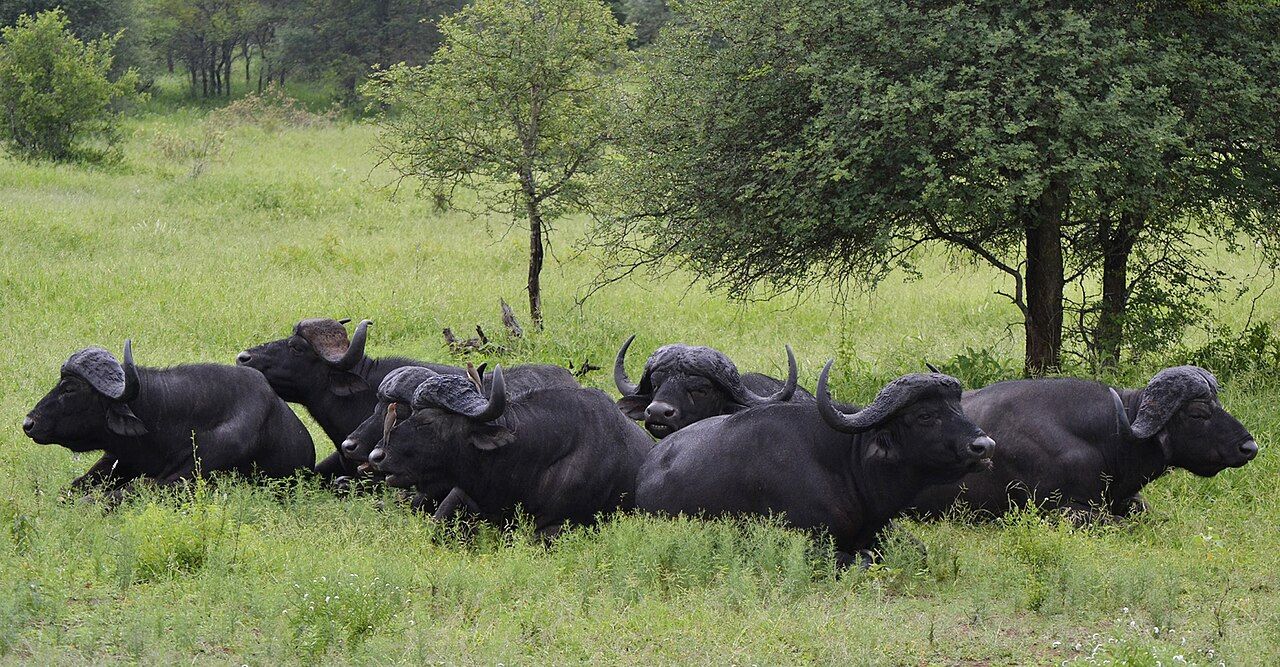
The five are the lion, the leopard, the African elephant, the rhinoceros and the African buffalo. That is the entire set. The phrase is now used across eastern and southern Africa for parks that hold all five, and has become part of the language around a typical game-drive day. It travels rather further than its original purpose.
Size is not the test. The hippo and the giraffe are left out because the list is about danger to a hunter, not bulk. I like this distinction. A name that sounds like a straightforward inventory turns out to be a record of what its makers feared, which is not quite the same thing as a guide to what looks impressive.
There is room for both the black rhino and the white rhino in the Big Five. The list says “the rhino”, singular, but the category includes both. It is a small wrinkle in a phrase that is usually treated as if it were a fixed, tidy unit. The tidiness, it turns out, is mostly in the wording.
The leopard is usually the hardest of the five to see. It is solitary and mostly nocturnal, which makes it a quiet reminder that being on a list does not guarantee an appearance. The name is there; the animal may not be. I find this more persuasive than a list that promises the satisfaction of ticking everything off.
The phrase also has a place on South African banknotes issued from 2012. Nelson Mandela is on the front of each note, with one of the Big Five on the back: a rhino on the 10-rand note, an elephant on the 20, a lion on the 50, a buffalo on the 100 and a leopard on the 200. A very compact field guide, with rather less mud.
Then there are the Little Five: the elephant shrew, the ant lion, the leopard tortoise, the buffalo weaver and the rhino beetle. The names borrow their shape from the larger list, though the animals are a different set. The Big Five label also appears in references to parks, from South Africa's flagship park to Rwanda's restored five. The old hunting phrase has become a way of describing where all five are found.
 CC BY-SA 4.0 — Rasheedhrasheed
The numbers: five animals; for another angle, read on foot among them.