Walking the roadless wilderness of iMfolozi
A pack, armed rangers and no roads inside: iMfolozi’s wilderness trails began in the nineteen-fifties, in a landscape between the Black and White Umfolozi rivers.
- Country
- South Africa
- Extent
- about 30,000 ha
- Ground
- roadless river country
 CC BY-SA 2.0 — Robert Cutts
I have a weakness for a plan with no vehicle-sized loophole. In iMfolozi, a wilderness trail means carrying a pack and sleeping out in the bush. The arrangement is direct. The pack, presumably, does not negotiate.
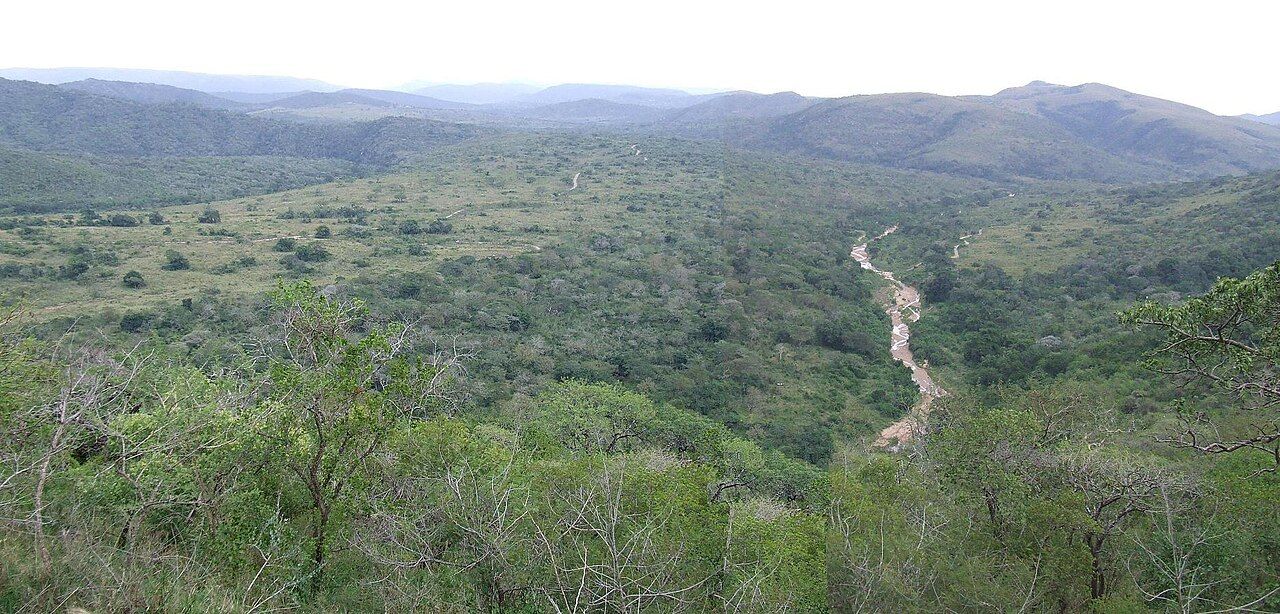
The wilderness area has no roads or buildings inside it. It covers about 30,000 hectares between the Black and White Umfolozi rivers. I like the unadornedness of that: country to cross on foot, without a building appearing to soften the idea of being out in it.
Ian Player began leading wilderness trails here in 1957. In 1958, a roadless wilderness area was set aside in iMfolozi, one of the first formally declared in Africa. The dates sit close together, which gives the story a pleasingly practical shape: the walking came first, then the formal boundary.
The trails are led by armed rangers and limited to small groups. That is a particular sort of company. Not a procession, not a crowd with a common timetable. I would rather have the rangers and the pack than a road cutting across the premise.
Player also founded the Wilderness Leadership School in 1957 and the World Wilderness Congress in 1977. The name of the place is doing useful work here. Wilderness is not just a mood or a view; in iMfolozi it has a boundary, and no roads or buildings inside it.
The Black Umfolozi and White Umfolozi meet east of the park to form the Umfolozi River. I find that detail a good ending to the map, though not quite the end of the walking story. For another version of the idea, there is Zambia's walking tradition.
The history has its other paths, too: rangers who saved the rhino, and walking among Zambezi elephants.
The numbers: about 30,000 hectares; trails began in 1957; the wilderness area was set aside in 1958.