Bwindi’s gorillas, and the forest around them
A day’s account of Bwindi’s steep forest: its mountain gorillas, how families came to be visited, and the Batwa who lived there before the park was created.
- Country
- Uganda
- Extent
- about 331 sq km
- Ground
- steep montane rainforest
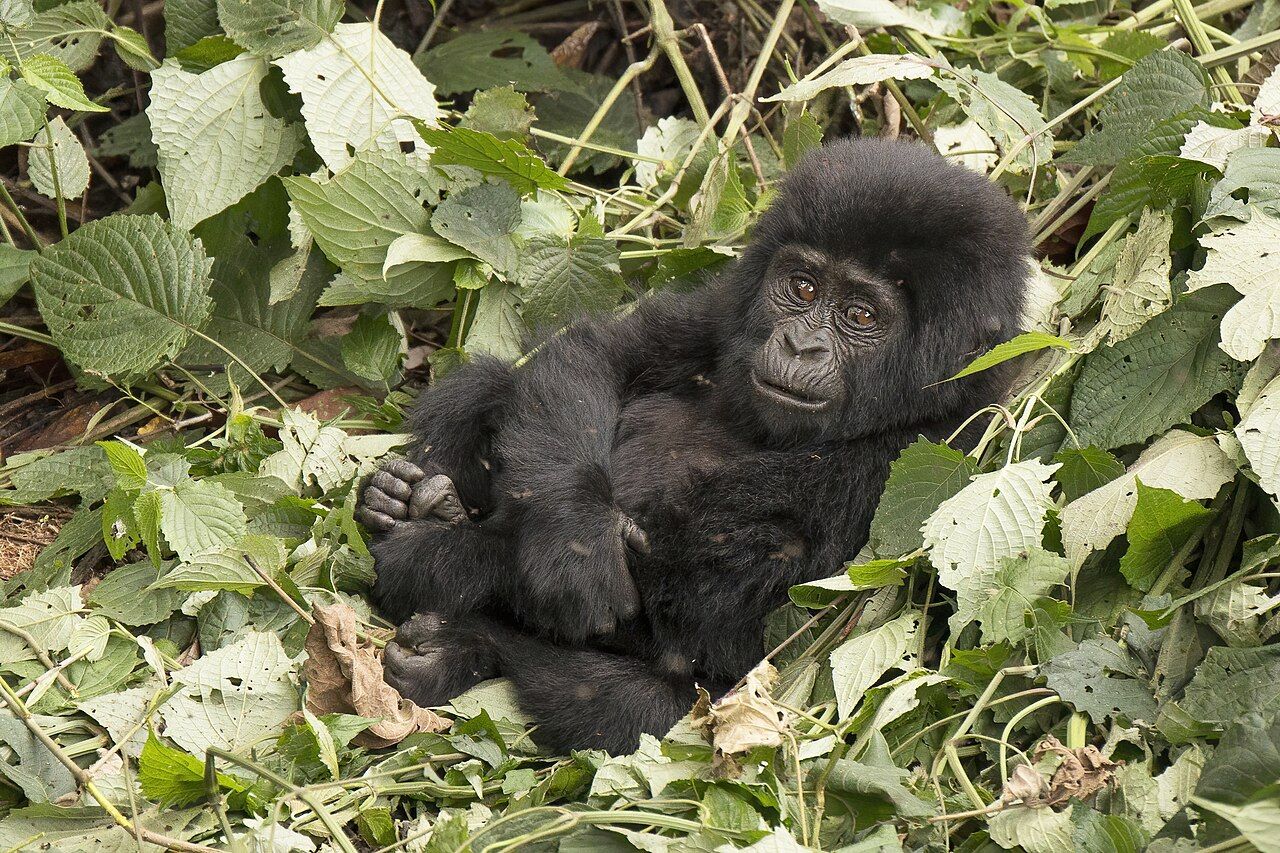 CC BY-SA 4.0 — Charles J. Sharp
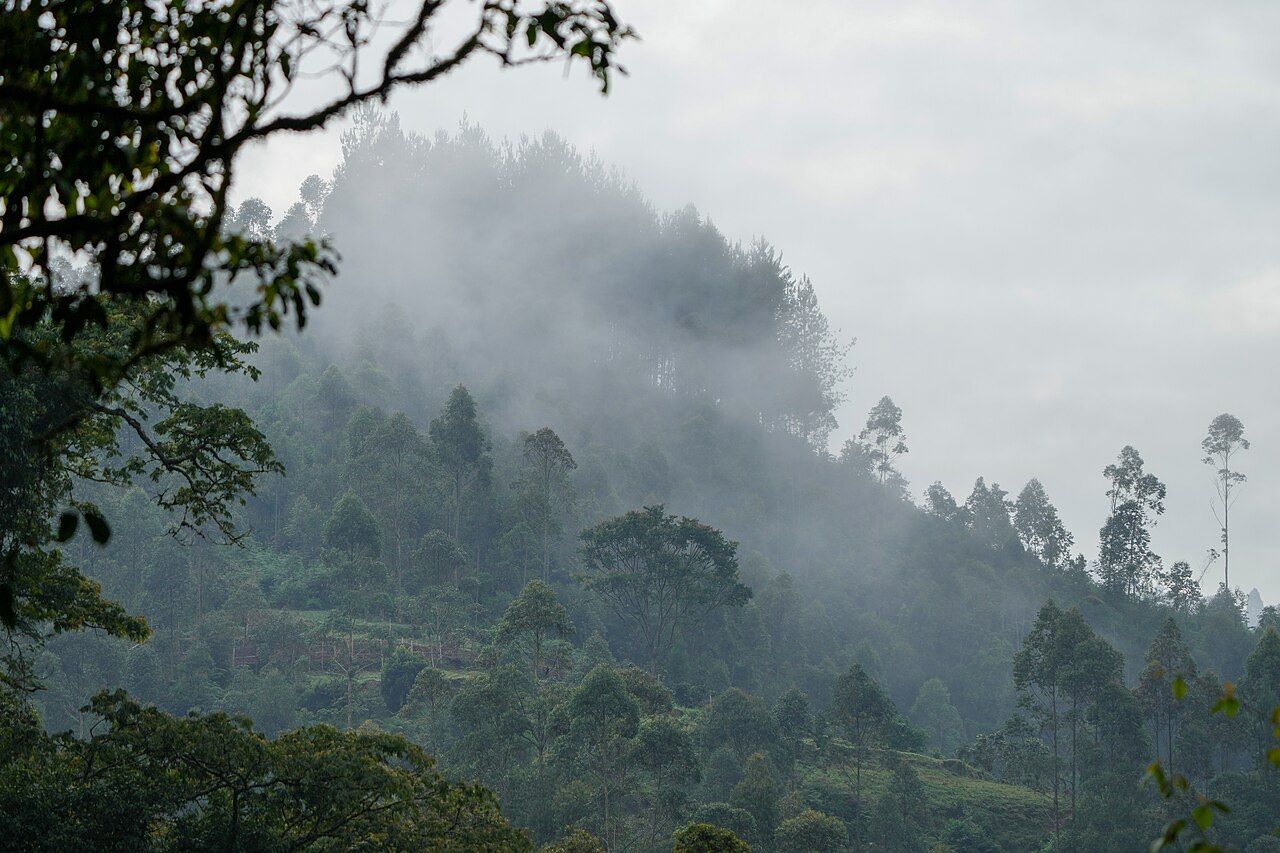
“About half” is a neat phrase. It also makes the forest sound like a container with gorillas counted into it. I would rather begin the day with the slope: Bwindi Impenetrable National Park covers about 331 square kilometres in south-western Uganda, and its terrain is steep montane rainforest. The gorillas matter. So does the place they live. A map can flatten that into a green patch; the words steep montane rainforest resist the simplification. I find the steepness a better opening than a promise of a sighting.
Morning, in my account, belongs to the forest itself. Bwindi is one of the few forests in East Africa to have survived the last ice age, which helps explain its diversity. It is home to about 120 species of mammals and around 350 species of birds. Those figures are a reminder not to treat the gorillas as the entire contents of the forest. A very compelling part, certainly. Not the entire contents. The list is impressive on paper, though paper makes everything sound politely arranged. Diversity here is not a supporting cast assembled for the gorillas; it is part of why the forest matters.
Bwindi became a national park in 1991. The World Heritage designation followed in 1994. The dates sit neatly in a sentence; the history does not. The Batwa, forest people who lived in Bwindi, were moved out when the park was created. I cannot make that a passing detail on the way to gorillas. A story about the forest’s protection has to include the people who were made to leave it. There is no tidy sentence that makes those facts sit comfortably together. The park dates can be stated in one breath. The removal cannot be made smaller by giving it the same amount of space, and I do not want the sentence to behave as if it can.
By midday, the numbers come into view. A 2018 census counted 459 mountain gorillas in Bwindi and the neighbouring Sarambwe reserve. The census results published in 2018 and 2019 put the world’s mountain gorillas at about 1,063. Mountain gorillas live in Bwindi and in the Virunga volcanoes, and nowhere else. That is a small range for an animal whose name gets repeated so easily.
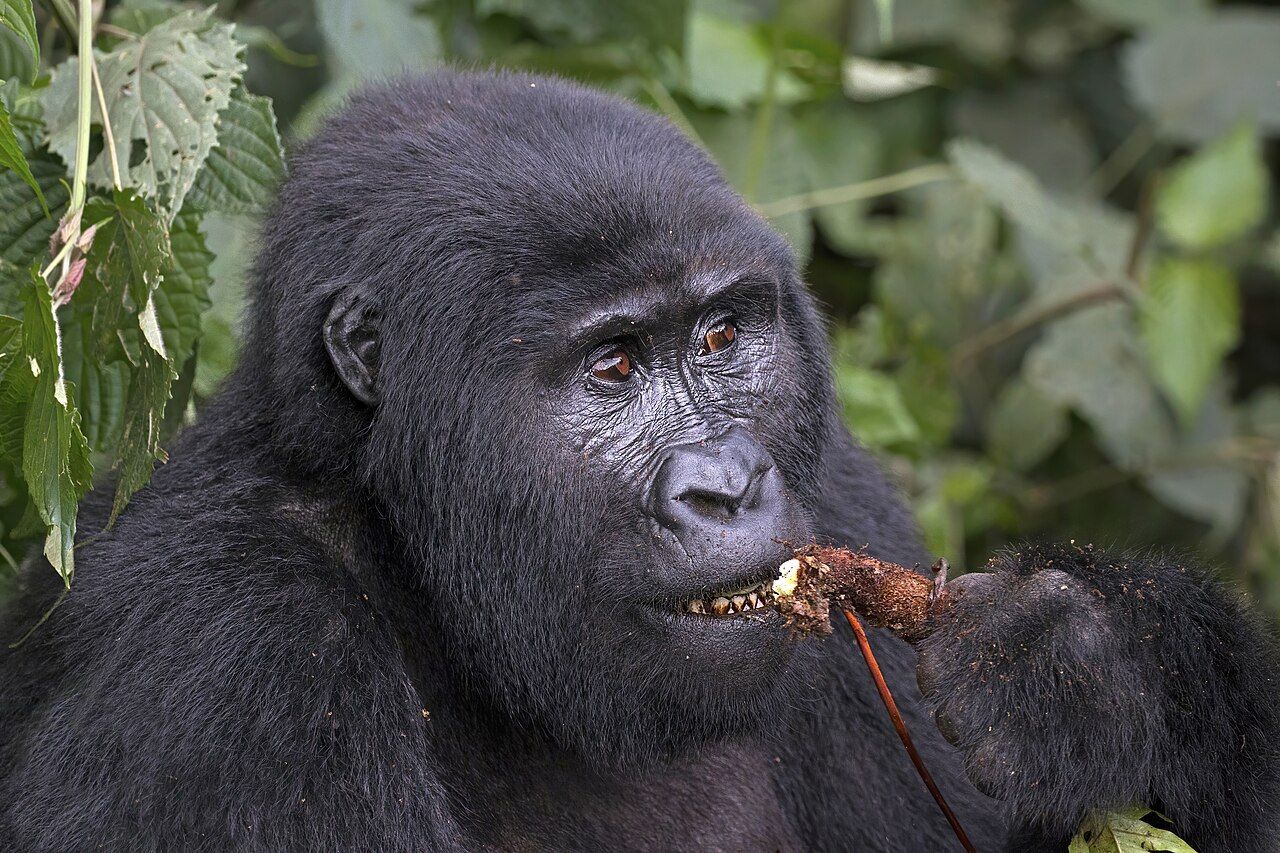 CC BY-SA 4.0 — Charles J. Sharp
The count for Bwindi and Sarambwe is not a count for Bwindi alone. I like the distinction. It is less tidy, and more honest. Elsewhere, the mountain gorillas live in the Virunga volcanoes too: the other half of the gorillas has its own landscape. The phrase “about half” has its place, but the more exact figures deserve their neighbours attached.
Bwindi is not a gorilla story with a forest attached; the forest is the story.
Bwindi is not a gorilla story with a forest attached; the forest is the story.
In the afternoon, I turn to how visitors came to see gorillas here. The first habituated gorilla family in Bwindi was opened to visitors in 1993. Now gorilla visits are made from four sectors: Buhoma, Ruhija, Rushaga and Nkuringo. Visits to a habituated family are limited to a small group for one hour a day. The limit is part of the story, not a footnote. One hour gives the visit a clear edge; it does not turn a family into an appointment on demand. A gorilla family is not a public performance, however much a visitor might wish the forest to arrange one.
 CC BY-SA 4.0 — Giles Laurent
The Uganda Wildlife Authority manages Bwindi and issues gorilla permits. That fact gives the visit a practical shape, but the larger change is still the one from a forest lived in by the Batwa to a national park where visitors come to see habituated gorillas. I find it difficult to write about that change as a simple success story. It has a clear sequence. It does not have a simple moral.
As the day moves towards evening, the other life in Bwindi comes back into view: the mammals and birds, the old forest, the steepness. My mind wanders to Kibale's thirteen primate species, then to tree-climbing lions to the north. They belong to other stories. Bwindi does not need borrowing from them. Its own story is already crowded: a rare surviving forest, gorillas in a restricted range, and people moved out when the park was created.
I would leave the day there, without pretending that a count settles what the forest means. The gorillas are a strong reason to care about Bwindi. They are not a reason to forget what else is there, or who was there first.
The numbers: about 331 square kilometres; 459 gorillas counted in Bwindi and Sarambwe in 2018; about 1,063 worldwide.