Murchison Falls, where the Nile squeezes through
A day with Uganda’s largest park: a narrow rock cleft, a long history of names, and the Nile opening into delta country.
- Country
- Uganda
- Extent
- about 3,840 sq km
- Ground
- river gorge, savanna and delta
 PD — Oliver Sedlacek file

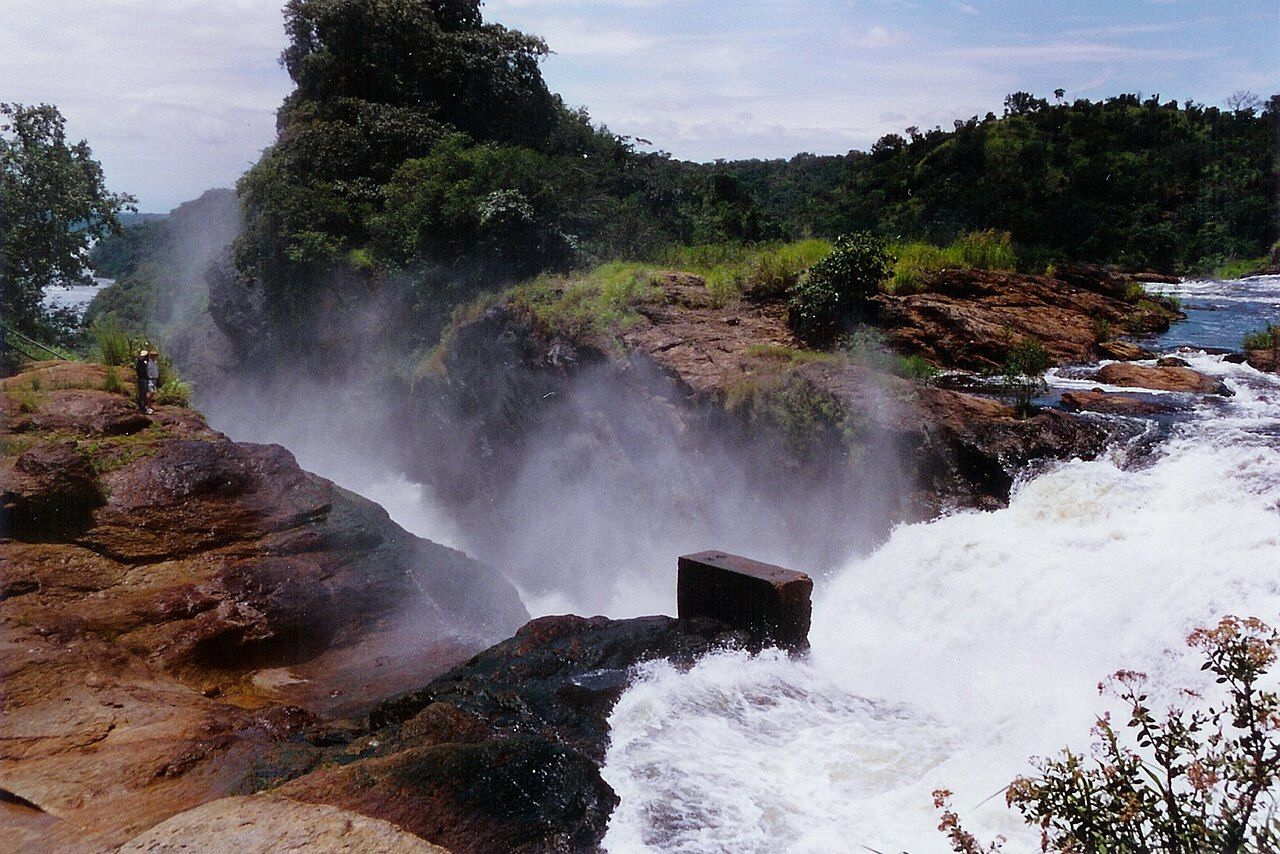
Morning starts, in my preferred version of a day here, with the river’s central argument. At Murchison Falls the Victoria Nile forces itself through a gap in the rock about 7 m wide, then drops about 43 m. I like a landscape that makes its point without a long introduction. This one has chosen a very narrow one.
The comparison is difficult to resist: the cleft is a small opening for a very large display. It is not a far wider waterfall a far wider waterfall, and that is rather the point. Murchison’s drama is in the squeeze. The park around it covers about 3,840 square kilometres, making it the largest in Uganda. River gorge, savanna and delta: not a bad range of settings for a place whose best-known feature is a gap in rock.
By later in the morning, I find myself turning to the names. Explorer Samuel Baker named the falls in 1864 after Sir Roderick Murchison, president of the Royal Geographical Society. In the 1970s they were renamed Kabalega Falls, after a king of Bunyoro; the old name returned. Names, it seems, can take a scenic route too. The park was gazetted in 1952.
There is another channel to account for. A flood in 1962 created Uhuru Falls beside the main falls. I have a soft spot for a landscape that refuses to keep to one channel, though the Nile has already made a fairly persuasive case for itself. Ernest Hemingway survived a plane crash near the falls in January 1954. The history here does not lack for dramatic interruptions.
By afternoon, the grasslands north of the Nile bring the park’s Rothschild’s giraffes into the picture. I leave Rothschild's giraffes in Kenya Rothschild's giraffes in Kenya to another story; here, Rothschild’s giraffes live on the grasslands north of the river. A useful reminder that even a headline waterfall does not get the whole park to itself.
Evening ends the day in the delta, where the Nile enters Lake Albert and shoobills are worth looking for. The shoebill's papyrus home the shoebill's papyrus home is an appealing phrase; the fact on the ground is simpler. The delta is a place to look.
The numbers: about 3,840 square kilometres; about 7 m across; about 43 m down. The squeeze is the whole story, and then some.